John Read and Irving Kirsch – Electroconvulsive Therapy (ECT) Does the Evidence From Clinical Trials Justify its Continued Use?

John Read and Irving Kirsch – Electroconvulsive Therapy (ECT) Does the Evidence From Clinical Trials Justify its Continued Use?

This week on MIA Radio we turn our attention to electroconvulsive therapy (known as electroshock in the US). It's fair to say that ECT remains a controversial subject with proponents and detractors regularly disagreeing on its safety and efficacy. The number of psychiatrists willing to administer ECT, particularly in the UK, is in decline but we are still using it to administer electric shocks to the brains of an estimated 2,000 people each year.

In this interview, we discuss a recent paper from the journal Ethical Human Psychology and Psychiatry. The title is 'Electroconvulsive Therapy for Depression: A Review of the Quality of ECT versus Sham ECT Trials and Meta-Analyses' and it is written by John Read, Irving Kirsch and Laura McGrath. On MIA we have previously written about the study and its findings.

We hear from two of the authors, Professor of Psychology John Read from the University of East London and Professor of Psychology Irving Kirsch from Harvard Medical School.

We discuss:
  • That the work aimed to review the quality of meta-analyses and any relevant clinical studies of ECT.
  • How there have only ever been 11 studies that have compared ECT with sham ECT (SECT).
  • Sham ECT is when the anaesthetic is administered but not followed by shocks to the brain.
  • That in addition to reviewing the quality of the studies, the paper went on to consider the effect of placebo in the administration of ECT.
  • That when reviewing the quality of studies, a 24-point scale was used and that the scorers were blinded to each other's ratings.
  • The 24-point scale included 5 basic Cochrane Collaboration criteria and an additional 19 quality indicators, some of which were specific to ECT procedures.
  • The average quality score across all the studies was 12.3 out of a 24 maximum.
  • One of the most important findings was that none of the studies reviewed were double-blind.
  • The reason for this is that the patients can't be blinded to the procedure because the adverse after-effects are very obvious.
  • In reviewing the studies it was sometimes the case that only the treating psychiatrist was rating the effectiveness of the procedure, not the patient.
  • The 5 meta-analyses themselves only contained between 1 and 7 of the eleven available studies.
  • The recommendation from the paper is that the use of ECT should be suspended pending a properly controlled, rigorous clinical trial.
  • That the UK's National Institute for Health and Clinical Excellence (NICE) has decided to review their ECT recommendations in their depression guidelines, considering the review.
  • That the Royal College of Psychiatrists has indicated that they will update their ECT position statement in light of the review.
  • It has come to light recently that NHS Trusts in the UK are sometimes using out of date or incorrect information in their ECT guidance leaflets, an example of this is referring to ECT correcting a 'chemical imbalance in the brain'.
  • How the expectations of the treating doctor can influence the condition of the person undergoing the treatment.
  • That the placebo effect can be large and long-lasting and that the more invasive the procedure, the larger the effect.
  • That one of the characteristics of depression is the feeling of hopelessness and that when you are given a new treatment, it can instil a sense of hope which counters the hopelessness.
  • That the call to prohibit ECT is because the negative effects of ECT are so strong, the fact that the evidence supporting it is so weak (especially in the long-term and beyond the improvement due to placebo) and that there are other means of addressing the difficulties that the person is dealing with.
  • That placebos are, in essence, a type of psychological therapy.
Links and further reading:

Electroconvulsive Therapy for Depression: A Review of the Quality of ECT versus Sham ECT Trials and Meta-Analyses

Richard P. Bentall: ECT is a classic failure of evidence-based medicine

NICE guidance on the use of electroconvulsive therapy

Jaksot(292)

A Therapist Navigating Antidepressant Withdrawal: Nelson Lee on the Power of the Present Moment

A Therapist Navigating Antidepressant Withdrawal: Nelson Lee on the Power of the Present Moment

Nelson Lee is a therapist and mental skills coach with a master's degree in clinical mental health counseling and an MBA. In 2024, he attempted to get off antidepressants that he'd been on for 15 year...

11 Kesä 202546min
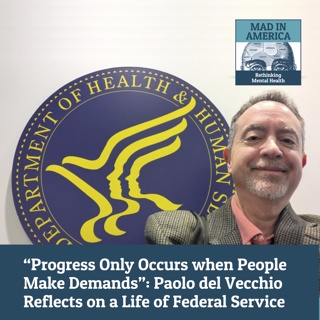
"Progress Only Occurs when People Make Demands" Paolo del Vecchio Reflects on a Life of Federal Service

"Progress Only Occurs when People Make Demands" Paolo del Vecchio Reflects on a Life of Federal Service

Paulo del Vecchio is a person in long-term recovery from mental health and addictions, who has been a leader in the peer recovery movement for 40 years. He recently completed a 30-year career at the U...

4 Kesä 202539min
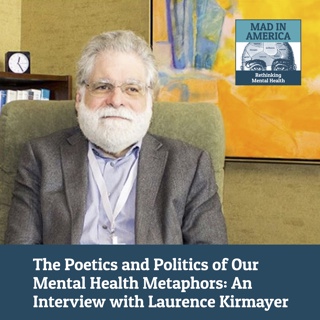
The Poetics and Politics of Our Mental Health Metaphors: An Interview with Laurence Kirmayer

The Poetics and Politics of Our Mental Health Metaphors: An Interview with Laurence Kirmayer

Laurence Kirmayer is one of the most influential figures in cultural psychiatry today. A psychiatrist, researcher, and theorist, he serves as James McGill Professor and Director of the Division of Soc...

21 Touko 202537min
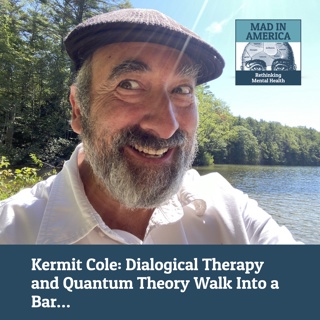
Kermit Cole: Dialogical Therapy and Quantum Theory Walk Into a Bar…

Kermit Cole: Dialogical Therapy and Quantum Theory Walk Into a Bar…

Hello, my name is Bob Whitaker, and today I have the pleasure of speaking with Kermit Cole. We'll be speaking about a philosophical enterprise that Kermit is now deeply engaged in. That is, broadly sp...

7 Touko 202536min
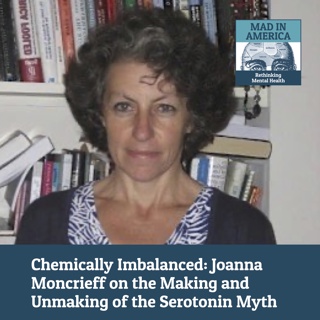
Chemically Imbalanced: Joanna Moncrieff on the Making and Unmaking of the Serotonin Myth

Chemically Imbalanced: Joanna Moncrieff on the Making and Unmaking of the Serotonin Myth

Welcome to this Mad in America podcast. My name is Robert Whitaker, and I'm happy today to have the pleasure of speaking with Joanna Moncrieff. Dr. Moncrieff is a psychiatrist who works in the Nationa...

30 Huhti 202549min
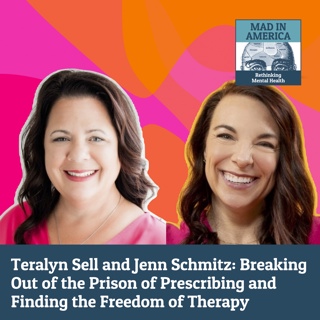
Teralyn Sell and Jenn Schmitz: Breaking Out of the Prison of Prescribing and Finding the Freedom of Therapy

Teralyn Sell and Jenn Schmitz: Breaking Out of the Prison of Prescribing and Finding the Freedom of Therapy

On the Mad in America podcast this week, Brooke Siem, author of May Cause Side Effects, talks with Teralyn Sell and Jenn Schmitz about their journey from working in the prison system to challenging co...

16 Huhti 202548min
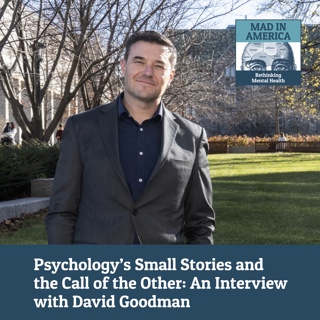
Psychology's Small Stories and the Call of the Other: An Interview with David Goodman

Psychology's Small Stories and the Call of the Other: An Interview with David Goodman

David Goodman is the Director of the Center for Psychological Humanities and Ethics and the Dean of the Woods College of Advancing Studies at Boston College, where he also teaches in the Department ...

9 Huhti 202543min
Psychotherapy and Psychosomatics: End of an Era for Independent Journals? An Interview With Giovanni Fava

Psychotherapy and Psychosomatics: End of an Era for Independent Journals? An Interview With Giovanni Fava

Welcome to Mad In America Radio. My name is Bob Whitaker, and today my guest is Italian psychiatrist, Giovanni Fava. From 1992 to 2022, Dr. Fava edited the journal Psychotherapy and Psychosomatics. We...

26 Maalis 202540min

Suosittua kategoriassa Terveys ja hyvinvointi

unicast
voi-hyvin-meditaatiot-2
psykopodiaa-podcast
vakeva-elama-viisaampi-mieli-vahvempi-keho
tiedenaiset-podcast
rss-pitaisko-erota
puhu-muru
rss-narsisti
terapiassa
rss-kuumilla-aalloilla
rss-uplevel-by-sonja-hannus
junnut-pelissa
rss-rakas-mielenterveyteni
katilon-kahvitunti
meditaatiot-suomeksi
selviytyjat-tarinoita-elamasta
rss-duodecim-lehti
rss-ehjaksi
rss-vapaudu-voimaasi
rss-kyykkya-ja-kuoharia