Native Seed Production and Tips for Starting a New Native Plant Garden or Restoration Area
Backyard Ecology™21 Tammi 2021

Native Seed Production and Tips for Starting a New Native Plant Garden or Restoration Area

Growing native plants has grown in popularity over the last couple of decades. This has led to an increased demand for native plant seeds. However, many of us have never really stopped to think about how those native seeds are produced on a commercial level. In this episode, we talk with John Seymour and Robert Hoffman from Roundstone Native Seed about this and their recommendations for planting native seeds. John is the president of Roundstone and Robert is their Restoration Ecologist.

Growing native plants for commercial seed production is a complicated process. At Roundstone Native Seed, the process starts with collecting the initial native seeds from the wild following the U.S. Forest Service collecting guidelines. The native seeds initially collected must then be grown first as plugs in a greenhouse, and then transplanted into larger production plots which produce the native seeds that are eventually harvested for sale.

Once in the production plots, the plants must be cared for throughout the growing season and throughout future years to keep the plots producing to the best of their ability. Some of the ongoing care and maintenance may include watering, hand weeding, and conducting prescribed burns on the fields. For many of the production fields, it may take up to three years before a stand is producing seed to its fullest capacity.

For many of these species, much of the harvesting and seed processing must be done by hand. Unlike many of our more traditional crops or flowers, native plants don't all go to seed at the same time. Often times the staff at Roundstone will go out to each stand every day to hand harvest just the seeds that are ready that day – taking a combine through and harvesting the whole field at once, like is done with corn or soybeans, is often not an option for native seeds.

After being harvested, the seeds then have to be dried and cleaned. The cleaning process includes removing all the "fluff" and extra pieces of vegetative material. This can be up to a 17-step process for native seeds, while more traditional crops may only have a few steps in the cleaning process. And each species has different cleaning requirements and needs. Each machine also has to be thoroughly cleaned before the next species can be processed.

When it comes to planting native seeds, site preparation is extremely important. The type of site preparation you need to do will depend on the current use of that land. Is it a yard, an existing garden or crop field, a pasture, etc.? The number one thing you can do for site preparation is weed control and a lack of weed control is the number one reason why native plant stands or gardens fail. The three most common forms of weed control before planting your native seeds are herbicide treatments, solarization, and repeat tillage.

It often takes multiple weed control treatments over several seasons to get a site properly prepped for planting native seeds. Initial weed control is so important prior to planting native seeds because native plants tend to germinate slower and over a longer period of time than many weeds. That longer and slower germination rate can allow weeds to take over and outcompete your native seeds. The old adage for native plants is that first they sleep, then they creep, then they leap, so you really need to do everything you can to reduce the weed competition during the first year or two.

The second most common reason for stand failure with native seeds is probably from planting the seeds too deep. Native seeds need a firm seed bed and often shouldn't be planted more than 1/8 to a 1/4 inch deep. It is usually better for the seeds to be on the surface than planted too deeply. Depending on your goals, the site, and your weed control process, native seeds can be planted in the dormant season (mid-November through early March) or the growing season (mid-April through late-June). Both planting times have their own pros and cons.

One of the things that I really like about Roundstone Native Seed is that they care about their customers and want to help them find the right mixes for them. If you call to talk to Roundstone Native Seed, they'll often take you through what they refer to as a "seed interview." During the seed interview, they will ask you lots of questions aimed at identifying what they believe will be the best mix to meet your specific needs, goals, and location. Their main goal is to help you have good stands and success with your native plants.

Links:

Episode image:

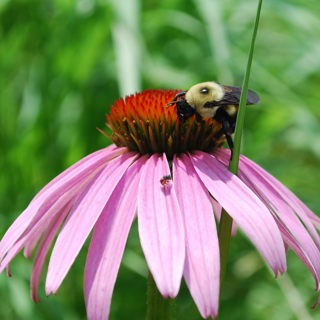
  • Bees on a purple coneflower
  • Photo credit: Roundstone Native Seed

Jaksot(115)

BirdCast: Revealing the Mysteries of Bird Migration

BirdCast: Revealing the Mysteries of Bird Migration

Summary Twice a year billions of birds migrate across the U.S. We've only recently discovered just how large that number really is. Being able to quantify that number is thanks to a large degree to a ...

20 Maalis 20251h 14min
How to Do Spring Garden Cleanup for Pollinators and Wildlife

How to Do Spring Garden Cleanup for Pollinators and Wildlife

Summary As gardeners, it's common to get the gardening itch in late winter and early spring. The temptation to finish cleaning up our gardens during this time is a natural temptation. However, when do...

6 Maalis 202510min
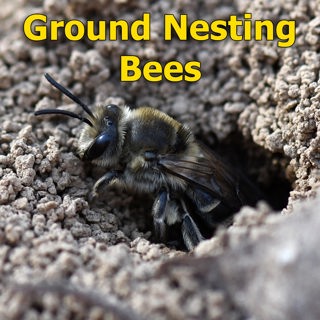
Exploring the Fascinating World of Ground Nesting Bees

Exploring the Fascinating World of Ground Nesting Bees

Summary Ground nesting bees represent a significant portion of our native bee population, yet they often go unnoticed due to their solitary nature and unique nesting habits. In this episode, we dive i...

20 Helmi 202546min
How to Attract More Birds to Your Yard

How to Attract More Birds to Your Yard

Summary When someone decides they want to attract birds to their yard, often the first thing they do is put up a birdfeeder (or two). It's what we did when I was a kid, and it's what countless other p...

6 Helmi 20258min
From Suburban Yard to Wildlife Haven: Amanda's Story

From Suburban Yard to Wildlife Haven: Amanda's Story

Summary Amanda shares the journey she and her husband have taken to transform their small, suburban yard into a vibrant habitat for birds and pollinators. We discuss the various projects they've under...

23 Tammi 202543min
We're back!

We're back!

Summary I am so excited to be relaunching the Backyard Ecology™ podcast! New episodes will be released every other week, and we have some exciting guests already lined up. Going forward, in addition ...

9 Tammi 20253min
Top 10 Backyard Ecology Podcast Episodes: October 1, 2022 – October 1, 2023

Top 10 Backyard Ecology Podcast Episodes: October 1, 2022 – October 1, 2023

I can't believe that 2023 is almost over! This year has flown by! For the past several weeks, I've been doing top 10 roundups of the different types of Backyard Ecology content. We've talked about the...

28 Joulu 202313min
Top 10 Backyard Ecology "Shorts"

Top 10 Backyard Ecology "Shorts"

Did you know that in addition to the regular Backyard Ecology videos that Anthony creates, he also produces a series of nature-trivia style short videos? Most of these videos are literally only a few ...

21 Joulu 20234min

Suosittua kategoriassa Tiede

tiedekulma-podcast
rss-mita-tulisi-tietaa
rss-poliisin-mieli
utelias-mieli
rss-duodecim-lehti
rss-metsantuntijat-podcast
mielipaivakirja
filocast-filosofian-perusteet
rss-astetta-parempi-elama-podcast
rss-luontopodi-samuel-glassar-tutkii-luonnon-ihmeita
university-of-eastern-finland
docemilia
menologeja-tutkimusmatka-vaihdevuosiin
rss-bios-podcast
rss-tiedetta-vai-tarinaa
rss-ylistys-elaimille
rss-lapsuuden-rakentajat-podcast
rss-sosiopodi
rss-miljonaarien-tasavalta