Dr Nikolay Kukushkin on Memory

Dr Nikolay Kukushkin on Memory

What if your body is learning things your mind doesn’t know? What if memory wasn't just something that our brain has?

Episode Summary
On this episode, I'm exploring a bold idea with neuroscientist Dr Nikolay Kukushkin: memory doesn’t just live in the brain. It might be a basic property of life itself. We unpack how scientists define memory (behavioural change over time) versus how the rest of us use the word, and why that distinction matters—from sea slugs to kidney cells. I ask the “muscle memory” question we all carry, and we separate the metaphor from the biology: your basal ganglia automate behaviours, but your muscle cells do literally adapt to patterned use.

We go deep on “patterns.” Nikolay’s work shows that even non-neural cells can detect minute-scale timing differences—preferring spaced pulses over a single crammed dose. That has huge implications for learning, exercise, nutrition, and even medicine; it suggests timing might be as important as quantity. We also talk about sleep as essential “synaptic housekeeping,” why false memories are an adaptive feature (not a failure), and what it really means to “run out of memory” in our overstimulated world.

Finally, we tilt at the big questions: how consciousness might have evolved, why Plato’s model of perception eerily echoes today’s top-down/bottom-up neuroscience, and what AI still lacks—learning patterns in time within an embodied world. If you’ve ever crammed for an exam, worried about forgetting your own name, or wondered what your cells are quietly learning from your daily routines, this one will rewire how you think about memory.

Guest Biography — Dr Nikolay Kukushkin
Dr Nikolay Kukushkin is a Clinical Associate Professor at NYU. His book One Hand Clapping: Unraveling the Mystery of the Human Mind traces how consciousness emerged from the natural world; the original Russian edition won the Enlightener (Prosvetitel) Award and the Alexander Belyaev Medal.

His recent research (Nature Communications, Nov 2024) showed that non-neural human cells display the classic “spacing effect,” suggesting memory-like temporal patterning beyond the brain.

AI-Generated Timestamped Summary
[00:00:00] Cold open: reframing memory as cellular, not just neural.
[00:01:00] Scientists’ definition of memory vs everyday usage.
[00:03:00] From behaviour change to cellular change; beyond “plugging a muscle into a brain.”
[00:05:00] All cells have experiences; “pattern matters.”
[00:06:00] Muscle memory: basal ganglia automation vs literal muscle adaptation.
[00:07:00] Shared molecular machinery: “use it or lose it” in brain and muscle.
[00:08:00] Nikolay’s path: from molecules to minds; bottom-up neuroscience.
[00:09:00] Protein quality control: molecular barcodes and cellular “conversations.”
[00:11:00] Why sea slugs: short path from molecules to behaviour.
[00:13:00] Hypothesis leap: if single neurons learn from pulses, could kidney cells?
[00:14:00] The experiment: four 3-min pulses vs one 12-min pulse (spacing wins).
[00:16:00] What’s uniquely neural: synapses and specific connectivity; where salience arises.
[00:19:00] Memory without awareness; non-neural systems can store patterns.
[00:20:00] Applications: exercise, diet, medicine; timing as a lever.
[00:23:00] The dark mirror: life as obsessive optimisation if we over-pattern.
[00:24:00] Personal practice: being mindful of inputs, attention as filter.
[00:26:00] Debunking “10% of the brain” and the sleep–memory link.
[00:28:00] Sleep weakens synapses; deprivation leads to saturation and hallucinations.
[00:30:00] The social-media “soup” analogy for saturated memory.
[00:32:00] Names, identity and rehearsal; de-naming as degradation.
[00:33:00] Reconsolidation: why false memories are a feature we need.
[00:34:00] 9/11/Challenger studies: how memories drift with time.
[00:36:00] Ebbinghaus and the spacing effect across species and systems.
[00:39:00] Cramming vs spacing: initial strength and decay rates.
[00:41:00] The forgetting curve and why “more” can decay slower in memory.
[00:42:00] “My whole life is one big experiment on my brain.”
[00:43:00] Practical “tip”: fix attention first; follow interest, not force.
[00:45:00] Attention economy and selective inputs as memory hygiene.
[00:48:00] From smoking to scrolling: a future of information hygiene.
[00:50:00] One Hand Clapping: why it feels special to be you.
[00:54:00] Plato’s “two fires”: ancient echoes of top-down/bottom-up perception.
[00:58:00] Intuition as hidden associations; LLMs as an analogy.
[01:00:00] AI: excitement, unease, and the risk of outsourcing humanness.
[01:03:00] What AI lacks: learning patterns in time without a body.
[01:05:00] Close and thanks.
[01:06:00] Outro and calls to action.

Links
Nikolay's website - https://www.nikolaykukushkin.com/


His NYC profile - https://liberalstudies.nyu.edu/about/faculty-listing/nikolay-kukushkin.html

His book 'One Hand Clapping' - https://www.nikolaykukushkin.com/press-1

'Memory Takes Time': research into how wemory is not confined to a particular location or locations in the brain - https://www.cell.com/neuron/fulltext/S0896-62731730467-1

Herman Ebbinghaus - https://en.wikipedia.org/wiki/Hermann_Ebbinghaus and The Ebbinghaus Illusion: https://en.wikipedia.org/wiki/Ebbinghaus_illusion

Tämä jakso on lisätty Podme-palveluun avoimen RSS-syötteen kautta eikä se ole Podmen omaa tuotantoa. Siksi jakso saattaa sisältää mainontaa.

Jaksot(368)

Dr Michael Hallsworth on The Hypocrisy Trap

Dr Michael Hallsworth on The Hypocrisy Trap

We all intuitively know that hypocrisy is a bad thing. But what if it isn’t a flaw, but a feature? But maybe the real problem isn’t hypocrisy, it’s how we think about it.Episode SummaryOn this episode...

16 Marras 202558min
James Geary on The Art of The Aphorism

James Geary on The Art of The Aphorism

Can a single sentence change the way you see the world? My guest on this episode, James Geary thinks so.Episode SummaryOn this episode, I speak with writer and journalist James, whose lifelong fascina...

9 Marras 20251h 4min
Dr Nicholas Wright on How the Brain Shapes War and War Shapes The Brain

Dr Nicholas Wright on How the Brain Shapes War and War Shapes The Brain

What can war teach us about how the human brain really works? And why is human decision-making a more significant factor than military strength in wars?Episode SummaryOn this episode, I'm exploring ho...

1 Marras 20251h 2min
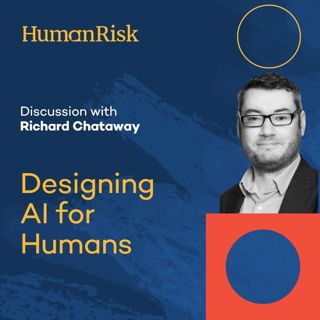
Richard Chataway on Designing AI for Humans

Richard Chataway on Designing AI for Humans

What if the biggest AI risk isn’t bias or data, but human behaviour itself? How might AI impact the people using it and what does that mean for how we design solutions and deploy the technology?Episod...

18 Loka 20251h 8min

Tom Hardin On Turning A Crime Into A Calling

Tom Hardin On Turning A Crime Into A Calling

What happens when the worst thing you’ve ever done becomes the foundation for your life’s work?Episode SummaryMy guest on this episode is Tom Hardin, otherwise known as Tipper X.  He's been on the sho...

5 Loka 202555min
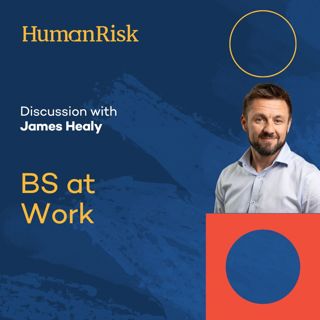
James Healy on BS at Work (Bullshit & Behavioural Science)

James Healy on BS at Work (Bullshit & Behavioural Science)

Why do so many workplaces run on bullshit processes and procedures?  And how might Behavioural Science help resolve them?Episode SummaryIn this episode, I sit down with author, speaker and advisor Jam...

27 Syys 20251h 4min
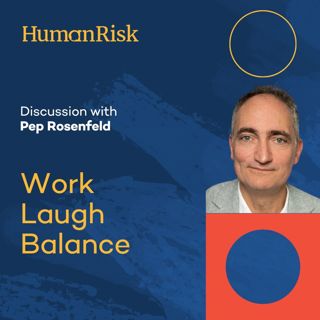
Pep Rosenfeld on Work Laugh Balance

Pep Rosenfeld on Work Laugh Balance

What if the most powerful tool at work isn’t logic, but laughter? On this episode I'm speaking to a comedian who far from thinking humour is a workplace distraction, thinks it might be one of our most...

6 Syys 20251h 3min

Suosittua kategoriassa Tiede

rss-poliisin-mieli
tiedekulma-podcast
rss-mita-tulisi-tietaa
docemilia
filocast-filosofian-perusteet
menologeja-tutkimusmatka-vaihdevuosiin
rss-duodecim-lehti
rss-tiedetta-vai-tarinaa
sotataidon-ytimessa
rss-lapsuuden-rakentajat-podcast
rss-lihavuudesta-podcast
utelias-mieli
radio-antro
rss-bios-podcast
rss-metsantuntijat-podcast
rss-luontopodi-samuel-glassar-tutkii-luonnon-ihmeita
rss-sosiopodi