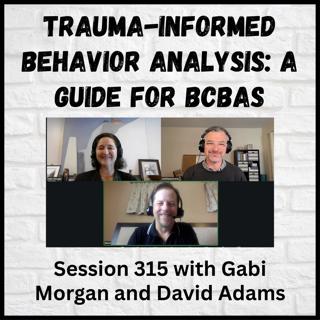
Trauma-Informed Behavior Analysis, A Guide for BCBAs: Session 315 with Gabi Morgan and David Adams

Trauma-Informed Behavior Analysis, A Guide for BCBAs: Session 315 with Gabi Morgan and David Adams

Thanks for joining me in Session 315 of The Behavioral Observations Podcast. In this episode, I spoke with Drs. Gabi Morgan and David Adams to dive deep into trauma-informed behavior analysis. Gabi brings her 30-year journey in the field—from undergrad roots to professorship at Bay Path University—while David shares his evolution from child and family therapy to clinical psychology, with a heavy focus on foster and adoptive parenting. Both guests are passionate about closing the divide between trauma therapy and behavioral strategies, and they credit mentors like Dr. Jeannie Golden for lighting the way.

We kick things off by unpacking what trauma really means. In doing so, as a content warning, please be aware that we do make general references to a variety of traumatic and adverse experiences. Having said that, David walks us through SAMHSA's three-part definition: the event, the experience, and the effects. It's not the event itself that defines trauma—it's the individual's response. He introduces "adverse conditioning experiences" as a behavior-analytic twist on adverse childhood experiences (ACEs), spotlighting how negative associations get wired in through conditioning.

From there, we contrast PTSD and complex PTSD. Same core symptoms (intrusive thoughts, avoidance, etc.), but complex PTSD adds prolonged exposure and three extra layers: impaired self-worth, rocky relationships, and emotional dysregulation. Gabi drives home a critical point: folks with developmental disabilities are at higher risk for trauma but often fly under the diagnostic radar. We need to get better at spotting trauma-related behaviors in this population.

Screening, Brain Science, and Practical Strategies

Screening is a big theme. We all agree behavior analysts aren't formally trained in assessment, but we have to be aware of how this is done. Gabi loves the Child Health and Development Institute's Child Trauma Screen (CTS), and the Massachusetts Child and Adolescent Needs and Strengths (Mass CANS) tool.

David then nerds out on the neurobiology: trauma affects the amygdala (hypervigilance), hippocampus (memory glitches), hypothalamus (stress gone haywire), and frontal lobe (decision-making on the fritz). Enter the "amygdala hijack"—when fear short-circuits rational thought. Bottom line? Kids in fight-or-flight aren't in a teachable moment. Safety and calm have to come first.

We close the show with actionable takeaways: risk-benefit analyses for every intervention (especially with histories of food neglect), "kind extinction" (empathy + withholding reinforcers), and the six pillars of trauma-informed care (safety, trustworthiness, peer support, collaboration, empowerment, cultural competence). TIC isn't a "hyphenated" ABA—it's the whole framework.

Advice for new BCBAs? Seek trauma training, question "business as usual," and be the stable adult in a kid's chaotic world. Empathy, creativity, and reducing fear are your superpowers.

Additional Resources Sponsor Shoutouts!
  • Frontera. Consider taking a demo of Frontera's Assessment Builder and see how the ethical application of AI technologies can help you serve clients and save you time! Your first assessment report is free. And if you use code BOP25 you'll get an additional five assessments for just $100. So head to fronterahealth.com to check it out!
  • CEUs from Behavioral Observations. Learn from your favorite podcast guests while you're commuting, walking the dog, or whatever else you do while listening to podcasts. New events are being added all the time, so check them out here.
  • The inaugural ABA CON CEU cruise, which launches on Royal Caribbean's Wonder of the Seas from February 16–20, 2026. Learn more about this cruise here.
  • The 2026 Stone Soup Conference! This is one of the best values in the online conference space. I'm actually going to be one of the speakers at this year's event, along with a great cast of other characters you're probably familiar with. Save on your registration by using promo code PODCAST26!
  • MindBodyBehavior's Certified Health Coach Program. If you're a BCBA looking to use your ABA skills to help people live healthier lifestyles, learn how to do it the right way, with expert instruction, mentoring, and guidance from Sarah Burby. Better still, podcast listeners can save $$$ by using the code BOP10 at check out. Click here to learn more!
  • The 2026 Verbal Behavior Conference! Taking place March 26–27, 2026, in Austin, Texas, or livestream and on-demand on BehaviorLive. Presenters will include Drs. Mark Sundberg, Patrick McGreevy, Caio Miguel, Alice Shillingsburg, Sarah Frampton, Andresa De Souza, and Danielle LaFrance will share how Skinner's analysis of verbal behavior can guide the assessment and treatment of generative learning challenges in children with autism and other developmental disabilities. And don't miss the special pre-conference workshop on Wednesday, March 25. The discounted early-bird registration price is only available for a limited time, so get your ticket right away!

Jaksot(326)

How to Use Whole Group Responding: Session 260 with Bill Heward

How to Use Whole Group Responding: Session 260 with Bill Heward

Dr. Bill Heward was gracious enough to return to the podcast in Session 260. In this episode, we talked about a handful of different topics, including how to respond to criticisms of reinforcement pra...

18 Huhti 20241h 22min
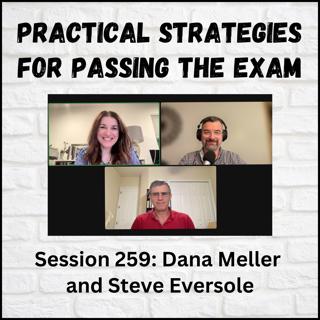
Practical Strategies for Passing the Exam: Session 259 with Dana Meller and Steve Eversole

Practical Strategies for Passing the Exam: Session 259 with Dana Meller and Steve Eversole

If you're a student, supervisor, or university instructor, this is an episode for you. In Session 259, I speak with Dana Meller and Dr. Steve Eversole, of Pass The Big ABA Exam and Behavior Developmen...

5 Huhti 20241h 21min
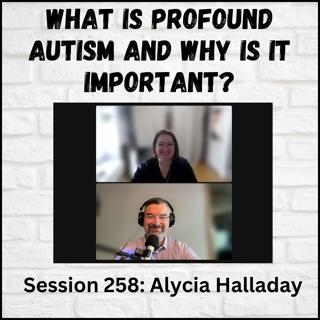
What is Profound Autism, and Why is it Important? Session 258 with Alycia Halladay Session 258

What is Profound Autism, and Why is it Important? Session 258 with Alycia Halladay Session 258

Dr. Alycia Halladay joins we to discuss the topic of Profound Autism. If you're not familiar with Alycia's work, she is the Chief Science Officer for The Autism Science Foundation, and host of the exc...

14 Maalis 202452min
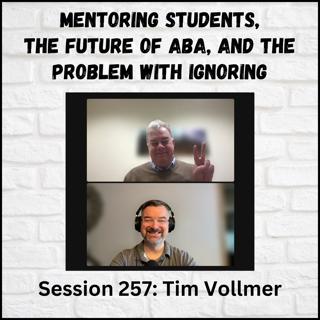
Mentoring Students,  the Future of ABA, and the Problem with Ignoring: Session 257 with Tim Vollmer

Mentoring Students, the Future of ABA, and the Problem with Ignoring: Session 257 with Tim Vollmer

I'm thrilled to be joined by none other than Dr. Tim Vollmer. In this podcast, we talk about a wide variety of research and practice topics, as well as some funny stories from his long and prolific ca...

10 Maalis 20241h 12min
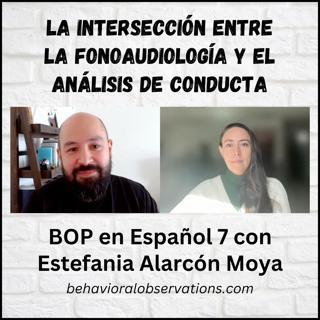
La intersección entre la fonoaudiología y el análisis de conducta: BOP en Español 7 con Estefania Alarcón Moya

La intersección entre la fonoaudiología y el análisis de conducta: BOP en Español 7 con Estefania Alarcón Moya

Las conversaciones acerca del alcance de nuestra práctica y de nuestras competencias son muy comunes hoy en día en nuestra profesión. Los fonoaudiólogos y los analistas de conducta coinciden frecuente...

5 Maalis 20241h 29min
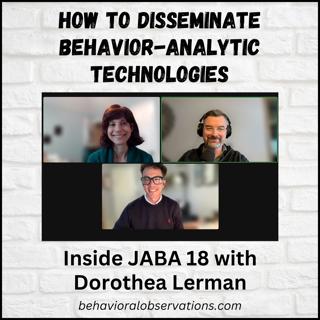
How to Disseminate Behavior-Analytic Technologies: Inside JABA 18

How to Disseminate Behavior-Analytic Technologies: Inside JABA 18

In the 18th installment of the Inside JABA Series, Dr. Dorothea Lerman joins Editor-in-Chief John Borrero and I to talk about her dissemination efforts, which are described in the Winter 2024 issue of...

15 Helmi 202458min
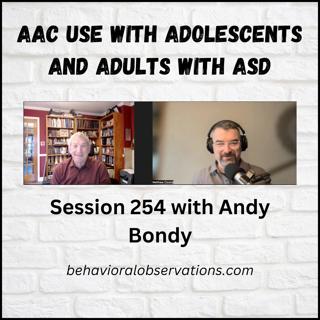
AAC Use with adolescents and adults with ASD: Session 254 with Andy Bondy

AAC Use with adolescents and adults with ASD: Session 254 with Andy Bondy

Fan-favorite Dr. Andy Bondy joins me again to talk about... you guessed it... AAC! In this episode, we discuss a paper he published last year in the journal, Advances in Neurodevelopmental Disorders, ...

1 Helmi 20241h
How to Assess Early Echoic Skills: Session 253 with Barbara Esch

How to Assess Early Echoic Skills: Session 253 with Barbara Esch

If you've completed a VB-MAPP at some point in your career, you're familiar with the EESA component of the assessment protocol. In today's podcast, I had the chance to talk with Dr. Barbara Esch, who ...

26 Tammi 202459min

Suosittua kategoriassa Tiede

tiedekulma-podcast
rss-mita-tulisi-tietaa
rss-poliisin-mieli
docemilia
utelias-mieli
radio-antro
filocast-filosofian-perusteet
rss-sosiopodi
ihanat-ipanat
mielipaivakirja
rss-bios-podcast
rss-duodecim-lehti
rss-laakaripodi
rss-radplus
rss-opeklubi
rss-lihavuudesta-podcast