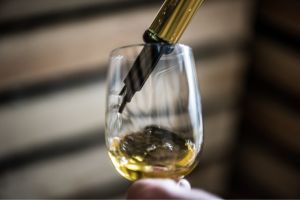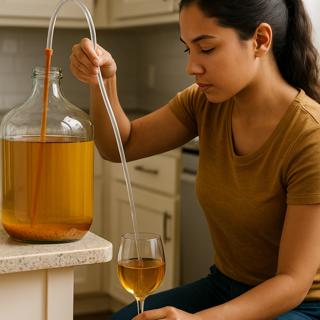

476: Be Medieval, Rack that Cider| Secondary Fermentation
Cider Chat5 Marras 2025

476: Be Medieval, Rack that Cider| Secondary Fermentation

How to clarify, stabilize, and finish cider the right way

The Purpose of Secondary Fermentation when Making Cider

Once the apple juice has started fermented and it is now slowing down, it is time to rack over your cider for secondary fermentation.

Secondary fermentation is where your cider moves from "young" to "refined." This stage improves clarity, stability, and overall quality before bottling or serving.

00:00 – Introduction and Welcome
00:27 – Meet the Host: Ria Windcaller
00:45 – The Magic of Clothes Pins
01:14 – Episode Overview: Secondary Fermentation
01:55 – Replay Announcement: Season 8, Episode 386
02:14 – Cider Making in the Northern Hemisphere
02:34 – Cider Making Resources and Equipment
06:09 – Totally Cider Tours
13:29 – Upcoming New York Cider Festival
15:31 – Featured Presentation: Clearing Cloudy Cider
24:01 – Observing Fermentation Activity
24:21 – Timing and Patience in Cider Making
24:54 – Understanding Racking Over
25:32 – Dealing with Stuck Fermentation
26:59 – Secondary Fermentation Indicators
27:47 – Preparing for Racking Over
29:13 – Racking Over Process
30:49 – Using Sulfites and Equipment
35:32 – Handling Head Space and Lees
38:38 – Final Tips and Bottling
42:43 – Supporters and Closing Remarks

Why Secondary Fermentation Matters

Secondary fermentation helps your cider:

Improve the overall quality and characteristics of the final product during secondary fermentation by;

Clarify: After the vigorous primary fermentation phase, yeast, pulp, and particulate matter settle out. Giving the cider time in secondary creates that clean, bright look in the glass.

Stabilize: Letting the cider relax in a less active fermentation state helps smooth out rough edges and reduces the risk of funky off-character flavors.

Reduce Bottle Sediment: Most of the lees settle in the secondary fermenter — not in your final bottles — giving you a cleaner, professional-looking cider.

Avoid Off-Flavors: Yeast that sits too long on the lees can break down (autolyze) and create harsh, unpleasant aromas. Racking to secondary moves the cider off that yeast layer and protects the finished profile..

Secondary fermentation is a crucial step for refining cider, enhancing its clarity, taste, and stability before it is consumed or sold.

Past Cider Making Episodes When to Transfer to Secondary

Primary fermentation must be substantially complete. Signs include:

– Airlock activity slows way down
– Gravity readings stabilize over several days
– Visible bubbling is minimal
– A firm lees bed is forming at the bottom
– Taste test confirms sugar is mostly gone (unless aiming for sweet

Equipment needed for Cider's Secondary Ferment

Find a complete list with links to purchase at the Cider Making Equipment page at ciderchat.com

  • Extra Apple Juice to for topping off
  • Secondary Fermenter – glass carboy of equal size
  • Airlock and Bung
  • Racking Cane or Auto-Siphon
  • Sanitizer
  • Hydrometer or Refractometer
  • Tubing & a clothes pin ( a Ria tip to have on hand for clamping tubing as you go so it can be managed to insure that the tube doesn't slip down into the lees and stir them up)
  • Bottle Brush and Cleaning Equipment
Determining when Secondary Fermentation Begins
  • Completion of Active Primary Fermentation: Watch and notice when the vigorous phase of primary fermentation is complete, which is typically indicated by a significant decrease in airlock activity or specific gravity readings that are close to the target final gravity.
  • Gravity Readings: Use a hydrometer or refractometer to take consecutive gravity readings over a few days. When readings are consistent, it suggests that fermentation has slowed down enough for secondary transfer.
  • Visual Clues: Look for a drop in the level of visible activity, such as the reduction of bubbles and the beginning of sediment formation at the bottom of the primary fermenter.
  • Taste Test: Conduct a taste test for residual sweetness. If the cider is too sweet, it may need more time in primary fermentation unless the desired style of cider is sweet rather than dry.
  • Timeframe Guidance: Generally, primary fermentation can take anywhere from a few days to two weeks, depending on factors like temperature, yeast strain, and original sugar content.
  • Avoiding Off-Flavors: Transfer before the cider has sat too long on the lees at the bottom of the carboy to prevent off-flavors that can result from yeast autolysis.
  • Specific Style Goals: Factor in the specific goals for the cider's style, as some styles may benefit from a longer or shorter primary fermentation before secondary.
  • Equipment Availability: Ensure that the secondary fermentation vessel is prepared and sanitized before deciding on the transfer to avoid any delays once the cider is ready.
Common Problems during Secondary Ferment
  • Stalled Fermentation – Adjust fermentation temperature to optimal range.
  • Excessive Oxidation – Minimize headspace and avoid splashing when transferring.
  • Contamination – Practice stringent sanitation and possibly discard contaminated batch.
  • Sulfite Burn – Allow time for dissipation or use activated carbon treatment.
  • Insufficient Carbonation – Verify yeast viability and sugar availability; maintain proper bottle conditioning temperature.
  • Sediment in Bottles – Allow full clearing in secondary, use fining agents, and bottle carefully.
  • Unexpected Flavor Changes – Allow time for maturation or blend with another batch.
  • Pressure Build-up in Containers – Use an airlock or periodically vent the container.
  • Cider Becomes Too Dry – Monitor gravity to stop fermentation at desired sweetness or back-sweeten with non-fermentable sweeteners.
Mentions in this Cider Chat

Jaksot(499)

464: Czech Cider: From Roadside Apples to Cellar Ferments

464: Czech Cider: From Roadside Apples to Cellar Ferments

A conversation with Czech Cider Fan Dan Samek This episode brings us to the heart of Europe by way of Vermont. Ria sat down with Dan Samek, a cider enthusiast and home distiller from Prague, to talk a...

2 Heinä 20251h 10min

463: Zydeco Meadery: Fermenting Roots from Trinidad to New England

463: Zydeco Meadery: Fermenting Roots from Trinidad to New England

Eric Depradine of Zydeco Meadery crafts mead with Heart, Honey, and Heritage As securing permission, Eric was able to start his fermentation journey in high school with a science project using cane ju...

18 Kesä 20251h 19min
462: Cider in a Cathedral of Opulence | The Newt, UK

462: Cider in a Cathedral of Opulence | The Newt, UK

A Digital Media Empire Embraces Cider at The Newt The Newt in Somerset is a world-class estate blending cider-making, luxury hospitality, and horticultural excellence. The estate is owned by South Afr...

4 Kesä 20251h 16min
461 RAW Levi Danielson

461 RAW Levi Danielson

Levi Danielson is the founder and cider maker at RAW Cider, based in Dayton, Oregon. With roots in the Driftless Region of Minnesota and a cidery nestled among cider apples and pears in the Willamette...

28 Touko 202554min

460: James B. Forbes on Little Pomona's Ciders & Legacy

460: James B. Forbes on Little Pomona's Ciders & Legacy

An intimate sit down with James Forbes of Little Pomona to talk about grief of losing his wife and business partner Susanna Forbes, the growth of the cidery, and the evolving identity of one this sele...

21 Touko 202545min

459: The Apple Finch's Pet-Nats at de Groote Wei Cider | Netherlands

459: The Apple Finch's Pet-Nats at de Groote Wei Cider | Netherlands

Fourth-Generation Farmer, First-Generation Cidermaker Sophie Horstink of De Groote Wei, which means The Great Meadow in Dutch, is crafting Dutch cider as a value added project at her family's farm. Lo...

14 Touko 202554min

458: Sodo Sidriné and the Rise of Lithuanian Craft Cider

458: Sodo Sidriné and the Rise of Lithuanian Craft Cider

Donatas Genys didn't set out to launch Lithuania's first keeved cider. But after trips to England and Normandy, years of experimentation, and the planting of over 6,000 cider apple trees, that's exact...

7 Touko 202556min
457: Snow Capped Cider: A Family Legacy at 7,000 Feet | CO

457: Snow Capped Cider: A Family Legacy at 7,000 Feet | CO

At the base of Colorado's Grand Mesa, the world's largest flat-top mountain, five generations of fruit growers have worked the land. Today, Snow Capped Cider carries on that legacy, crafting estate-gr...

30 Huhti 20251h 1min

Suosittua kategoriassa Yhteiskunta

olipa-kerran-otsikko
siita-on-vaikea-puhua
kaksi-aitia
gogin-ja-janin-maailmanhistoria
i-dont-like-mondays
joku-tietaa-jotain-2
uutiscast
poks
antin-palautepalvelu
kolme-kaannekohtaa
aikalisa
sita
yopuolen-tarinoita-2
mamma-mia
rss-murhan-anatomia
meidan-pitais-puhua
lahko
rss-nikotellen
ootsa-kuullut-tasta-2
loukussa