Episode #374: Mental Strategies: Neuroscience, Visualization, and Developing Resilience with Anne-Sophie Fluri

Episode #374: Mental Strategies: Neuroscience, Visualization, and Developing Resilience with Anne-Sophie Fluri

Mental Strategies: Neuroscience, Visualization, and Developing Resilience

Episode Summary: Training Your Brain for Performance and Health

Dr. Jordan Feigenbaum welcomes Anne-Sophie Fluri, a neuroscientist with a background in experimental neuroscience and Parkinson's disease research, who now runs Brain Wave, focusing on mental fitness and performance workshops.

This episode leverages Anne-Sophie's expertise to discuss powerful mental strategies applicable to life, stress management, and athletic performance. The conversation provides an evidence-based breakdown of meditation (what it is and what it isn't), the neurological mechanisms behind visualization (process vs. outcome imagery), and how these practices contribute to mental resilience and improved self-efficacy—a core component of the Barbell Medicine definition of health.

⏱️ Episode Timestamps

  • [00:00] Introduction, Guest Background, and Barbell Medicine Plus Offer
  • [00:41] What is Anne-Sophie currently focusing on at Brain Wave
  • [04:41] Meditation: What it is (and isn't) & Training Attentional Focus
  • [08:31] Why people start meditating (Sleep issues, anxiety, stress relief)
  • [12:28] Legitimate Health Benefits of Meditation (Focus, stress, health behaviors)
  • [19:35] Meditation in Sport and Performance Enhancement
  • [23:14] How to Start Meditating Today (Apps, YouTube, and the 5-minute approach)
  • [33:30] II. Visualization: Mental Imagery and Performance Rehearsal
  • [35:04] Visualization in Sport (F1, Michael Phelps, and mentally rehearsing failure)
  • [37:02] Process vs. Outcome Visualization & Multi-sensory Engagement
  • [43:03] How to Start Visualization Practices (Aphantasia caveat)
  • [46:47] The Power of Immediacy and Mind-Muscle Connection
  • [56:48] III. Mental Resilience: Self-Efficacy and the Six Components


⭐ Get More Value: Exclusive Content and Resources

Want to support the show and get early, ad-free access to all episodes plus exclusive bonus content? Subscribe to Barbell Medicine Plus and get ad-free listening, product discounts, and more. Try it free for 30-days.

Unsure which training plan is right for you? Take the free Barbell Medicine Template Quiz to be matched with the ideal program for your goals and experience level.

For media, support, or general questions, please contact us at support@barbellmedicine.com

I. Meditation: Training Focus and Battling Distraction

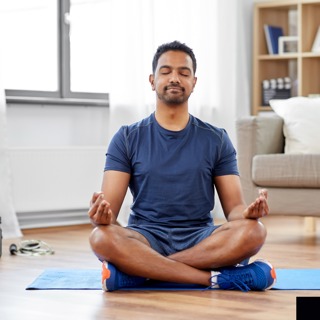
Dr. Feigenbaum and Anne-Sophie begin by clarifying that meditation is not about emptying the mind or achieving spiritual transcendence. It is a simple mental practice used to train attention and awareness by focusing on an anchor (breath, sound, sensation). When the mind inevitably wanders, the practice is to bring focus back to the anchor.

The True Benefits of Training Attention

While many people turn to meditation for sleep issues and stress relief, the strongest evidence points to its benefit as a tool to train focused attention.

  • Focus is a Skill: Anybody can be told to "focus" on their training or work, but meditation provides the concrete skill development needed to counter distraction. Focusing on a mundane anchor like breathing forces the brain (which seeks productive activity) to practice recentering.
  • Positive Externalities: Meditation’s primary value may be its "knock-on effects." By helping manage or reduce stress, it creates the self-awareness necessary to participate in other health-promoting behaviors (like eating mindfully, exercising, or making healthier decisions).
  • Sports Application: Athletes, from powerlifters to soccer players, can use this training to focus on the task at hand and minimize distraction from external noise (crowds) or internal noise (self-doubt, fear of failure).


II. Visualization: Mental Rehearsal for Performance

Visualization, or mental imagery, is a form of meditation used to create mental images of desired outcomes or processes. Research suggests this practice can have a direct carry-over to performance by activating overlapping areas in the brain as if the action were happening in real life.


Process, Outcome, and Safety

  • Process Visualization: This is ideal for technical tasks (like a squat or a race car lap). The athlete visualizes the step-by-step execution of the task (e.g., foot placement, bar path, gear changes), creating a "brain memory" that shortens the decision-making process during competition.
  • Outcome Visualization: Visualizing the moment of success (winning the competition, achieving a PR) can flood the brain with motivating chemicals and endorphins, bridging the gap between present reality and future possibility. However, caution is advised: for some, feeling the outcome too intensely can lead to lower motivation because the brain feels satisfied without doing the work.
  • Mind-Muscle Connection: Visualization during a lift may be the mechanism behind the highly sought-after "mind-muscle connection." By actively diverting focused attention toward the specific muscle groups being activated, athletes may recruit a greater amount of muscle tissue, improving activation and potentially long-term gains.


III. Mental Resilience and the Definition of Health

Anne-Sophie defines mental resilience mechanistically: the ability to return to an original form after force or pressure is applied. This aligns closely with the Barbell Medicine definition of health (from Huber, 2011) as the ability to adapt and self-manage in the face of social, physical, and emotional challenges.

Self-Efficacy and Control

Mental resilience is directly linked to self-efficacy (confidence in one's ability to exert control over one's life). Those with high self-efficacy feel in control, have good insight into their circumstances, and feel they have the resources to change the outcome.

The key components of mental resilience include:

  1. Health: Physical health, sleep, and nutrition.
  2. Vision: Having a clear goal and direction for the future.
  3. Tenacity: The ability to keep going after setbacks.
  4. Composure: Self-regulation and staying level-headed under stress.
  5. Collaboration: Social support and community.


The Path to Resilience

To develop mental resilience, Anne-Sophie recommends developing self-awareness and reflection through regular practice:


  • Practice Self-Awareness: Meditation improves the connectivity between the prefrontal cortex (executive function) and the amygdala (emotional center), allowing you to approach problems with a more level head and less emotional reactivity.

  • Start Mono-tasking: Stop multitasking (which is actually just costly task switching) and start mono-tasking. Turn mundane activities (cooking, cleaning) into opportunities for mindfulness—focusing on one task and actively paying attention to the senses involved. This is the best nootropic for memory and cognition.

  • Consistency: Structural changes in the brain (neuroplasticity) and lasting behavioral changes are seen after at least eight weeks of consistent practice (20–40 minutes daily).


Connect With Anne-Sophie Fluri and Barbell Medicine


  • Guest Substack: Read Anne-Sophie’s neuroscience insights and thought pieces at Rewire Me with Anne-Sophie (rewireme.substack.com).

  • Guest Instagram: Follow Anne-Sophie for "not so serious content" and wellness trend critiques: @coochiebygucci (instagram.com/coochiebygucci).

  • Support the Show & Save: Join Barbell Medicine Plus for ad-free listening and discounts on all courses and consultations!


Our Sponsors:
* Check out FIGS and use my code FIGSRX for a great deal: https://wearfigs.com
* Check out Factor: https://factormeals.com/bbm50off
* Check out Quince: https://quince.com/BBM


Support this podcast at — https://redcircle.com/barbell-medicine-podcast/donations

Advertising Inquiries: https://redcircle.com/brands

Privacy & Opt-Out: https://redcircle.com/privacy

Jaksot(418)

Episode #114: Post-Op Knee Rehab

Episode #114: Post-Op Knee Rehab

Pain & Rehab Podcast: Post-Operative Knee Rehabilitation Based on Dr. Derek Miles’ new article, the Pain & Rehab team discusses the ins and outs of post-operative rehabilitation, primarily focusing on...

21 Syys 20201h 13min

Episode #113: Type 2 Diabetes Part II

Episode #113: Type 2 Diabetes Part II

This is Part II of our Type II Diabetes podcast series. Check out part I here: https://soundcloud.com/user-344313169/diabetes-part-1-mixdown-2 References for Exercise and Diabetes https://www.ncbi....

14 Syys 202043min

Episode #112: Diabetes Part I

Episode #112: Diabetes Part I

References: American Academy of Clinical Endocrinologists' Guidelines: https://www.aace.com/pdfs/diabetes/algorithm-exec-summary.pdf https://www.aace.com/pdfs/diabetes/AACE_2019_Diabetes_Algorithm_FIN...

7 Syys 202054min

Episode #111: Live Nutrition and Training Q/A Greatest Hits

Episode #111: Live Nutrition and Training Q/A Greatest Hits

This podcast is a mashup of Dr. Feigenbaum's previous two instragram live Q/A's. Join him every Wednesday at his instagram page, jordan_barbellmedicine, Iat 530pm PST! For more of our stuff: Podcast...

31 Elo 202047min

Episode # 110: Strength Training In Rehab And Musculoskeletal Health

Episode # 110: Strength Training In Rehab And Musculoskeletal Health

In this episode our Pain & Rehab team discusses the role of strength training in rehabilitation and overall musculoskeletal health. Listen as we cover topics on physical activity engagement, clinical ...

24 Elo 20201h 23min

Episode #109: Fiber

Episode #109: Fiber

Drs. Feigenbaum and Baraki talk dietary about all things dietary fiber on this episode of the Barbell Medicine Podcast. References: Appendix 13. Food Sources of Dietary Fiber - 2015-2020 Dietary Gui...

17 Elo 20201h 8min

Episode #108: Abnormal Labs Part II

Episode #108: Abnormal Labs Part II

Part I: https://soundcloud.com/user-344313169/episode-107-abnormal-labs-part-i References: https://academic.oup.com/bmb/article/81-82/1/209/283873 https://www.ncbi.nlm.nih.gov/pmc/articles/PMC487126...

10 Elo 202035min

Episode #107: Abnormal Labs Part I

Episode #107: Abnormal Labs Part I

Links: https://www.ncbi.nlm.nih.gov/pmc/articles/PMC3936967/ https://journals.plos.org/plosone/article?id=10.1371/journal.pone.0004435 https://pubmed.ncbi.nlm.nih.gov/18557801/ https://www.ncbi.nlm.n...

4 Elo 202035min

Suosittua kategoriassa Terveys ja hyvinvointi

unicast
rss-pitaisko-erota
tiedenaiset-podcast
psykopodiaa-podcast
vakeva-elama-viisaampi-mieli-vahvempi-keho
voi-hyvin-meditaatiot-2
meditaatiot-suomeksi
rss-pt-paahtio
terapiassa
rss-narsisti
paritellen
rss-hanna-tikander
junnut-pelissa
rss-kuumilla-aalloilla
rss-duodecim-lehti
fitnessvastaanotto
rss-uplevel-by-sonja-hannus
rss-mighty-finland-podcast
rss-sanelunpurku-podcast
rss-lihavuudesta-podcast