Microsoft Fabric Changes Everything for BI Pros: Power BI, OneLake, Lakehouse & Real-Time Analytics Explaine

Microsoft Fabric Changes Everything for BI Pros: Power BI, OneLake, Lakehouse & Real-Time Analytics Explaine

If you’ve been comfortable living inside Power BI, Fabric quietly moved the ground under your feet. Power BI alone is no longer the full story—it’s now just one surface on top of OneLake, pipelines, warehouses, KQL and real‑time analytics. In this episode, we start from the “classic” BI workflow (scheduled refresh, static snapshots, report‑only mindset) and show how Fabric turns you from a visual builder at the end of someone else’s pipeline into someone who can shape data, storage and streaming inside the same ecosystem.

We begin with the hidden limits of traditional Power BI: daily refreshes masquerading as “live data,” brittle reports tied to isolated models, and a career path that boxes BI pros into being the last step in the chain. You’ll see how this breaks down once business leaders expect sub‑hourly or real‑time insight, compare you against lakehouse‑centric competitors, and stop accepting “we’ll see it tomorrow morning” as an answer. That pressure is exactly why Microsoft built Fabric—not as a checkbox in Power BI Desktop, but as a unified data platform that pulls lakehouse, warehouse, pipelines, KQL and reporting under one roof.

From there, we reframe Fabric: not “one more tool,” but the table Power BI now sits on. We walk through core concepts—OneLake as a single storage foundation, lakehouses and warehouses living next to your reports, dataflows and pipelines replacing scattered ETL, and real‑time analytics that let you query streams instead of waiting for the next refresh. You’ll hear what this looks like in practice for a BI pro: spinning up a Fabric workspace, exploring OneLake, connecting a report directly to a warehouse, and testing your first streaming query without becoming a full‑time data engineer.

Finally, we talk career strategy. Staying “just” a report builder risks getting sidelined as others take over architecture and pipeline decisions; learning a handful of Fabric skills—storage concepts, basic pipelines, lakehouse vs warehouse trade‑offs—positions you as the person who can explain to leadership how Microsoft’s new analytics stack actually fits together. You’ll leave with a concrete starting path: how to get Fabric access, which features to test first, and how to talk about those experiments with your stakeholders so they see your role evolving with the platform instead of being left behind by it.

WHAT YOU’LL LEARN
  • The hidden limits of classic Power BI (scheduled refresh, snapshots, report‑only mindset).
  • Why Microsoft Fabric is more than “another Power BI feature” and how it reshapes the analytics stack.
  • How OneLake, lakehouses, warehouses, pipelines and real‑time analytics fit together for BI pros.
  • How to provision Fabric access, explore OneLake and run your first streaming or warehouse‑backed queries.
  • How to reposition your Power BI skills so you’re not “just the visuals person” but part of the data platform conversation.
THE CORE INSIGHT

The core insight of this episode is that Fabric turns Power BI from the end of the pipeline into part of a full data platform. If you keep playing only the old report‑builder role, your skills will feel incomplete; if you learn how Fabric’s storage, pipelines and real‑time pieces work, you become the person who connects executive expectations to what the new Microsoft analytics stack can actually deliver.

WHO THIS EPISODE IS FOR
  • Power BI developers and BI pros wondering if their current skill set is still enough.
  • Analytics leaders evaluating Fabric and OneLake as the next step for their Microsoft data stack.
  • Data engineers and architects who need BI colleagues to understand lakehouse, warehouse and pipeline basics.
ABOUT THE AUTHOR / HOST

Mirko Peters is a Microsoft 365, Power BI and Fabric consultant and host of the M365.FM podcast, helping organizations treat Power BI, Fabric and OneLake as one integrated analytics operating system instead of isolated tools. He works with teams running on Microsoft 365 and Azure to modernize their BI platforms—bringing reporting, data engineering and governance together so dashboards aren’t just pretty, but built on a Fabric foundation that can scale and handle real‑time demands.

Become a supporter of this podcast: https://www.spreaker.com/podcast/m365-fm-modern-work-security-and-productivity-with-microsoft-365--6704921/support.

Tämä jakso on lisätty Podme-palveluun avoimen RSS-syötteen kautta eikä se ole Podmen omaa tuotantoa. Siksi jakso saattaa sisältää mainontaa.

Jaksot(769)

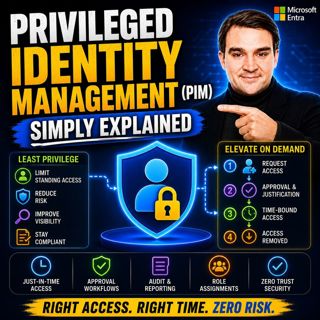
Privileged Identity Management (PIM) - Simply Explained

Privileged Identity Management (PIM) - Simply Explained

Administrator accounts are among the most valuable targets for cybercriminals. If an attacker compromises a Global Administrator or another privileged account, they can potentially reset passwords, ac...

16 Heinä 16min

Building a Secure Microsoft-First MSP: Intune, Defender & Entra ID at Scale with Albin Klinaku [MVP]

Building a Secure Microsoft-First MSP: Intune, Defender & Entra ID at Scale with Albin Klinaku [MVP]

Building a successful Managed Service Provider today requires much more than managing devices and responding to support tickets. Modern MSPs must become trusted security partners, helping organization...

16 Heinä 1h
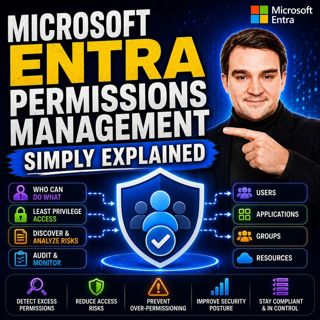
Microsoft Entra Permissions Management - Simply Explained

Microsoft Entra Permissions Management - Simply Explained

Cloud security isn't just about protecting user accounts anymore. Modern organizations manage thousands of identities across Microsoft Azure, Amazon Web Services (AWS), and Google Cloud Platform (GCP)...

16 Heinä 13min
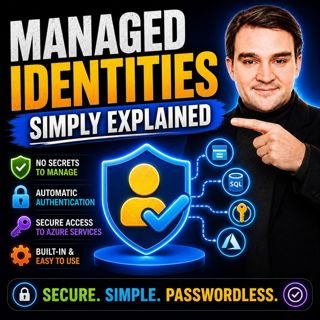
Managed Identities - Simply Explained

Managed Identities - Simply Explained

Managing passwords, connection strings, client secrets, and certificates has always been one of the biggest challenges when building secure cloud applications. Every application that connects to Azure...

16 Heinä 16min
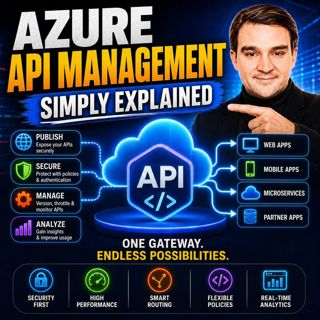
Azure API Management - Simply Explained

Azure API Management - Simply Explained

Azure API Management (APIM) is one of the most important services in Microsoft Azure for organizations building modern cloud applications, microservices, and enterprise integrations. While APIs make i...

16 Heinä 14min
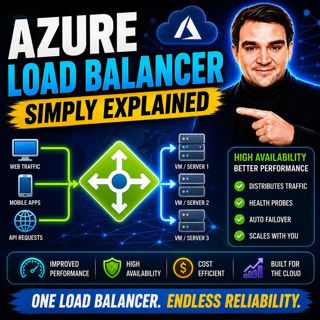
Azure Load Balancer — Simply Explained

Azure Load Balancer — Simply Explained

Every application starts small. A single virtual machine serves your website, processes customer requests, and handles all incoming traffic. At first, everything works perfectly. But as your user base...

16 Heinä 15min
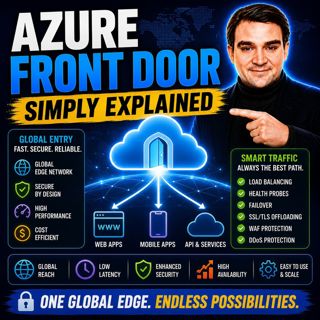
Azure Front Door - Simply Explained

Azure Front Door - Simply Explained

Building a website that performs well for users around the world is far more challenging than simply deploying a web application to Azure. A server hosted in North America may respond quickly for user...

16 Heinä 17min
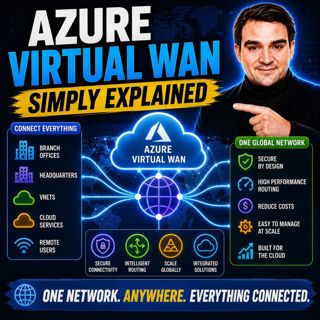
Azure Virtual WAN - Simply Explained

Azure Virtual WAN - Simply Explained

Building a global Azure network manually becomes increasingly difficult as your organization grows. What starts as a simple hub-and-spoke deployment quickly turns into a maze of virtual network peerin...

16 Heinä 14min

Suosittua kategoriassa Politiikka ja uutiset

aikalisa
uutiscast
ootsa-kuullut-tasta-2
rss-ootsa-kuullut-tasta
rss-vaalirankkurit-podcast
rss-podme-livebox
rss-seksicast
otetaan-yhdet
politiikan-puskaradio
tervo-halme
aihe
linda-maria
rss-raha-talous-ja-politiikka
viela-yksi-sivu
the-ulkopolitist
et-sa-noin-voi-sanoo-esittaa
rss-sveriges-radio-finska
rss-fingo-podcast
rss-tekoalyfoorumi
rss-girls-finish-f1rst