
🔓 PLUS PREVIEW: When to Push Through Pain, Pre-Exhaustion Training, and Conquering Cravings

🔓 PLUS PREVIEW: When to Push Through Pain, Pre-Exhaustion Training, and Conquering Cravings

Episode Summary

This is a preview of our subscriber-only Ask Us Anything episode, where Dr. Jordan Feigenbaum and Dr. Austin Baraki tackle the most persistent problems in training and nutrition. Hear the science behind managing pain in the gym—determining the threshold for acceptable discomfort versus a true programming error. They also analyze why short-term study findings often fail in the real world, cover the science of pre-exhaust training, and give practical advice on the psychology of managing dietary cravings when transitioning to a healthier diet.

Takeaways
  • Pain Threshold: Learn the 3/10 rule for pain in training: low-level, self-limiting discomfort is common, but anything more should be addressed.
  • Programming Fix: Recurrent pain (e.g., every 5-6 weeks) is often a programming issue caused by a lack of training tolerance, not a technique fault. The solution is modifying the total load, not just changing your form.
  • Training Philosophy: Stop "pushing" harder every session. The best way to progress is to wait for fitness to show up (the lift feels easier) before increasing the load.
  • Pre-Exhaust Science: Find out why techniques like leg extensions before squats are suboptimal for both strength and hypertrophy because they compromise the necessary total training load.
  • Cravings Are Transient: The intense difficulty experienced when switching from ultra-processed, hyper-palatable foods to home-cooked meals is normal (hedonic adaptation) and transient. Understanding that this discomfort will fade is key to long-term adherence.


⏱️ Preview Timestamps
  • 00:00 Introduction & Plus Subscriber Offer
  • 00:40 How Often Should I Feel Pain in Training? (Pain Threshold & Training Tolerance)
  • 09:31 The Science of Pre-Exhaust Training (Why it compromises total load)
  • 16:54 Managing Dietary Cravings When Switching Habits (Hedonic Adaptation)
  • 27:49 Conclusion: Barbell Medicine Plus Offer


🔓 Unlock the Full Episode & Exclusive Benefits

The topics above are only a fraction of what's covered in the full Ask Us Anything episode, which also includes:

  • How to structure high-intensity conditioning intervals and why heart rate is often a poor metric.
  • The science behind Powerlifting peaking and tapering for non-elite athletes.
  • The latest, large-scale meta-analysis on Vitamin D and respiratory infections and why the real-world benefit is highly modest.
  • A full discussion on the discrepancy between short-term studies and real-world results in diet and exercise.


Subscribe Today to Barbell Medicine Plus

When you join Barbell Medicine Plus, you get the full ad-free episode, access to our bonus content library, and major discounts:

  • 25% off all courses and seminars
  • 15% off consultations
  • 10% off all our programs


Want to support the show and get early, ad-free access to all episodes plus exclusive bonus content? Subscribe to Barbell Medicine Plus and get ad-free listening, product discounts, and more. Try it free for 30-days.

Unsure which training plan is right for you? Take the free Barbell Medicine Template Quiz to be matched with the ideal program for your goals and experience level.

For media, support, or general questions, please contact us at support@barbellmedicine.com

Resources


Pain

It is normal and acceptable for lifters to experience low-level, self-limiting discomfort during training. The threshold for acceptable pain is generally considered to be less than 3/10 on the pain scale, provided the discomfort is not sharp, does not cause fear, and is gone within 24 to 48 hours.


The real warning sign is recurrent pain—when the same tweak flares up every 5 to 6 weeks. This is typically not a technique fault but a programming issue—the lifter is demanding more from their body than their current training tolerance allows. The solution is usually to reduce the overall training load, modify the volume/intensity, and rebuild capacity gradually.

  • www.barbellmedicine.com/blog/training-with-pain-a-practical-approach
  • www.barbellmedicine.com/blog/the-barbell-medicine-guide-to-tendinopathy
  • Shrier, I. (2004). Does stretching help prevent injuries? Clinical Journal of Sports Medicine. DOI: {10.1097/00042752-200405000-00002} (Review discussing prior injury as a key risk factor).
  • Gabbett, T. J. (2016). The training—injury prevention paradox: should athletes be training smarter and harder? British Journal of Sports Medicine. DOI: {10.1136/bjsports-2016-096319} (Discusses role of prior injury and training load).
  • Siewe et al. (2014). Injuries in powerlifting: how common are they and what are their causes? Sports Medicine - Open. DOI: {10.1186/s40798-014-0016-x} (Epidemiology and common injury sites in powerlifting).
  • Calhoon, N. L., & Fry, A. C. (1999). Injury rates and profiles of elite competitive weightlifters. Journal of Strength and Conditioning Research. DOI: {10.1519/00124278-199902000-00010} (Injury rates in weightlifting).
  • Raske, Ă…., & Norlin, R. (2002). Injury incidence and prevalence among elite weight and powerlifters. Scandinavian Journal of Medicine & Science in Sports. DOI: {10.1034/j.1600-0838.2002.01188.x} (Injury sites in powerlifting).
  • Nijs et al. (2014). Treatment of central sensitization in patients with chronic musculoskeletal pain: new insights and practical implications. Physical Therapy. DOI: {10.2522/ptj.20130360} (Discusses non-mechanical factors like stress on pain).


Pre-Exhaustion

The technique of pre-exhastion training (e.g., leg extensions before squats) is generally suboptimal for both strength and hypertrophy.

Compromised Load: Pre-fatiguing the muscle compromises the ability to perform the subsequent compound lift with high intensity and high volume, thereby reducing the total training load. This directly hurts both muscle growth (less mechanical tension) and strength (less high-fidelity force production).

Limited Use Case: This technique is primarily useful in rehab (as a load-limiting or desensitization tool) or for highly specific muscular endurance challenges (e.g., preparing for certain high-rep CrossFit workouts).

  • https://www.barbellmedicine.com/blog/how-to-exercise-when-you-have-no-time/ (training load preservation)
  • Schoenfeld, B. J., et al. (2018). Differential effects of attentional focus strategies during long-term resistance training. European Journal of Sport Science. DOI:10.1080/17461391.2018.1500632 (Discusses mind-muscle connection effectiveness).
  • Schoenfeld, B. J. (2010). The mechanisms of muscle hypertrophy and their application to resistance training. Journal of Strength and Conditioning Research. DOI: 10.1519/JSC.0b013e3181e840f3(Reviews mechanical tension as the primary driver).
  • Fisher, J. P., et al. (2013). The effects of pre-exhaustion, exercise order, and rest intervals in resistance training. Journal of Applied Sports Science Reports. DOI: 10.1016/j.jassr.2013.06.002 (Discusses pre-exhaustion's impact on load).
  • Gentil, P., et al. (2007). Effect of exercise order on upper-body strength and muscle thickness in untrained men. Journal of Strength and Conditioning Research. DOI: 10.1519/R-20415.1 (Found pre-exhaustion did not enhance hypertrophy over traditional training).


Cravings

Switching from ultra-processed, hyper-palatable foods (e.g., pizza, fast food) to a whole-food, home-cooked diet involves temporary challenges due to hedonic adaptation (the brain is adapting away from high food reward).

The difficulty of managing cravings is complex. Switching is often easier when the body is in an energy surplus (biologically supported).

The tension and cravings intensify when the lifter moves into a calorie deficit, activating biological defense mechanisms (hormonal signaling increases hunger). Recognizing that the acute cravings are transient is crucial for maintaining self-efficacy and adherence, as it reinforces the belief that the new, healthier habit will eventually become easier.


Our Sponsors:
* Check out FIGS and use my code FIGSRX for a great deal: https://wearfigs.com
* Check out Factor: https://factormeals.com/bbm50off
* Check out Quince: https://quince.com/BBM


Support this podcast at — https://redcircle.com/barbell-medicine-podcast/donations

Advertising Inquiries: https://redcircle.com/brands

Privacy & Opt-Out: https://redcircle.com/privacy

Jaksot(420)

Episode #381: How a Supplement Sent a Soldier to the Hospital- A Medical Mystery

Episode #381: How a Supplement Sent a Soldier to the Hospital- A Medical Mystery

A 23-year-old soldier presents with hypertensive urgency and acute kidney injury. He thought he was doing everything right for his health—so what caused his system to fail? Dr. Feigenbaum and Dr. Bara...

1 Tammi 57min

Episode #380: The Peptide Market Audit: Injury Healing or Biohacking Hype?

Episode #380: The Peptide Market Audit: Injury Healing or Biohacking Hype?

Biohackers and longevity clinics claim peptides are a side-effect-free sniper rifle for fat loss and injury recovery, but the reality is often buried in failed clinical trials and regulatory bans. Man...

26 Joulu 20251h 21min
Ozempic & Alcohol, The Trap Bar Myth, and A Medical Mystery | Barbell Medicine AMA Teaser

Ozempic & Alcohol, The Trap Bar Myth, and A Medical Mystery | Barbell Medicine AMA Teaser

Experiencing a pins-and-needles sensation on a run or fearing the straight bar deadlift shouldn't be your fitness journey's bingo card. Many trainees abandon effective habits due to false narratives r...

23 Joulu 202530min
START HERE: The Cholesterol Action Plan Series

START HERE: The Cholesterol Action Plan Series

Welcome to the Barbell Medicine Cholesterol Action Plan. Cardiovascular disease is the #1 killer globally. We just released a massive 6-part audio series and written guide to fix that.It covers ApoB v...

20 Joulu 20252min
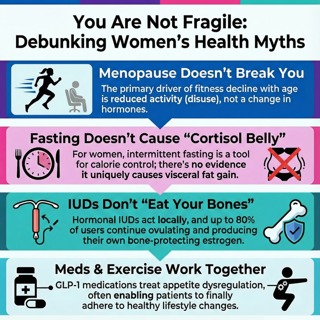
Episode 379: Menopause Myths, Cortisol Belly, & The Truth About IUDs

Episode 379: Menopause Myths, Cortisol Belly, & The Truth About IUDs

The wellness industry wants you to believe that menopause renders you fragile, fasting creates "cortisol belly," and birth control is silently destroying your skeletal health. These claims aren't just...

16 Joulu 20251h 6min
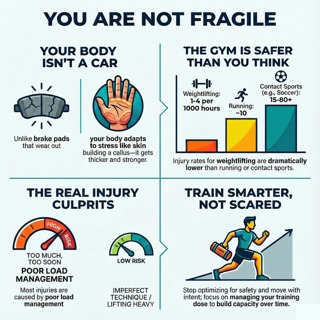
Episode #378: Bulletproof or Broken- Why 'Perfect Form' Is a Lie

Episode #378: Bulletproof or Broken- Why 'Perfect Form' Is a Lie

Bulletproof or Broken- Why 'Perfect Form' Is a Lie Episode SummaryIn this comprehensive episode, we dismantle the pervasive myth that the human body is a fragile machine susceptible to catastrophic in...

8 Joulu 20251h 23min
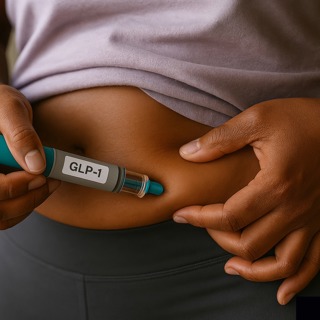
Episode 377: GLP-1 Anti-Obesity Medications Update-Efficacy, Muscle Risk, and Future

Episode 377: GLP-1 Anti-Obesity Medications Update-Efficacy, Muscle Risk, and Future

Episode Summary: The Cardiometabolic Revolution of Semaglutide, Tirzepatide, and BeyondThis episode provides a comprehensive, evidence-based update on GLP-1 receptor agonists (anti-obesity medications...

2 Joulu 20251h 26min
Episode #376: Cycle Syncing, Cardio Myths, and Iron Deficiency: A Barbell Medicine Review of Diary of a CEO's Viral Claims

Episode #376: Cycle Syncing, Cardio Myths, and Iron Deficiency: A Barbell Medicine Review of Diary of a CEO's Viral Claims

Cycle Syncing, Cardio Myths, and Iron Deficiency: A Barbell Medicine Review of Viral ClaimsEpisode Summary: Debunking Women's Health Claims and Setting Optimal TargetsIn this in-depth episode, Dr. Jor...

28 Marras 202558min

Suosittua kategoriassa Terveys ja hyvinvointi

unicast
rss-hanna-tikander
tiedenaiset-podcast
rss-pitaisko-erota
psykopodiaa-podcast
voi-hyvin-meditaatiot-2
puhu-muru
vakeva-elama-viisaampi-mieli-vahvempi-keho
rss-narsisti
meditaatiot-suomeksi
junnut-pelissa
rss-pt-paahtio
rss-kyykkya-ja-kuoharia
rss-en-saa-unta
rss-vapaudu-voimaasi
terapiassa
docemilia
paritellen
rss-kuumilla-aalloilla
katilon-kahvitunti