Finding meaning and purpose after spinal cord injury: Reflecting on 5 years of the Engage Program
Send us Fan Mail Rebuilding a sense of meaning and purpose following trauma is a vital contributor to post-traumatic growth and adapting well to a spinal cord injury (SCI). This webinar shared the co-...
12 Marras 20251h 29min
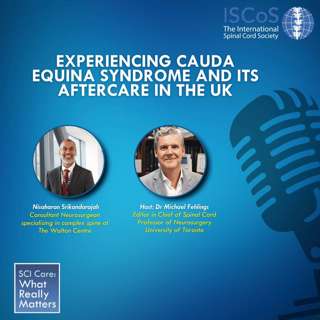
Experiencing cauda equina syndrome and its aftercare in the UK
Send us Fan Mail Points: Cauda equina syndrome (CES) is a common emergency condition that neurosurgeons and spine surgeons deal with.The long term consequences and the impact on the person dealing wit...
27 Loka 202514min
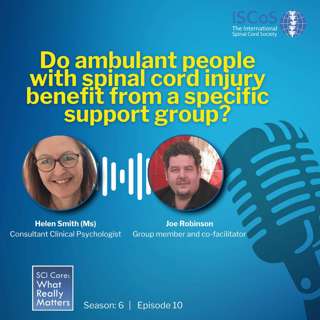
Do ambulant people with spinal cord injury benefit from a specific support group?
Send us Fan Mail Helen Smith (Ms) Consultant Clinical Psychologist Joe Robinson, Group member and co-facilitator, freelance artist and co-author of "The Very Alternative Guide to Spinal Cord Injury" S...
9 Loka 202538min
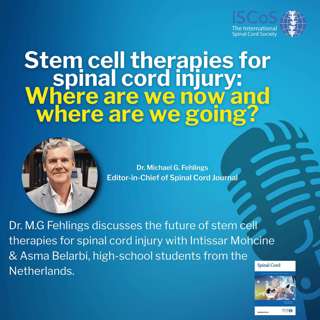
Stem cell therapies for spinal cord injury - Where are we now and where are we going?
Send us Fan Mail Dr. Michael G. Fehlings discusses the future of stem cell therapies for spinal cord injury with Intissar Mohcine & Asma Belarbi, high-school students from the Netherlands. Key poin...
9 Syys 202519min
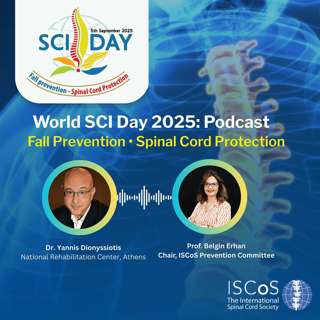
World SCI Day 2025 Podcast
Send us Fan Mail The podcast for World SCI Day 2025, themed “Fall Prevention, Spinal Cord Protection,” focuses on raising awareness about the critical issue of fall-related spinal cord injuries and ho...
4 Syys 202524min
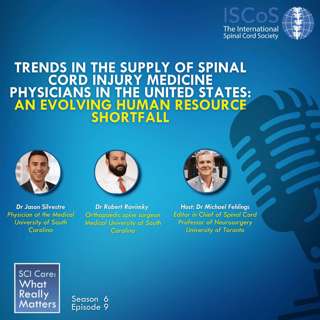
Trends in the Supply of Spinal Cord Injury Medicine Physicians in the United States: An Evolving Human Resource Shortfall
Send us Fan Mail Key points: 1) The incidence and prevalence of spinal cord injury are rising due to an aging population, increased falls with incomplete cervical injuries and the impact of nontraumat...
27 Elo 202518min
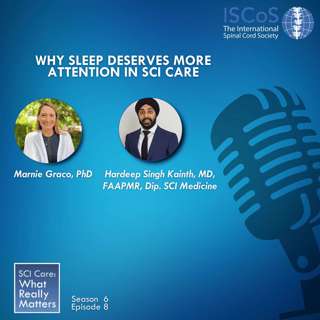
Why sleep deserves more attention in SCI care
Send us Fan Mail The International Spinal Cord Injury Survey (InSCI) found that sleep problems rank among the top six most common and debilitating health issues for people with SCI — and are the secon...
29 Heinä 202542min
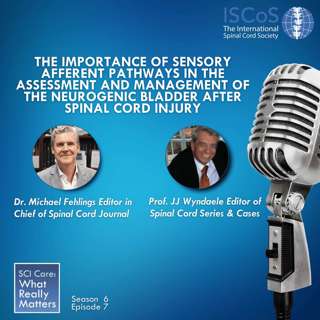
The importance of sensory afferent pathways in the assessment and management of the neurogenic bladder after spinal cord injury: A conversation with Professor JJ Wyndaele
Send us Fan Mail Key points: Key sensory afferent pathways from the urinary bladder to the spinal cord often remain intact in spinal cord injuries above the level of the conus medullaris. b) The urina...
14 Heinä 202512min