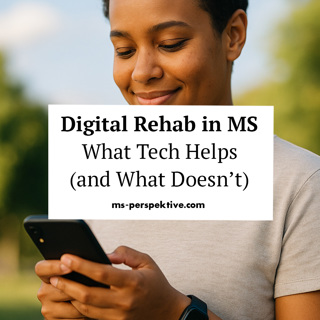

#142: Digital rehab in MS – what new technology can (and can't) do for you. An ECTRIMS 2025 Special

#142: Digital rehab in MS – what new technology can (and can't) do for you. An ECTRIMS 2025 Special

  • Maybe you already use your phone, a wearable, or one of the many MS-related apps to track your symptoms or support your daily routines. But when it comes to rehabilitation, the real question is: which digital tools actually help — and which ones are just noise?

In this ECTRIMS session, researchers from around the world explored how technology can enhance rehabilitation for people with MS. Their message was clear: digital tools can open new doors, but only when they are designed well, grounded in science, and truly support your everyday life.

You can read through the complete article here: https://ms-perspektive.de/EN/142-digital-rehab

In this episode, you'll hear about: 1. Alon Kalron – Israel

How digital technologies—from smartphones to sensor-based rehab tools—can extend what your rehab team can see and support between appointments.

2. Andrea Tacchino – Italy

Why digital outcome measurements matter, how sensors can capture real-life changes, and what it takes to turn raw data into meaningful digital biomarkers.

3. Gabriele Perachiotti – Italy

How high-intensity, task-oriented circuit training can improve balance, fatigue, and quality of life—even in people with severe mobility limitations—and how a simple home-based telerehab setup helps maintain progress.

4. Andrea Baroni – Italy

How machine-learning models can predict rehab outcomes and why your starting functional level is the strongest predictor of future improvement.

5. Diogo Haddad Santos – Brazil

Why "strange" visual symptoms in MS often reflect real, measurable eye-movement changes—and how portable eye-tracking may become a new digital biomarker.

6. Katrin Parmar – Switzerland

Which balance tests reflect high-tech lab measurements, and why static and dynamic balance need to be tested separately.

Topics we explore:
  • The promise and limits of MS apps & wearable sensors

  • Digital biomarkers for gait, balance, fatigue, and vision

  • Task-oriented training and telerehabilitation

  • Predicting rehab outcomes using machine learning

  • Eye-tracking and the hidden world of visual symptoms

  • Static vs. dynamic balance: why both matter

  • How to decide which digital tools are worth your time

What you'll take away:
  • Not every digital tool is useful — evidence and usability matter.

  • Sensors can capture changes that clinic visits miss.

  • Even with higher disability, meaningful rehab gains are possible.

  • Your starting function strongly shapes your rehab journey.

  • Subjective symptoms (like visual strain) deserve objective investigation.

  • The future of MS rehab is a blend of clinic + lab + digital.

---

See you soon and try to make the best out of your life,
Nele

For more information and positive thoughts, subscribe to my newsletter for free.

Click here for an overview of all podcast episodes published so far.

Denne episoden er hentet fra en åpen RSS-feed og er ikke publisert av Podme. Den kan derfor inneholde annonser.

Episoder(180)

#178: Tai Chi and Qigong for MS: Supporting Balance, Movement and Body Awareness – Interview with Mirko Lorenz

#178: Tai Chi and Qigong for MS: Supporting Balance, Movement and Body Awareness – Interview with Mirko Lorenz

Tai Chi and Qigong can be gentle, adaptable ways to support balance, coordination, mobility and body awareness in people with multiple sclerosis. In this episode, I talk with Tai Chi instructor Mirko...

12 Aug 25min

#177: A First Diagnosis of Multiple Sclerosis: Symptoms, Tests, and Next Steps

#177: A First Diagnosis of Multiple Sclerosis: Symptoms, Tests, and Next Steps

What may be the first signs of multiple sclerosis? Which tests are needed to diagnose MS, and what happens after the diagnosis? In this episode, I speak with Dr Datzmann, Senior Consultant at the MS C...

5 Aug 22min
#176: Progressive MS Research: Milestones, Setbacks and Hope with Tim Coetzee

#176: Progressive MS Research: Milestones, Setbacks and Hope with Tim Coetzee

Progressive MS research has made important advances, but many questions about disability progression, biomarkers, treatment, and quality of life remain unanswered. In this episode, I speak with Tim Co...

22 Jul 56min

#175: Multiple Sclerosis and Pain. How Exercise and Physical Activity Can Help

#175: Multiple Sclerosis and Pain. How Exercise and Physical Activity Can Help

Pain is one of the most common and life-impacting symptoms in multiple sclerosis. In this episode, Nele talks with Rasmus Christian Jungersen, PhD student at the Department of Exercise Biology at Aarh...

15 Jul 1h 8min

#174: MS Treatment Access in Australia. Deanna and Rachel on Living with Multiple Sclerosis, Advocacy, and the Future of Ocrevus, Kesimpta & Briumvi

#174: MS Treatment Access in Australia. Deanna and Rachel on Living with Multiple Sclerosis, Advocacy, and the Future of Ocrevus, Kesimpta & Briumvi

Deanna Renee and Rachel Kerr speak about living with multiple sclerosis in Australia, the importance of lived experience in policy, and the current uncertainty around PBS access to Ocrevus and Kesimpt...

8 Jul 41min

#173: Immunoadsorption for MS Relapses. Interview with senior physician Anna-Katharina Eser

#173: Immunoadsorption for MS Relapses. Interview with senior physician Anna-Katharina Eser

In this episode, I speak with Anna-Katharina Eser, senior physician at the MS Centre in Mainkofen, Germany, about immunoadsorption in multiple sclerosis. Immunoadsorption is a specialized blood purifi...

1 Jul 15min

#172: AI for MS. How the CLAIMS Project Could Transform MS Care – with Prof. Friedemann Paul

#172: AI for MS. How the CLAIMS Project Could Transform MS Care – with Prof. Friedemann Paul

In this episode, Prof. Friedemann Paul from Charité – Universitätsmedizin Berlin, Germany, explains how the European CLAIMS project aims to improve multiple sclerosis care through AI-assisted decision...

24 Jun 35min
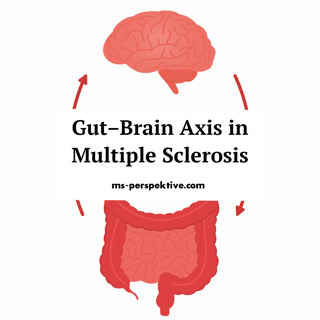
#171: The Gut-Brain Axis in Multiple Sclerosis. Interview with Prof. Dr. Anne-Katrin Pröbstel

#171: The Gut-Brain Axis in Multiple Sclerosis. Interview with Prof. Dr. Anne-Katrin Pröbstel

The gut–brain axis in multiple sclerosis is an exciting field of research that connects the gut microbiome, immune system and central nervous system. In this interview, Prof. Dr. Anne-Katrin Pröbstel ...

17 Jun 19min

Populært innen Fakta

fastlegen
dine-penger-pengeradet
relasjonspodden-med-dora-thorhallsdottir-kjersti-idem
foreldreradet
treningspodden
jakt-og-fiskepodden
rss-kunsten-a-leve
rss-strid-de-norske-borgerkrigene
mikkels-paskenotter
hverdagspsyken
sinnsyn
fryktlos
gravid-uke-for-uke
rss-var-forste-kaffe
rss-sarbar-med-lotte-erik
laringsmiljo-i-skole-og-barnehage-uis-podkast
rss-orjasater
rss-impressions-2
kvallm
lrerrommet