

#232 – Andreas Mogensen on what we owe 'philosophical Vulcans' and unconscious beings

#232 – Andreas Mogensen on what we owe 'philosophical Vulcans' and unconscious beings

Most debates about the moral status of AI systems circle the same question: is there something that it feels like to be them? But what if that’s the wrong question to ask? Andreas Mogensen — a senior researcher in moral philosophy at the University of Oxford — argues that so-called 'phenomenal consciousness' might be neither necessary nor sufficient for a being to deserve moral consideration.

Links to learn more and full transcript: https://80k.info/am25

For instance, a creature on the sea floor that experiences nothing but faint brightness from the sun might have no moral claim on us, despite being conscious.

Meanwhile, any being with real desires that can be fulfilled or not fulfilled can arguably be benefited or harmed. Such beings arguably have a capacity for welfare, which means they might matter morally. And, Andreas argues, desire may not require subjective experience.

Desire may need to be backed by positive or negative emotions — but as Andreas explains, there are some reasons to think a being could also have emotions without being conscious.

There’s another underexplored route to moral patienthood: autonomy. If a being can rationally reflect on its goals and direct its own existence, we might have a moral duty to avoid interfering with its choices — even if it has no capacity for welfare.

However, Andreas suspects genuine autonomy might require consciousness after all. To be a rational agent, your beliefs probably need to be justified by something, and conscious experience might be what does the justifying. But even this isn’t clear.

The upshot? There’s a chance we could just be really mistaken about what it would take for an AI to matter morally. And with AI systems potentially proliferating at massive scale, getting this wrong could be among the largest moral errors in history.

In today’s interview, Andreas and host Zershaaneh Qureshi confront all these confusing ideas, challenging their intuitions about consciousness, welfare, and morality along the way. They also grapple with a few seemingly attractive arguments which share a very unsettling conclusion: that human extinction (or even the extinction of all sentient life) could actually be a morally desirable thing.

This episode was recorded on December 3, 2025.

Chapters:

  • Cold open (00:00:00)
  • Introducing Zershaaneh (00:00:55)
  • The puzzle of moral patienthood (00:03:20)
  • Is subjective experience necessary? (00:05:52)
  • What is it to desire? (00:10:42)
  • Desiring without experiencing (00:17:56)
  • What would make AIs moral patients? (00:28:17)
  • Another route entirely: deserving autonomy (00:45:12)
  • Maybe there's no objective truth about any of this (01:12:06)
  • Practical implications (01:29:21)
  • Why not just let superintelligence figure this out for us? (01:38:07)
  • How could human extinction be a good thing? (01:47:30)
  • Lexical threshold negative utilitarianism (02:12:30)
  • So... should we still try to prevent extinction? (02:25:22)
  • What are the most important questions for people to address here? (02:32:16)
  • Is God GDPR compliant? (02:35:32)

Video and audio editing: Dominic Armstrong, Milo McGuire, Luke Monsour, and Simon Monsour
Coordination, transcripts, and web: Katy Moore

Denne episoden er hentet fra en åpen RSS-feed og er ikke publisert av Podme. Den kan derfor inneholde annonser.

Episoder(334)

#99 – Leah Garcés on turning adversaries into allies to change the chicken industry

#99 – Leah Garcés on turning adversaries into allies to change the chicken industry

For a chance to prevent enormous amounts of suffering, would you be brave enough to drive five hours to a remote location to meet a man who seems likely to be your enemy, knowing that it might be an a...

13 Mai 20212h 26min

#98 – Christian Tarsney on future bias and a possible solution to moral fanaticism

#98 – Christian Tarsney on future bias and a possible solution to moral fanaticism

Imagine that you’re in the hospital for surgery. This kind of procedure is always safe, and always successful — but it can take anywhere from one to ten hours. You can’t be knocked out for the operati...

5 Mai 20212h 38min

#97 – Mike Berkowitz on keeping the US a liberal democratic country

#97 – Mike Berkowitz on keeping the US a liberal democratic country

Donald Trump’s attempt to overturn the results of the 2020 election split the Republican party. There were those who went along with it — 147 members of Congress raised objections to the official cert...

20 Apr 20212h 36min
The ten episodes of this show you should listen to first

The ten episodes of this show you should listen to first

Today we're launching a new podcast feed that might be useful to you and people you know. It's called 'Effective Altruism: An Introduction', and it's a carefully chosen selection of ten episodes of ...

15 Apr 20213min

#96 – Nina Schick on disinformation and the rise of synthetic media

#96 – Nina Schick on disinformation and the rise of synthetic media

You might have heard fears like this in the last few years: What if Donald Trump was woken up in the middle of the night and shown a fake video — indistinguishable from a real one — in which Kim Jong ...

6 Apr 20212h

#95 – Kelly Wanser on whether to deliberately intervene in the climate

#95 – Kelly Wanser on whether to deliberately intervene in the climate

How long do you think it’ll be before we’re able to bend the weather to our will? A massive rainmaking program in China, efforts to seed new oases in the Arabian peninsula, or chemically induce snow f...

26 Mar 20211h 24min
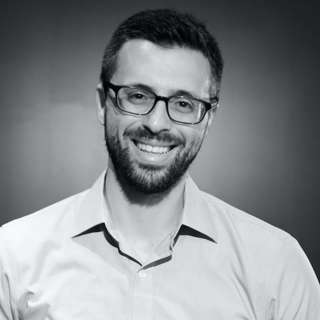
#94 – Ezra Klein on aligning journalism, politics, and what matters most

#94 – Ezra Klein on aligning journalism, politics, and what matters most

How many words in U.S. newspapers have been spilled on tax policy in the past five years? And how many words on CRISPR? Or meat alternatives? Or how AI may soon automate the majority of jobs? When p...

20 Mar 20211h 45min
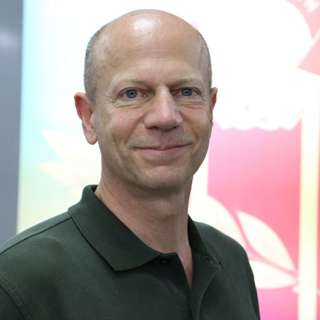
#93 – Andy Weber on rendering bioweapons obsolete & ending the new nuclear arms race

#93 – Andy Weber on rendering bioweapons obsolete & ending the new nuclear arms race

COVID-19 has provided a vivid reminder of the power of biological threats. But the threat doesn't come from natural sources alone. Weaponized contagious diseases — which were abandoned by the United S...

12 Mar 20211h 54min

Populært innen Fakta

fastlegen
dine-penger-pengeradet
relasjonspodden-med-dora-thorhallsdottir-kjersti-idem
rss-strid-de-norske-borgerkrigene
treningspodden
foreldreradet
rss-bisarr-historie
mikkels-paskenotter
jakt-og-fiskepodden
sinnsyn
rss-sarbar-med-lotte-erik
hverdagspsyken
hagespiren-podcast
rss-sunn-okonomi
rss-bak-luftfarten
gravid-uke-for-uke
rss-kunsten-a-leve
fryktlos
level-up-med-anniken-binz
rss-kull