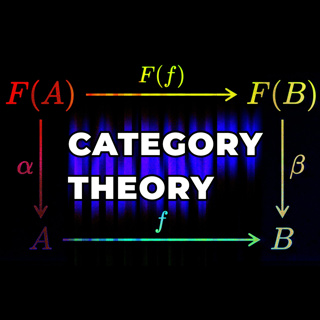

Making deep learning perform real algorithms with Category Theory (Andrew Dudzik, Petar Velichkovich, Taco Cohen, Bruno Gavranović, Paul Lessard)

Making deep learning perform real algorithms with Category Theory (Andrew Dudzik, Petar Velichkovich, Taco Cohen, Bruno Gavranović, Paul Lessard)

We often think of Large Language Models (LLMs) as all-knowing, but as the team reveals, they still struggle with the logic of a second-grader. Why can’t ChatGPT reliably add large numbers? Why does it "hallucinate" the laws of physics? The answer lies in the architecture. This episode explores how *Category Theory* —an ultra-abstract branch of mathematics—could provide the "Periodic Table" for neural networks, turning the "alchemy" of modern AI into a rigorous science.


In this deep-dive exploration, *Andrew Dudzik*, *Petar Velichkovich*, *Taco Cohen*, *Bruno Gavranović*, and *Paul Lessard* join host *Tim Scarfe* to discuss the fundamental limitations of today’s AI and the radical mathematical framework that might fix them.


TRANSCRIPT:

https://app.rescript.info/public/share/LMreunA-BUpgP-2AkuEvxA7BAFuA-VJNAp2Ut4MkMWk


---


Key Insights in This Episode:


* *The "Addition" Problem:* *Andrew Dudzik* explains why LLMs don't actually "know" math—they just recognize patterns. When you change a single digit in a long string of numbers, the pattern breaks because the model lacks the internal "machinery" to perform a simple carry operation.

* *Beyond Alchemy:* deep learning is currently in its "alchemy" phase—we have powerful results, but we lack a unifying theory. Category Theory is proposed as the framework to move AI from trial-and-error to principled engineering. [00:13:49]

* *Algebra with Colors:* To make Category Theory accessible, the guests use brilliant analogies—like thinking of matrices as *magnets with colors* that only snap together when the types match. This "partial compositionality" is the secret to building more complex internal reasoning. [00:09:17]

* *Synthetic vs. Analytic Math:* *Paul Lessard* breaks down the philosophical shift needed in AI research: moving from "Analytic" math (what things are made of) to "Synthetic" math [00:23:41]


---


Why This Matters for AGI

If we want AI to solve the world's hardest scientific problems, it can't just be a "stochastic parrot." It needs to internalize the rules of logic and computation. By imbuing neural networks with categorical priors, researchers are attempting to build a future where AI doesn't just predict the next word—it understands the underlying structure of the universe.


---

TIMESTAMPS:

00:00:00 The Failure of LLM Addition & Physics

00:01:26 Tool Use vs Intrinsic Model Quality

00:03:07 Efficiency Gains via Internalization

00:04:28 Geometric Deep Learning & Equivariance

00:07:05 Limitations of Group Theory

00:09:17 Category Theory: Algebra with Colors

00:11:25 The Systematic Guide of Lego-like Math

00:13:49 The Alchemy Analogy & Unifying Theory

00:15:33 Information Destruction & Reasoning

00:18:00 Pathfinding & Monoids in Computation

00:20:15 System 2 Reasoning & Error Awareness

00:23:31 Analytic vs Synthetic Mathematics

00:25:52 Morphisms & Weight Tying Basics

00:26:48 2-Categories & Weight Sharing Theory

00:28:55 Higher Categories & Emergence

00:31:41 Compositionality & Recursive Folds

00:34:05 Syntax vs Semantics in Network Design

00:36:14 Homomorphisms & Multi-Sorted Syntax

00:39:30 The Carrying Problem & Hopf Fibrations


Petar Veličković (GDM)

https://petar-v.com/

Paul Lessard

https://www.linkedin.com/in/paul-roy-lessard/

Bruno Gavranović

https://www.brunogavranovic.com/

Andrew Dudzik (GDM)

https://www.linkedin.com/in/andrew-dudzik-222789142/


---

REFERENCES:


Model:

[00:01:05] Veo

https://deepmind.google/models/veo/

[00:01:10] Genie

https://deepmind.google/blog/genie-3-a-new-frontier-for-world-models/

Paper:

[00:04:30] Geometric Deep Learning Blueprint

https://arxiv.org/abs/2104.13478

https://www.youtube.com/watch?v=bIZB1hIJ4u8

[00:16:45] AlphaGeometry

https://arxiv.org/abs/2401.08312

[00:16:55] AlphaCode

https://arxiv.org/abs/2203.07814

[00:17:05] FunSearch

https://www.nature.com/articles/s41586-023-06924-6

[00:37:00] Attention Is All You Need

https://arxiv.org/abs/1706.03762

[00:43:00] Categorical Deep Learning

https://arxiv.org/abs/2402.15332

Denne episoden er hentet fra en åpen RSS-feed og er ikke publisert av Podme. Den kan derfor inneholde annonser.

Episoder(271)

What Most People Get Wrong About Evolution | Akarsh Kumar

What Most People Get Wrong About Evolution | Akarsh Kumar

A lot of people in AI treat evolution as a dumb fallback, basically random search for when you can't take a gradient. Akarsh Kumar thinks that is wrong. Selection hangs on to partial solutions, so mut...

10 Okt 47min

How a Voice Agent Learns the Rhythm of Conversation — Shawn Wen

How a Voice Agent Learns the Rhythm of Conversation — Shawn Wen

Tsung-Hsien (Shawn) Wen, CTO of PolyAI, tells Tim Scarfe why voice agents are harder than text agents. Voice adds time, and a good conversation depends on adapting to the person on the line, not just ...

1 Okt 1h 10min

Who Checks a Proof No Human Can Read? — Leo de Moura

Who Checks a Proof No Human Can Read? — Leo de Moura

Leonardo de Moura created Lean and co-created Z3. ---This episode is sponsored by Parallel.Parallel, where agents find answers: web search, extraction and deep research APIs built for AI agents.Start ...

30 Sep 1h 14min

When AI Research Starts Moving Faster Than Human Research - Zhengyao Jiang

When AI Research Starts Moving Faster Than Human Research - Zhengyao Jiang

Weco let an AI coding agent rewrite the harness around another agent for eight days: its code, prompts and tools, while the underlying language model stayed fixed. Tim Scarfe asks Weco co-founder Zhen...

26 Sep 43min

How Deep Learning Finally Cracked Messy Tables - Frank Hutter

How Deep Learning Finally Cracked Messy Tables - Frank Hutter

Frank Hutter, co-founder of Prior Labs, talks about TabPFN, a tabular foundation model that makes predictions in a single forward pass, and the research behind it.TabPFN is pre-trained on synthetic da...

23 Sep 1h 53min

Why Scaling Prediction Cannot Create Intelligence - Alexander Mattick

Why Scaling Prediction Cannot Create Intelligence - Alexander Mattick

Alexander Mattick is a researcher at Fraunhofer IIS and a PhD researcher at the University of Technology Nuremberg (UTN), and a regular on Yannic Kilcher's Discord. He first came on MLST in 2022, afte...

21 Sep 2h 14min

How Physical AI Learns Across Language, Video and Action — Ming-Yu Liu

How Physical AI Learns Across Language, Video and Action — Ming-Yu Liu

The car making a left turn at the start of this episode was never filmed. Cosmos 3 generated it. Ming-Yu Liu, who leads the Cosmos research at NVIDIA, explains how one model can describe a video, gene...

15 Sep 25min

Speech Recognition Is Not a Solved Problem — Pavan Kumar Reddy

Speech Recognition Is Not a Solved Problem — Pavan Kumar Reddy

Pavan Kumar Reddy leads audio research at Mistral AI. He joins Tim Scarfe for a deep technical tour of Voxtral — and explains why the frontier of deployed voice is still a cascade of specialised model...

14 Sep 1h 42min

Populært innen Teknologi

teknisk-sett
energi-og-klima
lydartikler-fra-aftenposten
nasjonal-sikkerhetsmyndighet-nsm
elektropodden
tomprat-med-gunnar-tjomlid
rss-ai-forklart
rss-kunstig-intelligens-med-elisabeth-maren-og-morten
shifter
smart-forklart
fornybaren
pedagogisk-intelligens
rss-alt-som-gar-pa-strom
rss-bak-skyen
rss-alt-vi-kan
teknologimagasinet-aftenposten
rss-hvorfor-ble-det-sann
rss-romnasjonen
kortslutning
rss-ki-praten