Nakba #40 - Mahmud al-Hissi

Nakba #40 - Mahmud al-Hissi

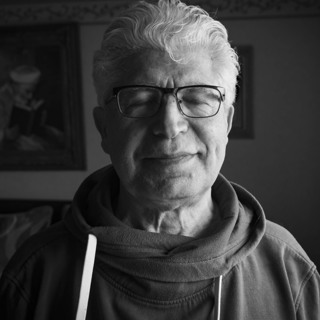
“We lived in a house in al-Hilwa in Jaffa, next to the Jabaliya Mosque. Jaffa was largely Arab, but we also had some neighbors who were Palestinian Jews. My parents have told me that people celebrated together and even married each other. My father was a fisherman and had his own boat. We also had a citrus grove in al-Nabi Rubin, a village located eleven or twelve kilometers south of Jaffa. Our land was about 4,000 square meters and included a farmhouse. The orchards lay next to the river, so irrigation was never a problem. Once a year, during the harvest season, pilgrims came to al-Nabi Rubin, to the tomb of the Prophet Rubin. Over time this developed into large popular festivals with up to 50,000 visitors. The Rubin Carnival lasted for three months, during which people celebrated honeymoons, got married, or circumcised boys. People came here to vacation. At the same time, commerce developed and people began trading livestock, carpets, clothes, furniture, and handicrafts. After the Second World War, European Jews arrived in Jaffa. They wanted to take over. My father Muhammad and my uncle Faris helped organize the armed resistance, which guarded our neighborhoods at night. My younger brother Sobhi and I often brought food to my father and uncle at their defense posts. They were stationed at the front. Their post blocked the entire street with light-brown sandbags. Once, when my brother and I had gone to the market, a man came running. In his hand he was holding a human head by the hair. I grabbed my brother’s hand and ran back home to our mother. When we decided to leave Jaffa, my father and uncle dug a very large hole outside the house in the courtyard. They placed all our valuables there—gold, money, jewelry, and furniture. They expected that we would soon return. We went down to the beach. There were boats there, and we boarded one of them. There were so many of us that the water almost reached over the gunwale. I was afraid the boat would sink. My father and uncle were not with us; they stayed behind at the front. We sailed south to Hiribya, where we had relatives. We stayed there for a few weeks. But the war followed us, and we were driven away from there as well. We fled south on foot to Jabalia, a desert area in the northern Gaza Strip. We had relatives there too. They gave us tents so that we could live on their land. My brother and I played outside all day long. Men were constantly arriving. When Jaffa fell, many resistance fighters were killed. My father survived and came to us, but he was never the same person again. He was a broken man. We lived in extreme poverty. For four years we lived in tents until UNRWA provided us with a house in al-Shati, north of Gaza City. That was in 1952. In 1956, during the Suez Crisis, the Israelis took control of the Gaza Strip from Egypt. They imposed a total curfew on the camp for about a week. We heard gunfire. At one point some Egyptian soldiers fleeing passed by. They wanted our civilian clothes. My father took their uniforms and weapons and buried them behind our house. When the curfew was lifted and I opened the door, a dead man was lying outside. I was shocked and screamed that there was a dead person outside our door. Some people helped remove the body. Right next to our house there was a forest, which we passed through on our way to school. One day I discovered a blanket lying under a tree. A friend and I ran over and lifted it. Underneath lay two dead Egyptian soldiers. My father was taken in for interrogation by the Israeli military. They wanted to question him about his activities in Jaffa ten years earlier. He was gone for fourteen days and returned even more shattered. We heard that the Israelis had carried out a massacre in Khan Yunis, in the south. One of my aunts lived there, and we were worried about her and her family. My brother and I took a taxi there. Our aunt’s family had survived, but she told us that 200 people had been killed by the Israelis.”

Denne episoden er hentet fra en åpen RSS-feed og er ikke publisert av Podme. Den kan derfor inneholde annonser.

Episoder(332)

Det judiska Kristianstad #48 - Semmy Rülf

Det judiska Kristianstad #48 - Semmy Rülf

- Pappa var gabai i synagogan i Kristianstad. Ofta saknade de en man, så pappa gick in på Grand Hotell och ringde mamma och så jag fick cykla i väg till synagogan klockan åtta på lördagsmorgonen, gömm...

17 Jul 1h 43min
Det judiska Högalid #47 - Isse Albert

Det judiska Högalid #47 - Isse Albert

På 1950-talet var det många som talade jiddisch på Lindvallsplan 4. En av de var min morbror Isse. Han föddes i polska Rajgrod 1926. Han fick namnet Jisrael Mordechai Albert. På 1930-talet utvandrade ...

10 Jul 12min
Andra generationen #91 - Lennart Weiss

Andra generationen #91 - Lennart Weiss

- De som har levt i det förgångna lever vidare i mig, säger Lennart Weiss.

3 Jul 1h 42min
Nakba #63 - Lars Wåhlin

Nakba #63 - Lars Wåhlin

- Vi var främmande kroppar i det här samhället, säger Lars Wåhlin, svensk FN-soldat stationerad i Gaza-remsan, 1960. Intervjuare: Lotta Schüllerqvist och Bernt Hermele Bakgrund: 1956 skapade FN, för ...

24 Jun 1h 24min
Det judiska Högalid  #46 - Fred Kudrén

Det judiska Högalid #46 - Fred Kudrén

Är det bara ett halvår sen Mikael dog? - Ja. Hur känns det idag? - Det är svårt, till exempel när man letar i bilder. Men det är också konstigt, för jag har inte spelat in någonting med hans röst, säg...

12 Jun 2h 1min
Nakba #62 - Amina Ali Hammoud

Nakba #62 - Amina Ali Hammoud

”I was 14 when the jews attacked our village. My parents prohibited me to go outside, but I ran outside anyway to look at the soldiers. Then I ran back to my mother och explained the Israelis looked j...

8 Jun 27min
Det judiska Högalid #45 - Josephine Schneider

Det judiska Högalid #45 - Josephine Schneider

Josephine Schneider om varför det tog så lång tid att göra radiodokumentären ”Judehuset som försvann”: - Jag tyckte det var skitjobbigt att göra en judisk grej, att komma ut som jude i en slags offent...

5 Jun 17min
Det judiska Högalid #44 - Tom Granditsky

Det judiska Högalid #44 - Tom Granditsky

- Man ska väl inte prata skit om sin mamma, men när jag var liten och skrek kunde hon säga till pappa: “Ta hand om honom nu, det är du som ville ha honom”, säger Tom Granditsky. - Det är väl inte så r...

29 Mai 1h 49min

Populært innen Fakta

fastlegen
dine-penger-pengeradet
relasjonspodden-med-dora-thorhallsdottir-kjersti-idem
foreldreradet
treningspodden
mikkels-paskenotter
rss-kunsten-a-leve
rss-strid-de-norske-borgerkrigene
sinnsyn
hverdagspsyken
rss-sarbar-med-lotte-erik
gravid-uke-for-uke
tomprat-med-gunnar-tjomlid
dopet
fryktlos
rss-kunstig-intelligens-med-elisabeth-maren-og-morten
rss-var-forste-kaffe
tid-for-historie
hva-er-greia-med
jakt-og-fiskepodden