
#148: Recognizing silent progression in MS with Prof. Dr. Heinz Wiendl

#148: Recognizing silent progression in MS with Prof. Dr. Heinz Wiendl

In this episode, Prof. Dr. Heinz Wiendl discusses why disease progression can occur even when relapses are well controlled and MRI scans appear stable. The conversation focuses on how subtle changes can develop over time, how they can be recognized earlier, and what this means for people living with MS.

This episode was supported by Sanofi S.A. and is an English translation of the original German interview.

You can find the full blog article with all questions, answers, and additional context here:
👉 https://ms-perspektive.de/en/148-heinz-wiendl/

Topics discussed in this episode
  • why disease progression can occur even when relapses are well controlled

  • how often this affects people and why most patients remain stable

  • what progression independent of relapse activity (PIRA) means in everyday practice

  • the importance of invisible symptoms such as fatigue, cognitive changes, bladder dysfunction, and spasticity

  • why commonly used scales often fail to capture subtle but relevant changes

  • what MRI can reveal, where its limits lie, and why it should not be interpreted in isolation

  • why long-term observation over months matters more than day-to-day fluctuations

  • how patients can actively contribute by observing and documenting changes

  • what current research tells us about silent inflammatory processes and endophenotypes

  • why reliable biomarkers are still missing and what research is focusing on

  • the therapeutic idea behind BTK inhibitors and which patient groups may benefit

  • a realistic and hopeful outlook on future developments in MS care

Is there anything you would like to share with our listeners as a final message?

Prof. Dr. Heinz Wiendl:
I believe my most important message is this: we can be hopeful.
The developments of recent years show that we are far from reaching the end of the road. On the contrary, we have learned that progress continues — new therapies are being developed, and our understanding of the disease is steadily improving.

At the same time, there are still cases that are frustrating, because patients are not treated early or effectively enough, or because the disease course is particularly challenging.
That is precisely why we must continue to do research, continue to improve, and continue to refine our approaches.

My hope is that in five years' time, we will be able to say: now everyone truly benefits from these advances.

And I hope this sends a positive signal — one of courage and optimism for the future.

---

I would like to thank Prof. Heinz Wiendl for this insightful interview and for his encouraging outlook on current developments and future perspectives.

See you soon and try to make the best out of your life,
Nele

For more information and positive thoughts, subscribe to my newsletter for free.

Click here for an overview of all podcast episodes published so far.

Denne episoden er hentet fra en åpen RSS-feed og er ikke publisert av Podme. Den kan derfor inneholde annonser.

Episoder(180)

#178: Tai Chi and Qigong for MS: Supporting Balance, Movement and Body Awareness – Interview with Mirko Lorenz

#178: Tai Chi and Qigong for MS: Supporting Balance, Movement and Body Awareness – Interview with Mirko Lorenz

Tai Chi and Qigong can be gentle, adaptable ways to support balance, coordination, mobility and body awareness in people with multiple sclerosis. In this episode, I talk with Tai Chi instructor Mirko...

12 Aug 25min

#177: A First Diagnosis of Multiple Sclerosis: Symptoms, Tests, and Next Steps

#177: A First Diagnosis of Multiple Sclerosis: Symptoms, Tests, and Next Steps

What may be the first signs of multiple sclerosis? Which tests are needed to diagnose MS, and what happens after the diagnosis? In this episode, I speak with Dr Datzmann, Senior Consultant at the MS C...

5 Aug 22min
#176: Progressive MS Research: Milestones, Setbacks and Hope with Tim Coetzee

#176: Progressive MS Research: Milestones, Setbacks and Hope with Tim Coetzee

Progressive MS research has made important advances, but many questions about disability progression, biomarkers, treatment, and quality of life remain unanswered. In this episode, I speak with Tim Co...

22 Jul 56min

#175: Multiple Sclerosis and Pain. How Exercise and Physical Activity Can Help

#175: Multiple Sclerosis and Pain. How Exercise and Physical Activity Can Help

Pain is one of the most common and life-impacting symptoms in multiple sclerosis. In this episode, Nele talks with Rasmus Christian Jungersen, PhD student at the Department of Exercise Biology at Aarh...

15 Jul 1h 8min

#174: MS Treatment Access in Australia. Deanna and Rachel on Living with Multiple Sclerosis, Advocacy, and the Future of Ocrevus, Kesimpta & Briumvi

#174: MS Treatment Access in Australia. Deanna and Rachel on Living with Multiple Sclerosis, Advocacy, and the Future of Ocrevus, Kesimpta & Briumvi

Deanna Renee and Rachel Kerr speak about living with multiple sclerosis in Australia, the importance of lived experience in policy, and the current uncertainty around PBS access to Ocrevus and Kesimpt...

8 Jul 41min

#173: Immunoadsorption for MS Relapses. Interview with senior physician Anna-Katharina Eser

#173: Immunoadsorption for MS Relapses. Interview with senior physician Anna-Katharina Eser

In this episode, I speak with Anna-Katharina Eser, senior physician at the MS Centre in Mainkofen, Germany, about immunoadsorption in multiple sclerosis. Immunoadsorption is a specialized blood purifi...

1 Jul 15min

#172: AI for MS. How the CLAIMS Project Could Transform MS Care – with Prof. Friedemann Paul

#172: AI for MS. How the CLAIMS Project Could Transform MS Care – with Prof. Friedemann Paul

In this episode, Prof. Friedemann Paul from Charité – Universitätsmedizin Berlin, Germany, explains how the European CLAIMS project aims to improve multiple sclerosis care through AI-assisted decision...

24 Jun 35min
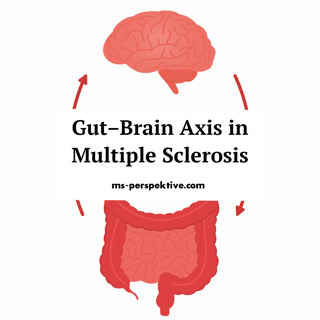
#171: The Gut-Brain Axis in Multiple Sclerosis. Interview with Prof. Dr. Anne-Katrin Pröbstel

#171: The Gut-Brain Axis in Multiple Sclerosis. Interview with Prof. Dr. Anne-Katrin Pröbstel

The gut–brain axis in multiple sclerosis is an exciting field of research that connects the gut microbiome, immune system and central nervous system. In this interview, Prof. Dr. Anne-Katrin Pröbstel ...

17 Jun 19min

Populært innen Fakta

fastlegen
dine-penger-pengeradet
relasjonspodden-med-dora-thorhallsdottir-kjersti-idem
foreldreradet
treningspodden
jakt-og-fiskepodden
rss-kunsten-a-leve
mikkels-paskenotter
rss-strid-de-norske-borgerkrigene
hverdagspsyken
sinnsyn
fryktlos
gravid-uke-for-uke
rss-sarbar-med-lotte-erik
rss-var-forste-kaffe
kvallm
tomprat-med-gunnar-tjomlid
rss-impressions-2
rss-bak-luftfarten
laringsmiljo-i-skole-og-barnehage-uis-podkast