PFC Podcast: Hypothermia Management

PFC Podcast: Hypothermia Management

In this essential episode of the Prolonged Field Care (PFC) Podcast, host Dennis sits down with CRNA Kevin to dive deep into one of the most overlooked yet critical issues in trauma care: Hypothermia prevention and management. Even in warm environments, trauma patients can rapidly become hypothermic—leading to coagulopathy, increased bleeding, wound infections, and worse outcomes. Dennis and Kevin break down the science, real-world lessons from deployments, and practical strategies for austere and prolonged field care settings.

Whether you're a medic, provider, or anyone involved in combat casualty care, this episode will change how you approach keeping patients warm under fire or in remote locations.

Episode Highlights:

  • The four main mechanisms of heat loss: radiation (40-60% of total loss), convection, conduction, and evaporation—and how to counter each one effectively.
  • Why even healthy patients cool rapidly under anesthesia, and why trauma patients in the field are at much higher risk.
  • Practical tips for austere environments: using tents, inflatable structures, insulation from the ground, wool blankets, and body heat to raise ambient temperature.
  • Common mistakes that actively cool patients: wet clothing, cold airways (LMAs/ventilation), uncovered exposure, and cold blood/fluid administration.
  • Best bang-for-buck interventions: covering the head, minimizing exposure, drying the patient, using HME filters, and insulating from the ground.
  • Real deployed experiences: keeping trauma bays warm, pre-warming gear, using camping pads on litters, and limitations of Ready-Heat and HPMKs at altitude or in extreme cold.
  • Advanced rewarming techniques (when available): fluid warming, bladder lavage, peritoneal lavage, and ECMO.
  • Temperature monitoring challenges in the field: esophageal, nasopharyngeal, rectal, Foley, and forehead strips—plus how to interpret trends.

Chapters:

  • 00:00 – Introduction & Why Hypothermia Matters in Trauma Care
  • 02:30 – Heat Loss in Anesthesia: Vasodilation and the First-Hour Temperature Drop
  • 04:50 – Mechanisms of Heat Loss: Radiation, Convection, Conduction, Evaporation
  • 07:10 – OR Strategies: Room Temperature, Head Covering, Fluid Warming, Bear Huggers
  • 09:29 – Environmental Control in the Field: Raising Ambient Temperature & Reducing Wind
  • 11:52 – Using Tents and Structures to Trap Body Heat
  • 14:14 – Insulation from the Ground: Litters, Wool Blankets, Camping Pads, Air Mattresses
  • 17:53 – Preventing Conduction & Pressure Sores with Padding
  • 19:56 – Avoid Actively Cooling Patients: Cold LMAs, Unheated Ventilation, Wet Clothing
  • 22:21 – Heat Moisture Exchangers (HME) & Humidified Gas
  • 26:40 – Blood Resuscitation: Cold Fluids vs. Hypovolemia—What Kills First?
  • 31:17 – Team-Based Rewarming: Minimize Exposure, Pre-Warm Gear, Dry HPMKs
  • 35:22 – Limitations of Battery-Powered Warmers & Bear Huggers in Austere Settings
  • 40:04 – Prevention First: Insulate, Cover, Dry—Then Active Rewarming Works Better
  • 42:24 – Downstream Effects of Hypothermia: Lethal Triad & Wound Infections
  • 44:51 – Aggressive Rewarming Options: Chest Tubes, Gastric/Bladder Lavage, ECMO
  • 47:15 – Temperature Monitoring in the Field: Probes, Strips, and Trend Interpretation

For more content, go to ⁠⁠⁠⁠⁠⁠⁠⁠⁠⁠⁠⁠⁠⁠⁠⁠⁠⁠⁠⁠⁠⁠⁠⁠⁠⁠⁠⁠⁠⁠⁠⁠⁠⁠⁠⁠⁠⁠⁠⁠⁠⁠⁠⁠⁠⁠⁠⁠⁠⁠⁠⁠⁠⁠⁠⁠⁠⁠⁠⁠⁠⁠⁠⁠⁠⁠⁠⁠⁠⁠⁠⁠⁠⁠⁠⁠⁠⁠⁠⁠⁠⁠⁠⁠⁠⁠⁠⁠⁠⁠⁠⁠⁠www.prolongedfieldcare.org⁠⁠⁠⁠⁠⁠⁠⁠⁠⁠⁠⁠⁠⁠⁠⁠⁠⁠⁠⁠⁠⁠⁠⁠⁠⁠⁠⁠⁠⁠⁠⁠⁠⁠⁠⁠⁠⁠⁠⁠⁠⁠⁠⁠⁠⁠⁠⁠⁠⁠⁠⁠⁠⁠⁠⁠⁠⁠⁠⁠⁠⁠⁠⁠⁠⁠⁠⁠⁠⁠⁠⁠⁠⁠⁠⁠⁠⁠⁠⁠⁠⁠⁠⁠⁠⁠⁠⁠⁠⁠⁠⁠⁠⁠

Consider supporting us: ⁠⁠⁠⁠⁠⁠⁠⁠⁠⁠⁠⁠⁠⁠⁠⁠⁠⁠⁠⁠⁠⁠⁠⁠⁠⁠⁠⁠⁠⁠⁠⁠⁠⁠⁠⁠⁠⁠⁠⁠⁠⁠⁠⁠⁠⁠⁠⁠⁠⁠⁠⁠⁠⁠⁠⁠⁠⁠⁠⁠⁠⁠⁠⁠⁠⁠⁠⁠⁠⁠⁠⁠⁠⁠⁠⁠⁠⁠⁠⁠⁠⁠⁠⁠⁠⁠⁠⁠⁠⁠⁠⁠⁠⁠patreon.com/ProlongedFieldCareCollective⁠⁠⁠⁠⁠⁠⁠⁠⁠⁠⁠⁠⁠⁠⁠⁠⁠⁠⁠⁠⁠⁠⁠⁠⁠⁠⁠⁠⁠⁠⁠⁠⁠⁠⁠⁠⁠⁠⁠⁠⁠⁠⁠⁠⁠⁠⁠⁠⁠⁠⁠⁠⁠⁠⁠⁠⁠⁠⁠⁠⁠⁠⁠⁠⁠⁠⁠⁠⁠⁠⁠⁠⁠⁠⁠⁠⁠⁠⁠⁠⁠⁠ or ⁠⁠⁠⁠⁠⁠⁠⁠⁠⁠⁠⁠⁠⁠⁠⁠⁠⁠⁠⁠⁠⁠⁠⁠⁠⁠⁠⁠⁠⁠⁠⁠⁠⁠⁠⁠⁠⁠⁠⁠⁠⁠⁠⁠⁠⁠⁠⁠⁠⁠⁠⁠⁠⁠⁠⁠⁠⁠⁠⁠⁠⁠⁠⁠⁠⁠⁠⁠⁠⁠⁠⁠⁠⁠⁠⁠⁠⁠⁠⁠⁠⁠www.lobocoffeeco.com/product-page/prolonged-field-care⁠⁠

Denne episoden er hentet fra en åpen RSS-feed og er ikke publisert av Podme. Den kan derfor inneholde annonser.

Episoder(625)

SOMA 26' - Role 1.5: Fighting Tourniquet Syndrome at the Forefront

SOMA 26' - Role 1.5: Fighting Tourniquet Syndrome at the Forefront

Ukrainian orthopedic and reconstructive surgeon describes what prolonged field care actually looks like when evacuation from the front line to Role 2 takes three to four days, and sometimes longer. Af...

3 Sep 21min

294 - Do Antibiotics Really Reduce Mortality in Trauma? Wound Care First in Prolonged Field Care

294 - Do Antibiotics Really Reduce Mortality in Trauma? Wound Care First in Prolonged Field Care

Antibiotics are not magic. In this episode of the PFC Podcast, Dennis sits down with Ryan to cut through the common myth that “I’ve given antibiotics, so the wound is protected.” They unpack why vigor...

31 Aug 36min
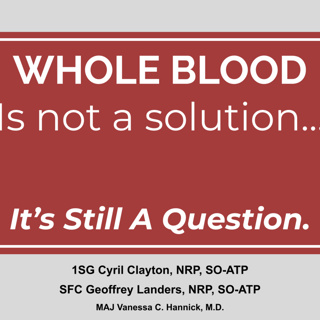
SOMA 26' - Fresh Whole Blood is Not The Answer: It's Still a Question

SOMA 26' - Fresh Whole Blood is Not The Answer: It's Still a Question

Whole Blood Is Not a Solution (Until Conventional Forces Can Deliver It)Recorded live at SOMA 26Dr. Vanessa Hanick (emergency physician, former active-duty Army, now National Guard) and 1SG Cy Clayton...

27 Aug 28min
293 - Dead Tissue Kills in Prolonged Field Care: 4 C’s, Early Debridement & Delayed Primary Closure Lessons from the Field

293 - Dead Tissue Kills in Prolonged Field Care: 4 C’s, Early Debridement & Delayed Primary Closure Lessons from the Field

In this episode of the PFC Podcast, Dennis sits down with missionary surgeon Jason to cut through the noise on real-world wound care in austere and unconventional warfare environments. From the bridge...

24 Aug 49min
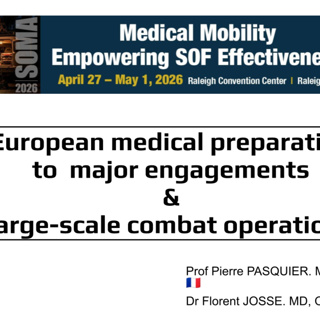
SOMA 26' - European Medical Preparations for Major Engagements and Large-Scale Combat Operations

SOMA 26' - European Medical Preparations for Major Engagements and Large-Scale Combat Operations

Recorded live at SOMA 26Pierre Pasquier (France) and his German counterpart deliver a clear-eyed assessment of how European military medical systems are preparing for large-scale combat operations and...

20 Aug 31min
292-Building Mobile Surgical Capability in Denied Environments

292-Building Mobile Surgical Capability in Denied Environments

In this episode of the Prolonged Field Care Podcast, Dennis sits down with Mitch (U.S. family practice/ER physician) and Augustine (frontline surgeon with five years of experience) to unpack what it a...

17 Aug 41min
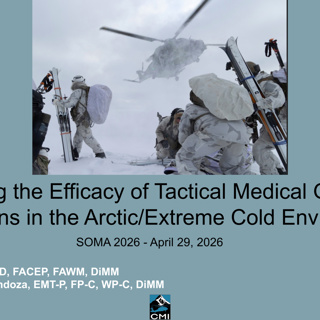
SOMA 26 - Optimizing the Efficacy of Commonly Used Tactical Medical Gear and Medications In The Arctic Extreme Cold Operational Environment

SOMA 26 - Optimizing the Efficacy of Commonly Used Tactical Medical Gear and Medications In The Arctic Extreme Cold Operational Environment

Recorded live at SOMA 26Dr. Emily Johnston (Cascadia Mountain Institute) and SFC Ezequiel Mendoza (Arctic Dustoff, Fairbanks) deliver a hard-hitting, field-validated look at how standard tactical medi...

13 Aug 29min
291 - Pediatric Burns In Prolonged Field Care Assessment, Resuscitation & Airway Management

291 - Pediatric Burns In Prolonged Field Care Assessment, Resuscitation & Airway Management

In this essential episode of the Prolonged Field Care Podcast, Dennis sits down with pediatric intensivist Dr. Sara Bibbens to tackle one of the most challenging and anxiety-inducing scenarios in aust...

10 Aug 30min

Populært innen Fakta

fastlegen
dine-penger-pengeradet
relasjonspodden-med-dora-thorhallsdottir-kjersti-idem
treningspodden
rss-strid-de-norske-borgerkrigene
jakt-og-fiskepodden
foreldreradet
rss-orjasater
hverdagspsyken
sinnsyn
tomprat-med-gunnar-tjomlid
rss-kunsten-a-leve
mikkels-paskenotter
rss-var-forste-kaffe
lederskap-nhhs-podkast-om-ledelse
gravid-uke-for-uke
fryktlos
rss-impressions-2
kvallm
branncast