Brain Balls
Radiolab9 Jan

Brain Balls

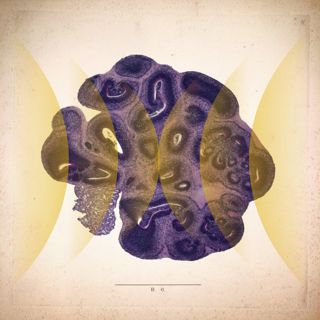
When neuroscientist Madeline Lancaster was a brand new postdoc, she accidentally used an expired protein gel in a lab experiment and noticed something weird. The stem cells she was trying to grow in a dish were self-assembling. The result? Madeline was the first person ever to grow what she called a “cerebral organoid,” a tiny, 3D version of a human brain the size of a peppercorn.

In about a decade, these mini human brain balls were everywhere. They were revealing bombshell secrets about how our brains develop in the womb, helping treat advanced cancer patients, being implanted into animals, even playing the video game Pong. But what are they? Are these brain balls capable of sensing, feeling, learning, being? Are they tiny, trapped humans? And if they were, how would we know?

Special thanks to Lynn Levy, Jason Yamada-Hanff, David Fajgenbaum, Andrew Verstein, Anne Hamilton, Christopher Mason, Madeline Mason-Moriarty, the team at the Boston Museum of Science, and Howard Fine, Stefano Cirigliano, and the team at Weill-Cornell.

EPISODE CREDITS:
Reported by - Latif Nasser
with help from - Mona Madgavkar
Produced by - Annie McEwen, Mona Madgavkar, and Pat Walters
with mixing help from - Jeremy Bloom
Fact-checking by - Natalie Middleton and Rebecca Rand
and Edited by - Alex Neason and Pat Walters

EPISODE CITATIONS:

Videos -

Articles -


Books -
Carl Zimmer Life’s Edge: The Search for What it Means to be Alive (https://carlzimmer.com/books/lifes-edge/)


Sign up for our newsletter!! It includes short essays, recommendations, and details about other ways to interact with the show. Signup (https://radiolab.org/newsletter)!

Radiolab is supported by listeners like you. Support Radiolab by becoming a member of The Lab (https://members.radiolab.org/) today.

Follow our show on Instagram, Twitter and Facebook @radiolab, and share your thoughts with us by emailing radiolab@wnyc.org.

Leadership support for Radiolab’s science programming is provided by the Simons Foundation and the John Templeton Foundation. Foundational support for Radiolab was provided by the Alfred P. Sloan Foundation.


Hosted by Simplecast, an AdsWizz company. See pcm.adswizz.com for information about our collection and use of personal data for advertising.

Denne episoden er hentet fra en åpen RSS-feed og er ikke publisert av Podme. Den kan derfor inneholde annonser.

Episoder(652)

G: Unnatural Selection

G: Unnatural Selection

This past fall, a scientist named Steve Hsu made headlines with a provocative announcement. He would start selling a genetic intelligence test to couples doing IVF: a sophisticated prediction tool, bu...

26 Jul 201934min
G: Relative Genius

G: Relative Genius

Albert Einstein asked that when he died, his body be cremated and his ashes be scattered in a secret location. He didn’t want his grave, or his body, becoming a shrine to his genius. When he passed aw...

28 Jun 20191h 3min
G: Problem Space

G: Problem Space

In the first episode of G, Radiolab’s miniseries on intelligence, we went back to the 1970s to meet a group of Black parents who put the IQ test on trial. The lawsuit, Larry P v Riles, ended with a ba...

14 Jun 201940min

G: The Miseducation of Larry P

G: The Miseducation of Larry P

Are some ideas so dangerous we shouldn’t even talk about them? That question brought Radiolab’s senior editor, Pat Walters, to a subject that at first he thought was long gone: the measuring of human ...

7 Jun 20191h 4min
Neither Confirm Nor Deny

Neither Confirm Nor Deny

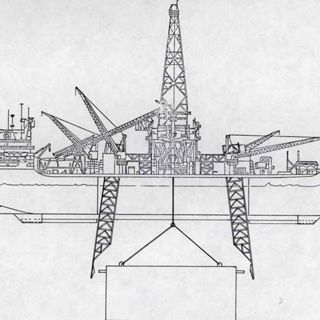
How a sunken nuclear submarine, a crazy billionaire, and a mechanical claw gave birth to a phrase that has hounded journalists and lawyers for 40 years and embodies the tension between the public’s de...

4 Jun 201927min

The Good Samaritan

The Good Samaritan

On a Tuesday afternoon back in the summer of 2017, Scotty Hatton and Scottie Wightman both made a decision to help someone in need. They both paid a price for their actions that day, which have led to...

24 Mai 20191h 11min
Bit Flip

Bit Flip

Back in 2003 Belgium was holding a national election. One of their first where the votes would be cast and counted on computers. Thousands of hours of preparation went into making it unhackable. And w...

8 Mai 201956min
Dinopocalypse Redux

Dinopocalypse Redux

Using high-powered ballistics experiments, fancy computer algorithms, and good old-fashioned ancient geology, scientists have woven together a theory about the extinction of the dinosaurs that is so p...

3 Mai 201945min

Populært innen Vitenskap

fastlegen
tingenes-tilstand
rss-nysgjerrige-norge
sinnsyn
rekommandert
forskningno
villmarksliv
liberal-halvtime
rss-paradigmepodden
rss-zahid-ali-hjelper-deg
jss
tomprat-med-gunnar-tjomlid
kvinnehelsepodden
nordnorsk-historie
fjellsportpodden
rss-inn-til-kjernen-med-sunniva-rose
rss-rekommandert
tidlose-historier
rss-overskuddsliv
rss-bondevennen