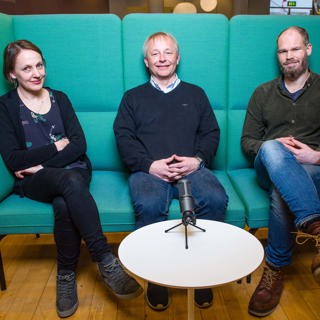
Taking ChIP from Yeast to ENCODE to Enable Genome-Wide Regulatory Protein Mapping (Peggy Farnham)

Taking ChIP from Yeast to ENCODE to Enable Genome-Wide Regulatory Protein Mapping (Peggy Farnham)

In this episode of the Epigenetics Podcast, we talked with Peggy Farnham from the Keck School of Medicine at USC about her work on establishing the ChIP Method in mammalian cells.

In this episode, we dive into the relationship between transcription factors, chromatin dynamics, and gene expression with Professor Peggy Farnham from the Keck School of Medicine at USC. Professor Farnham shares her profound insights into how her groundbreaking research has reshaped our understanding of gene regulation and its implications in cancer. We explore how she has been a pioneer in mapping the genome-wide landscape of regulatory proteins, illuminating the molecular logic behind transcriptional control and its disruption in cancer biology.

The interview starts with her instrumental role in adapting chromatin immunoprecipitation (ChIP) technology from yeast to human cells. Professor Farnham reflects on the technical challenges she faced during this transition, such as the quest for visibility of signals in mammalian systems. Her ability to innovate and troubleshoot challenges led to significant advancements in techniques that allow for the rapid identification of transcription factor binding sites, fundamentally changing the landscape of epigenetic research.

As the discussion progresses, we learn about Professor Farnham's active involvement in the ENCODE project, where she contributed to high-resolution mapping of transcription factors and regulatory elements in human cells. She articulates her appreciation for collaborative efforts in science, highlighting how working within a consortium harnesses the collective expertise of diverse research groups. This collaboration not only bolstered the credibility of the data produced but also propelled the field forward in understanding the complexity of gene regulation.

Through her participation in various projects, such as the Psyc-ENCODE consortium and the Roadmap Epigenome Mapping Consortium, Professor Farnham shares insights into her investigation of epigenetic variations, particularly in relation to complex disorders like schizophrenia. Her findings underscore the nuances of enhancer variability among individuals and the implications for understanding disease mechanisms, thereby advancing our knowledge of genetic regulation and its contributions to diverse biological outcomes.

Moreover, the episode highlights Professor Farnham's reflective understanding of emerging technologies in the field. She discusses the evolution of methods that allow researchers to investigate gene regulation at single-cell resolution, recognizing the significant implications these innovations have for our comprehension of cellular differentiation and the transcriptional landscape.

References
  • Weinmann AS, Bartley SM, Zhang T, Zhang MQ, Farnham PJ. Use of chromatin immunoprecipitation to clone novel E2F target promoters. Molecular and Cellular Biology. 2001 Oct;21(20):6820-6832. DOI: 10.1128/mcb.21.20.6820-6832.2001. PMID: 11564866; PMCID: PMC99859.

  • Wells J, Farnham PJ. Characterizing transcription factor binding sites using formaldehyde crosslinking and immunoprecipitation. Methods (San Diego, Calif.). 2002 Jan;26(1):48-56. DOI: 10.1016/s1046-2023(02)00007-5. PMID: 12054904.

  • Rhie SK, Schreiner S, Witt H, et al. Using 3D epigenomic maps of primary olfactory neuronal cells from living individuals to understand gene regulation. Science Advances. 2018 Dec;4(12):eaav8550. DOI: 10.1126/sciadv.aav8550. PMID: 30555922; PMCID: PMC6292713.

  • Tak YG, Hung Y, Yao L, et al. Effects on the transcriptome upon deletion of a distal element cannot be predicted by the size of the H3K27Ac peak in human cells. Nucleic Acids Research. 2016 May;44(9):4123-4133. DOI: 10.1093/nar/gkv1530. PMID: 26743005; PMCID: PMC4872074.

Related Episodes Contact

Episoder(173)

Sex-biased Imprinting and DNA Regulatory Landscapes During Reprogramming (Sam Buckberry)

Sex-biased Imprinting and DNA Regulatory Landscapes During Reprogramming (Sam Buckberry)

In this episode of the Epigenetics Podcast, we talked with Sam Buckberry from the Telethon Kids Institute about his work on gene imprinting, sex-biased gene expression, DNA regulatory landscapes, and ...

25 Jan 202438min

BET Proteins and Their Role in Chromosome Folding and Compartmentalization (Kyle Eagen)

BET Proteins and Their Role in Chromosome Folding and Compartmentalization (Kyle Eagen)

In this episode of the Epigenetics Podcast, we talked with Kyle Eagen from Baylor College of Medicine about his work on BET Proteins and their role in chromosome folding and compartmentalization. In t...

11 Jan 202430min

Epigenetic Underpinnings of Human Addiction (Francesca Telese & Jessica Zhou)

Epigenetic Underpinnings of Human Addiction (Francesca Telese & Jessica Zhou)

In this episode of the Epigenetics Podcast, we talked with Francesca Telese from UC San Diego and Jessica Zhou from Cold Spring Harbour about their work on the molecular underpinnings of human addicti...

21 Des 202359min

H3K79 Methylation, DOT1L, and FOXG1 in Neural Development (Tanja Vogel)

H3K79 Methylation, DOT1L, and FOXG1 in Neural Development (Tanja Vogel)

In this episode of the Epigenetics Podcast, we talked with Tanja Vogel from the University Clinics Freiburg about her work on epigenetic modifications in stem cells during central nervous system devel...

30 Nov 202342min

Function of Insulators in 3D Genome Folding (Maria Gambetta)

Function of Insulators in 3D Genome Folding (Maria Gambetta)

In this episode of the Epigenetics Podcast, we talked with Maria Gambetta from the University of Lausanne about her work on the function of insulators in 3D genome folding. Maria Gambetta focuses on i...

16 Nov 202343min

Contribution of the Estrogen Receptor to Breast Cancer Progression (Jason Carroll)

Contribution of the Estrogen Receptor to Breast Cancer Progression (Jason Carroll)

In this episode of the Epigenetics Podcast, we talked with Jason Carroll from the Cambridge Research Institute about his work on contribution of estrogen receptor to breast cancer progression. The Pod...

2 Nov 202346min

Inheritance of Transcriptional Memory by Mitotic Bookmarking (Sheila Teves)

Inheritance of Transcriptional Memory by Mitotic Bookmarking (Sheila Teves)

In this episode of the Epigenetics Podcast, we caught up with Sheila Teves from the University of British Columbia to talk about her work on the inheritance of transcriptional memory by mitotic bookma...

19 Okt 202345min

Differential Methylated Regions in Autism Spectrum Disorders (Janine La Salle)

Differential Methylated Regions in Autism Spectrum Disorders (Janine La Salle)

In this episode of the Epigenetics Podcast, we talked with Janine La Salle from UC Davis about her work on differential methylated regions in autism spectrum disorders. In our discussion, Janine LaSal...

5 Okt 202340min

Populært innen Vitenskap

fastlegen
jss
tingenes-tilstand
rekommandert
sinnsyn
forskningno
liberal-halvtime
tomprat-med-gunnar-tjomlid
rss-paradigmepodden
rss-nysgjerrige-norge
villmarksliv
kvinnehelsepodden
fjellsportpodden
nevropodden
nordnorsk-historie
rss-overskuddsliv
rss-rekommandert
diagnose
rss-bondevennen
psykopoden