Think Thursday: Intentional Discomfort & Hedonic Reset

Think Thursday: Intentional Discomfort & Hedonic Reset

In this Think Thursday episode, we explore how the human brain evolved to use discomfort as information—and what happens when modern life removes nearly all friction, effort, and delay.

Our brains weren’t designed for constant comfort. Discomfort once served as critical feedback, helping guide behavior, attention, rest, and problem-solving. But in today’s world of instant gratification and instant relief, discomfort is often treated as a problem to eliminate rather than a signal to interpret.

This episode unpacks why that shift matters for brain health, motivation, resilience, and long-term satisfaction—and how intentional discomfort can support a hedonic reset.

In this episode, we discuss:

  • Why discomfort evolved as a key feedback mechanism in the human brain
  • How instant relief interrupts the brain’s ability to learn from discomfort
  • The difference between regulation and comfort from a neuroscience perspective
  • How highly concentrated, low-effort rewards shape motivation and satisfaction
  • The concept of hedonic adaptation and why “enough” keeps moving
  • What a hedonic reset actually is (and what it isn’t)
  • How intentional discomfort supports nervous system regulation
  • The role of dopamine, effort, and delay in sustaining motivation
  • Why distress tolerance is a foundational skill for behavior change
  • How identity shifts through repeated, slightly uncomfortable choices

Expert perspectives referenced:

  • Dr. Anna Lembke, author of Dopamine Nation, on pleasure–pain balance and modern reward concentration
  • Dr. Andrew Huberman on dopamine signaling, effort, and motivation
  • James Clear on identity following behavior
  • Inspiration from a conversation on the Mel Robbins Podcast with Dr. Lembke

One gentle experiment to try this week:

Choose one moment per day when you notice mild discomfort—boredom, restlessness, or the urge to distract—and pause instead of fixing it.

Examples:

  • Standing in line without reaching for your phone
  • Sitting with boredom for 60–90 seconds
  • Letting an urge rise and fall without reacting

Notice:

  • Where you feel the sensation in your body
  • What thoughts show up
  • Whether the feeling changes on its own

This isn’t about forcing discomfort or pushing through distress. It’s about teaching your nervous system that discomfort is tolerable and temporary—and that awareness alone can create change.

Key takeaway:

Discomfort isn’t a problem to solve.
It’s information to work with.

In a culture built around instant relief and effortless reward, intentional discomfort can be a powerful way to restore balance, protect motivation, and support long-term brain health.

★ Support this podcast ★

Denne episoden er hentet fra en åpen RSS-feed og er ikke publisert av Podme. Den kan derfor inneholde annonser.

Episoder(413)

More Sober October: Make it An Experiment, Not an Exam

More Sober October: Make it An Experiment, Not an Exam

What if the goal of More Sober October isn’t a perfect calendar—but learning something about your relationship with alcohol?In this episode, Molly shares how to approach October as an experiment inste...

28 Sep 23min
Think Thursday: Alzheimer’s Prevention and What the Latest Research Tells Us

Think Thursday: Alzheimer’s Prevention and What the Latest Research Tells Us

World Alzheimer’s Day is a good reminder that the story around Alzheimer’s disease is changing.In this Think Thursday episode, Molly looks at what we know now about earlier diagnosis, blood-based biom...

24 Sep 18min

How Much Alcohol is Safe? Rethinking Drinking Guidelines

How Much Alcohol is Safe? Rethinking Drinking Guidelines

What does “drink less” actually mean?In this episode of the Alcohol Minimalist podcast, Molly explores the changing alcohol guidelines and why there isn’t one simple number that guarantees a “safe” le...

21 Sep 20min
Think Thursday: Why Familiar Feels True-When Thoughts Become Beliefs

Think Thursday: Why Familiar Feels True-When Thoughts Become Beliefs

What happens when a thought gets repeated so often that it stops feeling like a thought and starts feeling like a fact?In this Think Thursday episode, Molly explores the illusory truth effect, process...

17 Sep 15min
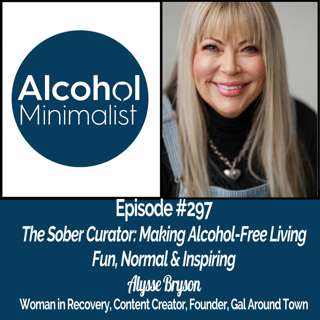
The Sober Curator: Making Alcohol-Free Living Fun, Normal & Inspiring with Alysse Bryson

The Sober Curator: Making Alcohol-Free Living Fun, Normal & Inspiring with Alysse Bryson

What does it look like to build a fun, fulfilling life with less alcohol—or none at all?In this episode of the Alcohol Minimalist Podcast, Molly talks with Elise Bryson, CEO and curator of The Sober C...

14 Sep 45min
Revisiting Think Thursday: Neurodivergence and The Brain's Energy Economy

Revisiting Think Thursday: Neurodivergence and The Brain's Energy Economy

In this revisited Think Thursday episode, Molly explores ADHD through the lens of the brain’s energy economy—how neurodivergent brains may use mental fuel differently, and why that matters for motivat...

10 Sep 13min

Summer's Greatest Hits: Alcohol & ADHD

Summer's Greatest Hits: Alcohol & ADHD

This week on the Alcohol Minimalist Podcast, we’re revisiting the most-downloaded episode from the Alcohol & series: Alcohol & ADHD.ADHD is a personal topic for me, and it also comes up often with coa...

7 Sep 35min
Think Thursday: Hearing Health is Brain Health

Think Thursday: Hearing Health is Brain Health

We tend to think of hearing as something that happens in our ears, but hearing is really a partnership between the ears and the brain. And growing research suggests that when hearing begins to decline...

3 Sep 12min

Populært innen Fakta

fastlegen
dine-penger-pengeradet
relasjonspodden-med-dora-thorhallsdottir-kjersti-idem
rss-strid
treningspodden
rss-bisarr-historie
foreldreradet
jakt-og-fiskepodden
rss-orjasater
tomprat-med-gunnar-tjomlid
takk-og-lov-med-anine-kierulf
hverdagspsyken
sinnsyn
mikkels-paskenotter
rss-impressions-2
rss-kull
gravid-uke-for-uke
rss-kunstig-intelligens-med-elisabeth-maren-og-morten
rss-kunsten-a-leve
fryktlos