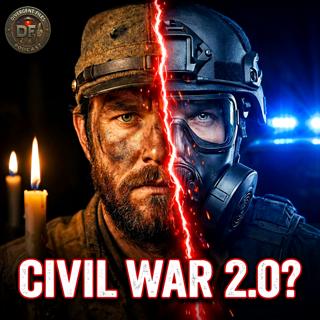
Second Civil War? The Last Time Americans Felt This Split, 1861 Followed

Second Civil War? The Last Time Americans Felt This Split, 1861 Followed

In 1860, most Americans didn’t think a civil war was coming.
They argued. They polarized. They distrusted each other. They believed the system would hold.

It didn’t.

In this episode of Divergent Files, we step past headlines and outrage cycles and ask a harder question: are we repeating the structural conditions that precede internal conflict?

Not the surface-level noise. The deeper architecture.
Civil wars don’t begin with a single spark. They form when pressure builds across systems — economic, cultural, informational, institutional — until the state can no longer mediate reality between competing groups.

We examine what the United States actually looked like before 1861, economically and structurally. We explore the concept of “dual societies” existing inside one nation, and how modern political science identifies early-stage civil conflict. We break down economic divergence, elite fragmentation, and the collapse of shared information ecosystems. We analyze erosion of institutional trust, jurisdictional tension between state and federal power, and why modern internal conflict would not resemble 1861 — and why that difference matters.

This isn’t fear-mongering.
It’s pattern recognition.

History shows that collapse rarely announces itself. It feels gradual. Rational. Manageable. Until it isn’t.

The question isn’t whether Americans are angry. The question is whether the structural guardrails that prevent fracture are strengthening — or weakening.

We don’t predict. We examine.
Because once institutional trust erodes past a certain threshold, recovery becomes exponentially harder. And by the time a nation realizes it crossed the line, it’s already on the other side of it.

Divergent Files investigates history, power, and systemic pressure points with receipts — not rhetoric.

If you want outrage, there are plenty of places to find it.
If you want to understand how societies actually break — and how they sometimes pull back from the edge — sit with this one.

Denne episoden er hentet fra en åpen RSS-feed og er ikke publisert av Podme. Den kan derfor inneholde annonser.

Episoder(176)

Someone Was In America 130,000 Years Ago. We Still Don’t Know Who

Someone Was In America 130,000 Years Ago. We Still Don’t Know Who

What if humans were in America far earlier than we were taught?In this episode, we follow the evidence from White Sands and the collapse of Clovis-first to the controversial Cerutti Mastodon Site in C...

1 Sep 15min
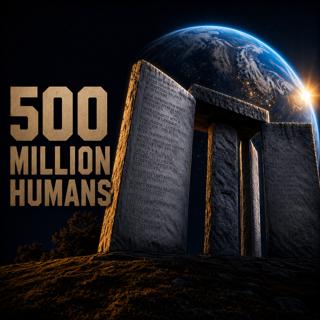
The Georgia Guidestones: A Blueprint for the End of the World? | The Mystery Behind the Monument

The Georgia Guidestones: A Blueprint for the End of the World? | The Mystery Behind the Monument

The Georgia Guidestones were built to survive catastrophe—and they left behind a strange set of rules for humanity, including the infamous call to keep the population under 500 million.In this episode...

29 Aug 23min
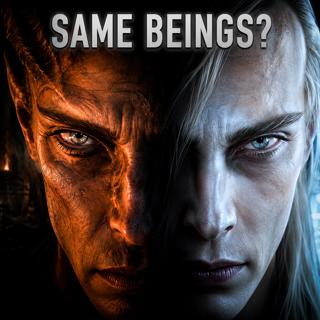
Are UFOs What Ancient People Called Demons? | UFOs & Non-Human Intelligence

Are UFOs What Ancient People Called Demons? | UFOs & Non-Human Intelligence

What if UFOs, demons, Watchers, jinn, and ancient folklore were different names for the same unexplained phenomenon?In this episode of Divergent Files, we examine the strange parallels between modern ...

27 Aug 19min
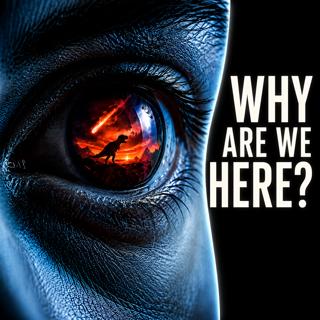
Did Extinction Make Human Intelligence Possible? | Mass Extinction, Evolution & Human Survival

Did Extinction Make Human Intelligence Possible? | Mass Extinction, Evolution & Human Survival

What if human intelligence wasn’t evolution’s inevitable destination—but an adaptation to a planet that kept changing the rules?We explore mass extinctions, Snowball Earth, dinosaurs, environmental in...

25 Aug 12min

They Are Building a Search Engine for Your Life

They Are Building a Search Engine for Your Life

A Florida man went for a bike ride. Ten months later, Google told him police wanted his location data.In this episode, we follow the trail from geofence warrants and license plate readers to commercia...

22 Aug 20min
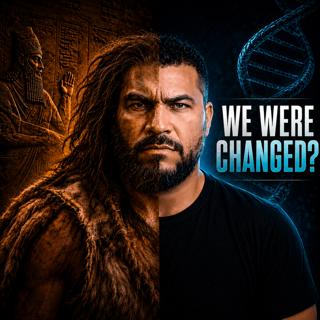
Something Happened to Humanity We Still Can't Explain

Something Happened to Humanity We Still Can't Explain

More than 4,000 years ago, ancient Mesopotamian texts described humanity as something deliberately fashioned by the gods.Today, genetics and archaeology are still trying to explain what made humans ch...

19 Aug 13min
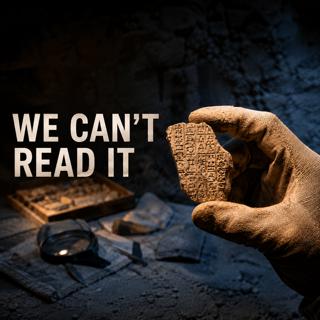
What If We’re Wrong About the Past?

What If We’re Wrong About the Past?

Humanity has struggled with a strange problem: how do you leave a message that people will still understand 10,000 years from now?If meaning can disappear that easily, how certain can we be that we fu...

18 Aug 13min
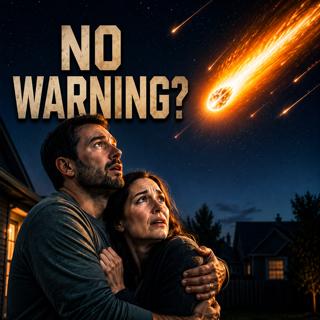
Apophis Exposed Earth’s Most Dangerous Blind Spot | Asteroids, NASA & Planetary Defense

Apophis Exposed Earth’s Most Dangerous Blind Spot | Asteroids, NASA & Planetary Defense

Asteroid Apophis will safely pass Earth in 2029. But its story exposed a much bigger problem: humanity can only defend against the objects we see coming.In this episode of Divergent Files, we explore ...

15 Aug 21min

Populært innen Vitenskap

fastlegen
tingenes-tilstand
romkapsel
jss
liberal-halvtime
sinnsyn
tomprat-med-gunnar-tjomlid
rekommandert
villmarksliv
forskningno
rss-paradigmepodden
dekodet-2
fjellsportpodden
rss-rekommandert
tidlose-historier
nordnorsk-historie
rss-inn-til-kjernen-med-sunniva-rose
rss-nysgjerrige-norge
grunnstoffene
rss-kunstig-intelligens-med-elisabeth-maren-og-morten