Evidence Based Treatment is Flexible and Compassionate: DBT and FBT for Eating Disorders

Evidence Based Treatment is Flexible and Compassionate: DBT and FBT for Eating Disorders

The most fundamental question in treating eating disorders is “What works?” Eating disorders are so painful and can be so fatal; we want to use the treatment that has the best chance of giving our clients their lives back.

We live in a time when empirical observation can be used to answer this question as more and more research studies examine the effectiveness of various interventions.

Family-Based Treatment (FBT), sometimes referenced as the gold standard for treating eating disorders, is a manualized treatment that gives parents the responsibility for restoring their child's weight and managing eating behaviors. Critics of FBT are concerned that in cases where a parent is abusive, neglectful, or psychologically unstable, this type of parental involvement may increase family dysfunction and in some cases enable a child’s abuser. Others are concerned that FBT addresses only the eating disorder behaviors without understanding the underlying psychosocial dynamics.

In this episode, Abby Sarrett-Cooper discusses her experience combining Dialectical Behavior Therapy (DBT) with FBT to help clients achieve tangible improvement, while also navigating theirs and their families’ emotional realities.

Abby shares her history of struggling with an eating disorder while in an unstable family environment during a time before targeted, evidence-based treatment was available. She speaks about how now she navigates complicated family dynamics and uses FBT and DBT to help parents support loved ones.

Abby challenges the assumption that evidence-based treatment is rigid and distant, and talks about how individualized, client-centered care is a key component of evidence based intervention.

Abby is a Licensed Professional Counselor in New Jersey and Pennsylvania and a Certified Eating Disorder Specialist. She has been in private practice for 20 years, focusing on evidence-based, Health at Every Size (HAES)-informed approaches to treating eating disorders. Her postgraduate training includes certification in FBT and intensive training in standard DBT, DBT for adolescents (DBT-A), DBT for families, and DBT for eating disorders. Abby is an early adopter of FBT in community private practice, and of integrating DBT with FBT to empower families and manage the dysregulation common in treatment.

Outside her practice, Abby served on the psychology faculty at Caldwell University in New Jersey for 10 years, teaching Child Development, Adolescent Development, and Psychopathology, and designing the university’s first Positive Psychology course. Throughout her career, she has been a vocal advocate for evidence-based treatment that is nonjudgmental, stigma-reducing, and myth-challenging. Abby is a member of the International Association of Eating Disorder Professionals and has been active in the Academy for Eating Disorders for 15 years, currently serving as co-chair of its Special Interest Group Oversight Committee.

This is our second time recording this episode so to begin, we briefly reflect on our first time recording and what we'd like to shift this time around.

One of the challenges in the current digitized climate, is that the things we say become so solid and permanent, while as humans we are constantly evolving. I cringe inside when I look at so much of what I’ve written or produced in the past. And I hope that we approach this episode, and all the others, with flexibility and forgiveness, recognizing that each of us is perpetually reflecting, growing, and changing.


To work with Abby, visit https://partnersincounseling.net/meet-the-partners/


For Elka's binge eating recovery program, visit https://elkacubacub.com/

Denne episoden er hentet fra en åpen RSS-feed og er ikke publisert av Podme. Den kan derfor inneholde annonser.

Episoder(38)

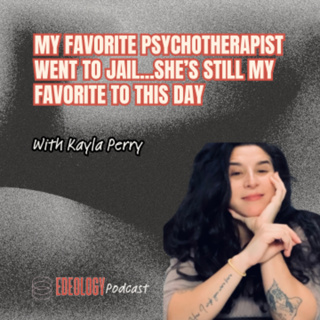
“My Favorite Psychotherapist Went to Jail” with Kayla Perry

“My Favorite Psychotherapist Went to Jail” with Kayla Perry

Moralistic judgment is the root of so much division in our field and in our society. The perception of ideologically opposing groups as uninformed, evil, or inherently harmful is the surest way to eli...

2 Jun 1h 12min
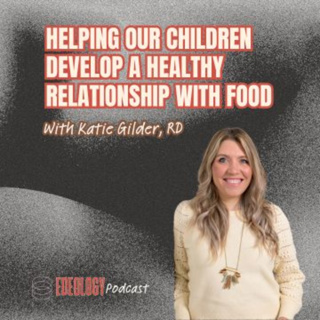
Helping our Children Develop a Healthy Relationship with Food with Katie Gilder, RD

Helping our Children Develop a Healthy Relationship with Food with Katie Gilder, RD

Many of the hot topics in eating disorder recovery—health at every size, food neutrality, whether some foods are manufactured with addictive qualities—extend beyond eating disorders and to the message...

12 Mai 1h 1min
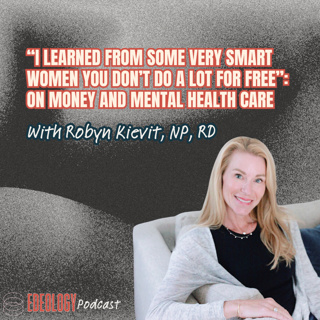
“I Learned from Some Very Smart Women You Don’t Do a Lot for Free”: On Money and Mental Health Care with Robyn Kievit NP, RD

“I Learned from Some Very Smart Women You Don’t Do a Lot for Free”: On Money and Mental Health Care with Robyn Kievit NP, RD

Periodically, I hear someone describe a past therapist, a particular therapy modality, or a treatment center as “just in it for the money.”On the flip side, I’ve had many conversations with therapists...

11 Mar 39min
This is your trigger warning!

This is your trigger warning!

In this episode, I discuss why this podcast has no content rules and how I address information that might be triggering to the listener. I also do a deep dive into the question, can words cause harm?M...

5 Feb 22min

Dialogue: Is eating disorder treatment evidence-based, heart-led, or some of both? Family-Based Treatment meets Somatic therapy

Dialogue: Is eating disorder treatment evidence-based, heart-led, or some of both? Family-Based Treatment meets Somatic therapy

How do we know what is real? There is a growing number of treatment modalities, each with its own acronyms and catchphrases. There is also a large diversity of opinions around issues related to food, ...

21 Jan 1h 7min

Does lived-experience matter in clinical work? With David Wiss, PhD, RDN, IFMCP

Does lived-experience matter in clinical work? With David Wiss, PhD, RDN, IFMCP

When we argue with other clinicians about treatment-related issues, it’s natural to focus almost exclusively on content. And when it doesn’t go well, we often attribute that to the wrongness of the ot...

7 Jan 52min

The Invisible Specialty: Ethical veganism and eating disorder recovery with Maneva Gill

The Invisible Specialty: Ethical veganism and eating disorder recovery with Maneva Gill

It can be taken for granted that there are many non-disordered ways of eating. In addition to food preferences and aversions, allergies, food-sensitivities, and body composition, our food choices can ...

23 Des 20251h 9min

Attraction, love, and erotic feelings in the therapeutic relationship with Rebecca Prolman, LMFT

Attraction, love, and erotic feelings in the therapeutic relationship with Rebecca Prolman, LMFT

The therapeutic relationship is, in some ways, a bizarre one. On one hand, it’s a meeting between two people, a space where you share so much of yourself, your deeper emotions, and experiences. And at...

10 Des 20251h 4min

Populært innen Helse

fastlegen
rss-gukild-johaug
psykodrama
hvordan-har-du-det-mann
leger-om-livet
relasjonspodden-med-dora-thorhallsdottir-kjersti-idem
rss-skravla-gar
foreldreradet
morten-ramm-lar-kakla-ga-til-du-sovner
g-punktet
klimaks
rss-loping-for-nybegynnere
bak-fasaden-en-reise-i-livet-med-sykepleier-ine
treningsprat
rss-lopedrommen
rss-dagen-for-dagen
hjernesterk
hverdagspsyken
kjed-deg-i-sovn-verdens-kjedeligste-podcast
rss-kunsten-a-leve