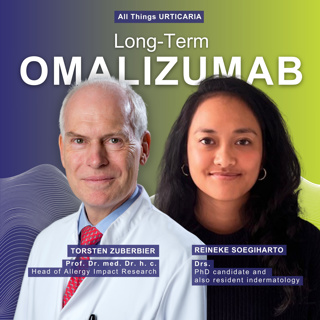
Drug Survival of Omalizumab

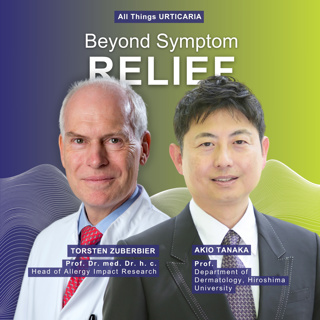
In this episode of the Urticaria podcast series, Prof. Torsten Zuberbier speaks with Reineke Soegiharto, PhD candidate and dermatology resident from UMC Utrecht, about the international UCARE study DRUSO-CU, which investigated the drug survival of omalizumab in chronic urticaria.


They discuss:

🔹 What does “drug survival” mean and why is it a meaningful real-world outcome measure?

🔹 How long do patients with chronic urticaria typically remain on omalizumab therapy?

🔹 Why do patients discontinue treatment — and what does this say about effectiveness and safety?

🔹 How do early treatment response and disease duration influence long-term outcomes?

🔹 What role do chronic inducible urticarias (CIndU) play in treatment duration?

🔹 Are adverse events or reimbursement issues relevant reasons for stopping omalizumab?


Based on data from more than 2,000 patients across 14 UCARE centers worldwide, the study shows that omalizumab has excellent long-term safety and effectiveness. Importantly, treatment discontinuation is most often due to well-controlled disease, not side effects or lack of efficacy. Patients with a rapid early response tend to stop treatment sooner, while those with longer disease duration or concomitant CIndU often require longer therapy. The discussion highlights the importance of early and effective disease control and showcases the value of international collaboration within the UCARE network.


Key Learnings from the Episode:

Drug survival reflects effectiveness, safety, and real-world treatment decisions.

About 50% of patients remain on omalizumab after 3.3 years overall.

In good responders, 50% are still treated after approximately 7 years.

Discontinuation is most commonly due to well-controlled disease.

Adverse events do not significantly impact omalizumab drug survival.

Early and strong treatment response predicts shorter overall treatment duration.

Longer disease duration before treatment is associated with longer therapy needs.

Patients with chronic inducible urticaria often remain on treatment longer.

Seasonal and subtype differences are relevant in CIndU management.

Reimbursement issues were not a major factor in treatment discontinuation.

Omalizumab shows an excellent long-term safety profile.

International UCARE collaboration enables meaningful real-world research.


Chapters:

00:00 Introduction to Urticaria and Research Initiatives

03:10 Understanding Drug Survival in Chronic Urticaria

06:10 Predictors of Treatment Duration with Omalizumab

08:54 The Role of Disease Duration and Response

11:33 Exploring Chronic Inducible Urticaria

14:23 The Experience of Collaborative Research in UCARE


Do you have suggestions for future episodes? Please provide feedback and offer your suggestions for future topics and expert selection here.

Feedback form: ATU: ⁠⁠⁠⁠⁠⁠https://forms.office.com/e/m6a2uEdsUH

Denne episoden er hentet fra en åpen RSS-feed og er ikke publisert av Podme. Den kan derfor inneholde annonser.

Episoder(121)

AI and the Future of Urticaria

AI and the Future of Urticaria

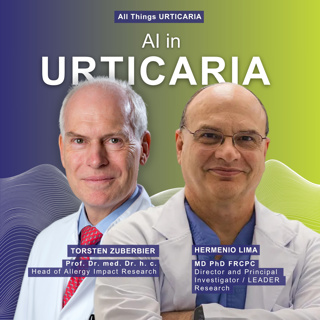
In this episode of the UCARE GA²LEN (Global Allergy and Asthma Excellence Network) podcast on Urticaria, Prof. Torsten Zuberbier and Prof. Hermenio Lima discuss the growing role of artificial intellig...

16 Jun 16min
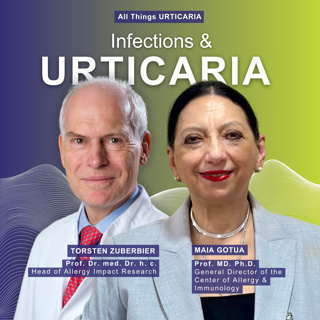
Urticaria Triggers: Infection Insights

Urticaria Triggers: Infection Insights

In this episode of the UCARE GA²LEN (Global Allergy and Asthma Excellence Network) podcast on Urticaria, Prof. Torsten Zuberbier and Prof. Maia Gotua discuss the role of infections in acute and chroni...

19 Mai 16min
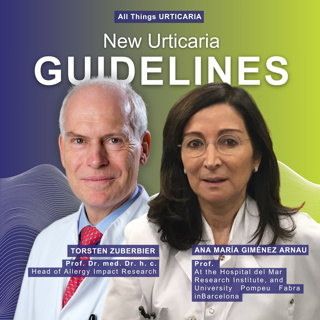
A New Era in Urticaria Treatment

A New Era in Urticaria Treatment

In this episode of “All Things Urticaria” — a podcast from UCARE, the Global Allergy and Asthma Excellence Network — Prof. Torsten Zuberbier and Prof. Ana Giménez-Arnau discuss the newly released inte...

23 Apr 19min
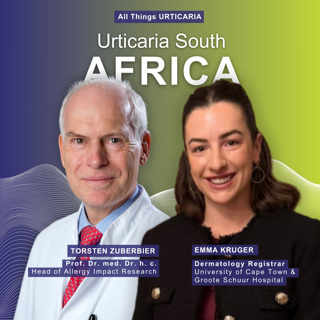
Managing Urticaria in Resource-Limited Settings

Managing Urticaria in Resource-Limited Settings

In this episode of the UCARE Global Allergy and Asthma Excellence Network podcast on Urticaria, Prof. Torsten Zuberbier speaks with Dr. Emma Kruger from Cape Town, South Africa, about managing urticar...

24 Mar 17min
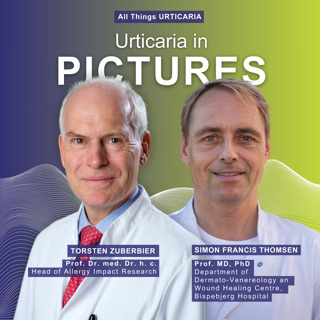
Visualizing Urticaria Worldwide

Visualizing Urticaria Worldwide

In this episode of the GA²LEN Urticaria Podcast, Professor Torsten Zuberbier is joined by Professor Simon Francis Thomsen from Denmark to introduce an exciting new global initiative within the UCARE n...

28 Jan 19min

A New Era for Urticaria Treatment

A New Era for Urticaria Treatment

In this short, conference-based episode, Professor Torsten Zuberbier, President of Global Allergy and Asthma Excellence Network, speaks with Professor Kiran Godse from Mumbai, India, directly from the...

18 Des 20255min

Measuring What Matters: PROMs in Urticaria Care

Measuring What Matters: PROMs in Urticaria Care

In this episode of the GA²LEN (Global Allergy and Asthma Excellence Network) Podcast on Everything Urticaria, Professor Torsten Zuberbier talks with Dr. Karsten Weller, a leading expert and developer ...

2 Des 202519min

Populært innen Vitenskap

fastlegen
tingenes-tilstand
jss
liberal-halvtime
sinnsyn
rekommandert
forskningno
villmarksliv
tomprat-med-gunnar-tjomlid
smart-forklart
dekodet-2
rss-overskuddsliv
rss-nysgjerrige-norge
rss-inn-til-kjernen-med-sunniva-rose
fjellsportpodden
noen-har-snakket-sammen
rss-paradigmepodden
nevropodden
kvinnehelsepodden
rss-skogkurs-podden