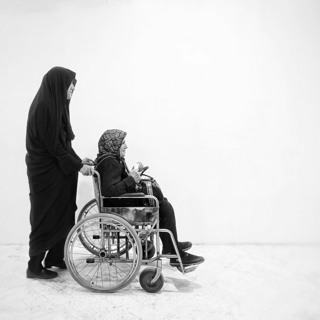
The adoption of the 1949 Geneva Conventions: a humanitarian break and colonial continuity

The adoption of the 1949 Geneva Conventions: a humanitarian break and colonial continuity

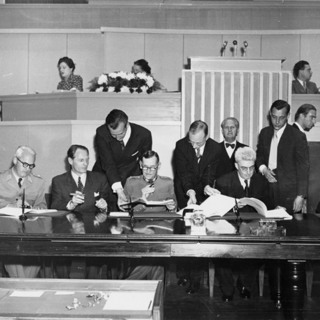
More than seven decades after their adoption, the four Geneva Conventions of 1949 remain foundational to contemporary international humanitarian law (IHL). Efforts to update their Commentaries testify to both the resilience of the Geneva Conventions and their enduring relevance in modern armed conflicts. Yet the story of their making is inseparable from the longer history of the law of armed conflict, which developed in the late nineteenth century within a deeply hierarchical international legal order. From the perspective of colonized states and territories, that history reveals a persistent divide between European and non-European worlds, a divide that shaped not only general international law but also key features of the Geneva Conventions themselves. In this post, part of a joint symposium on the updated Commentary on the Fourth Geneva Convention with EJIL:Talk! and Just Security, Associate Professor Srinivas Burra revisits the adoption of the 1949 Geneva Conventions against the backdrop of the Second World War, the creation of the United Nations, and the onset of decolonization. Focusing on the Fourth Convention’s regime of occupation and on Common Article 3, he examines these developments from a Third World Approaches to International Law (TWAIL) perspective, accounting for the structural legacies of empire in international law. He argues that while these provisions marked important advances, they also carried forward earlier exclusions embedded in colonial conceptions of sovereignty. Read in this light, the Conventions represent both a decisive break in humanitarian protection and a continuation of hierarchies inherited from the nineteenth century.

Denne episoden er hentet fra en åpen RSS-feed og er ikke publisert av Podme. Den kan derfor inneholde annonser.

Episoder(303)

Civilian protection has a dependency-chain problem

Civilian protection has a dependency-chain problem

Civilian protection is often assessed by whether a person has been warned, evacuated, registered, sheltered or reached with relief. For many persons with disabilities, each measure depends on a wider ...

20 Aug 21min

The machines must not choose who dies: a humanitarian case for disarming AI

The machines must not choose who dies: a humanitarian case for disarming AI

As states race to develop autonomous weapons systems, the effort to agree binding international rules on machine decisions over life and death has reached a critical moment. In this post, Eberechukwu...

13 Aug 18min
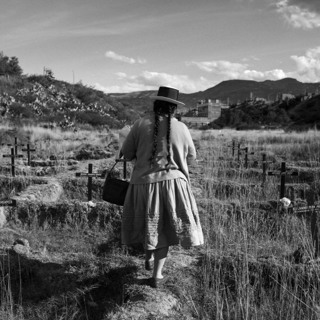
Memorializing IHL violations in the age of AI: opportunities and risks for transitional justice

Memorializing IHL violations in the age of AI: opportunities and risks for transitional justice

Memorialization, one of the five pillars of transitional justice, plays a vital role in preserving the memory of international humanitarian law (IHL) violations and gross human rights violations, supp...

23 Jul 17min

“A number that learned how not to scream”: the case for community-led metrics on protection

“A number that learned how not to scream”: the case for community-led metrics on protection

The international humanitarian system has built a sophisticated architecture for the protection of civilians, namely political resolutions, cluster coordination mechanisms, reporting frameworks, and a...

7 Jul 15min

Amplifying Pacific voices: the region’s crucial role in advancing IHL

Amplifying Pacific voices: the region’s crucial role in advancing IHL

Pacific Island states have long demonstrated leadership in promoting peace, disarmament, and humanitarian values. From traditional customs that reflect principles contained in contemporary internation...

2 Jul 15min

The shelter that shone in the distance | Written and Performed by Mamuch Bey

The shelter that shone in the distance | Written and Performed by Mamuch Bey

For the world's more than 120 million forcibly displaced people, the idea of refuge is not an abstraction – it is a horizon, an act of imagination, and sometimes the only thing that keeps hope alive. ...

18 Jun 4min
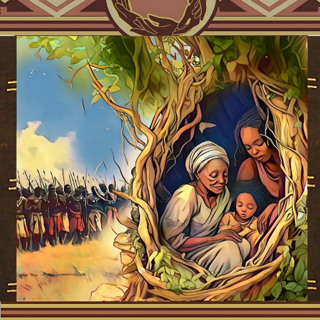
African traditions and the protection of children in armed conflict

African traditions and the protection of children in armed conflict

Across Africa, norms regulating the conduct of hostilities long predate the codification of modern international humanitarian law (IHL). The ICRC Tool on African traditions and the preservation of hum...

16 Jun 12min
We helped individuals while harming persons: what conflict-affected communities deserve beyond beneficiary status

We helped individuals while harming persons: what conflict-affected communities deserve beyond beneficiary status

Conflict and displacement do more than destroy homes, livelihoods, and infrastructure. They also fracture the social relationships through which people sustain dignity, identity, and collective life. ...

11 Jun 14min
Populært innen Politikk og nyheter

giver-og-gjengen-vg
aftenpodden
forklart
aftenpodden-usa
stopp-verden
popradet
lydartikler-fra-aftenposten
nokon-ma-ga
rss-espen-lee-usensurert
rss-gukild-johaug
det-store-bildet
dine-penger-pengeradet
hanna-de-heldige
rss-ness
aftenbla-bla
fotballpodden-2
frokostshowet-pa-p5
rss-penger-polser-og-politikk
e24-podden
rss-borsmorgen-okonominyhetene