Digital Distraction at sea & DIY Maritime Learning

Digital Distraction at sea & DIY Maritime Learning

Chapters


  • 01:30 Hapag-Lloyd and Zim’s $4.1bn deal

  • 03:30 Defining distraction: BIMCO guidance and device risks

  • 05:30 The Karen Høj collision and tablet use

  • 14:40 Cognitive overload, multitasking myths, and Swiss cheese

  • 17:30 Connectivity, alarms, and unintended consequences

  • 29:45 Cruise industry “red zone” bridge culture

  • 35:30 Zodiac’s in-house e-learning hire

  • 41:00 The economics of content creation and AI

  • 48:30 Data-driven training and operational feedback loops

  • 55:00 Human error, system design, and why humans still matter

Episode Shownotes


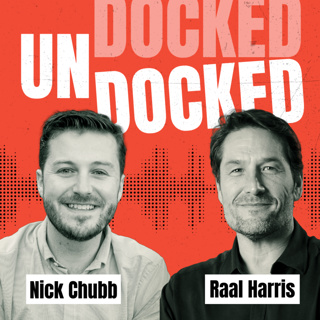
Nick and Raal unpack recent guidance from BIMCO on distraction-causing devices, grounding the conversation in two high-profile cases: the MAIB report into the Karen Høj collision and the US Coast Guard findings on the Ever Forward grounding. In both, device use featured as a contributory factor. The point is not moral failure, but cognitive limits. Multitasking degrades performance. Refocusing takes time. Situational awareness is fragile.


From there, the discussion broadens to alarm overload, connectivity creep, and the operational implications of always-on vessels. What begins as welfare connectivity can blur into safety risk if boundaries are unclear. Proposed mitigations, sterile bridge periods, alert hierarchies, role-based communications, and explicit challenge culture, are examined alongside examples from cruise shipping’s “red zone” bridge protocols.


The second half shifts to training. A job advert from a Ship Operator for a senior in-house e-learning content creator sparks debate about whether shipping is entering a new phase: lower production costs, AI-enabled media, and the possibility of dynamic, data-driven learning loops. The real opportunity lies not in content volume, but in linking operational data to behavioural change.


The episode closes on a reframing of “human error.” If 90% of incidents are attributed to people, how many accidents are prevented by human judgement, intervention, and care? The challenge for leaders is designing systems that support humans at their best—minimising distraction, maximising performance.


This episode is brought to you by Fortec UK.


Fortec’s DNV-approved N-Line maritime monitors are engineered for lifecycle continuity, enabling seamless upgrades without costly console redesigns. With flexible dimming options and IEC 60945 compliance, they support dependable performance across demanding bridge environments. Learn more at: https://www.fortec.uk

Denne episoden er hentet fra en åpen RSS-feed og er ikke publisert av Podme. Den kan derfor inneholde annonser.

Episoder(56)

Are We Making Seafaring Harder Than It Needs to Be? With Steven Jones

Are We Making Seafaring Harder Than It Needs to Be? With Steven Jones

Steven Jones joins Nick Chubb and Raal Harris to examine what the latest Seafarers Happiness Index reveals about life at sea, crew relationships, shore-based wellbeing.Chapters02:16 The origins of the...

6 Aug 57min
The Trust Problem Behind Digital Training Records and Maritime’s Third Mobile Ecosystem

The Trust Problem Behind Digital Training Records and Maritime’s Third Mobile Ecosystem

Mintra’s integration with Norway’s competence registry opens a wider discussion about digital training records, trust and interoperability in maritime. Nick and Raal revisit failed technology forecast...

30 Jul 50min

The Battle for Shipbuilding Capacity and Private Equity Targets Vessel Operations

The Battle for Shipbuilding Capacity and Private Equity Targets Vessel Operations

Nick and Raal explore shipbuilding’s geopolitical revival, friendshoring, autonomous vessel insurance, and the risks of an overheated global orderbook cycle ahead for shipping. They also examine how s...

23 Jul 58min

Freedom of Navigation Under Fire, China's Unexpected Green Push, and Trusting AI at Sea

Freedom of Navigation Under Fire, China's Unexpected Green Push, and Trusting AI at Sea

Freedom of navigation comes under renewed pressure as proposals to charge for transit through the Strait of Hormuz raise profound questions about international maritime law. The conversation then turn...

16 Jul 53min

Compliance Over Competence, Human APIs, and Cognitive Load

Compliance Over Competence, Human APIs, and Cognitive Load

This week, Nick and Raal explore two new research reports examining the gap between maritime systems as they're designed and how they're actually used at sea. They discuss cognitive overload on modern...

9 Jul 54min

$600 Ship Data Collection, Digital Literacy, and Preventive Healthcare

$600 Ship Data Collection, Digital Literacy, and Preventive Healthcare

Nick and Raal discuss leadership change at Hafnia, falling costs for onboard vessel data collection, the continuing debate over software ecosystems versus single platforms, digital literacy and STCW r...

2 Jul 57min

Adaptive Learning and the Death of the Manager: UnDocked Live from Bergen

Adaptive Learning and the Death of the Manager: UnDocked Live from Bergen

Nick and Raal mark Undocked’s first live episode from Bergen with two competing visions for AI in maritime: scalable human expertise and the decline of middle management. The discussion explores perfo...

25 Jun 34min

The End of Easy Globalisation: Bergen Maps the New Maritime Order

The End of Easy Globalisation: Bergen Maps the New Maritime Order

Nick and Raal report from Bergen after Undocked’s first live stage appearance, capturing interviews with Michael Beckley, Sabrina Chao, Andreas Enger, Julian Bray, Pia Melling and Göran Persson. Acros...

18 Jun 1h 26min

Populært innen Teknologi

lydartikler-fra-aftenposten
teknisk-sett
tomprat-med-gunnar-tjomlid
elektropodden
shifter
hans-petter-og-co
rss-alt-som-gar-pa-strom
rss-ai-forklart
teknologi-og-mennesker
rss-bak-skyen
rss-digitaliseringspadden
energi-og-klima
smart-forklart
fornybaren
rss-grenser-for-ki
rss-snakk-om-sikkerhet
rss-ki-praten
rss-kunstig-intelligens-med-elisabeth-maren-og-morten
digital-forretningsforstaelse
rss-bouvet-bobler