March Madness Series: Drift Happens-Here's How You Rebound

March Madness Series: Drift Happens-Here's How You Rebound

Episode Summary

In this third episode of the March basketball series, Molly shares transparently about a recent three-week stretch of travel that disrupted her Mostly Alcohol-Free rhythm.

With retreats, vacation, conferences, disrupted sleep, and limited access to her usual alternatives, she drifted from her typical low-risk limits and had fewer alcohol-free days than usual.

Instead of spiraling, she chose to rebound.

This episode explores the neuroscience of short-term pattern shifts, why regulation comes before restriction, and how to interrupt a streak without shame. Molly shares her real-time rebound plan — including five alcohol-free days this week — and what she’ll do differently next time.


Drifting happens.

Rebounding builds self-trust.


In This Episode

  • Why travel and novelty increase dopamine
  • The impact of sleep disruption on regulation
  • How environment shapes drinking behavior
  • Why streaks strengthen neural pathways
  • The difference between drifting and spiraling
  • Why curiosity regulates and shame dysregulates
  • Molly’s five-day rebound plan

Key Takeaways

  • Drift is human.
  • Regulation comes first.
  • Interrupting a streak restores flexibility.
  • Pre-decision reduces in-the-moment choices.
  • You are defined by your response, not your slip.

Reflection

If you’ve drifted recently, ask yourself:

  • What contributed to it?
  • What would your rebound look like this week?
  • What can you pre-decide next time?

Work With Molly

Learn more at:
www.mollywatts.com

Or email: molly@mollywatts.com


Low risk drinking guidelines from the NIAAA:

Healthy men under 65:

No more than 4 drinks in one day and no more than 14 drinks per week.

Healthy women (all ages) and healthy men 65 and older:
No more than 3 drinks in one day and no more than 7 drinks per week.

One drink is defined as 12 ounces of beer, 5 ounces of wine, or 1.5 ounces of 80-proof liquor. So remember that a mixed drink or full glass of wine are probably more than one drink.

Abstinence from alcohol
Abstinence from alcohol is the best choice for people who take medication(s) that interact with alcohol, have health conditions that could be exacerbated by alcohol (e.g. liver disease), are pregnant or may become pregnant or have had a problem with alcohol or another substance in the past.

Benefits of “low-risk” drinking
Following these guidelines reduces the risk of health problems such as cancer, liver disease, reduced immunity, ulcers, sleep problems, complications of existing conditions, and more. It also reduces the risk of depression, social problems, and difficulties at school or work.

★ Support this podcast ★

Denne episoden er hentet fra en åpen RSS-feed og er ikke publisert av Podme. Den kan derfor inneholde annonser.

Episoder(413)

More Sober October: Make it An Experiment, Not an Exam

More Sober October: Make it An Experiment, Not an Exam

What if the goal of More Sober October isn’t a perfect calendar—but learning something about your relationship with alcohol?In this episode, Molly shares how to approach October as an experiment inste...

28 Sep 23min
Think Thursday: Alzheimer’s Prevention and What the Latest Research Tells Us

Think Thursday: Alzheimer’s Prevention and What the Latest Research Tells Us

World Alzheimer’s Day is a good reminder that the story around Alzheimer’s disease is changing.In this Think Thursday episode, Molly looks at what we know now about earlier diagnosis, blood-based biom...

24 Sep 18min
How Much Alcohol is Safe? Rethinking Drinking Guidelines

How Much Alcohol is Safe? Rethinking Drinking Guidelines

What does “drink less” actually mean?In this episode of the Alcohol Minimalist podcast, Molly explores the changing alcohol guidelines and why there isn’t one simple number that guarantees a “safe” le...

21 Sep 20min
Think Thursday: Why Familiar Feels True-When Thoughts Become Beliefs

Think Thursday: Why Familiar Feels True-When Thoughts Become Beliefs

What happens when a thought gets repeated so often that it stops feeling like a thought and starts feeling like a fact?In this Think Thursday episode, Molly explores the illusory truth effect, process...

17 Sep 15min
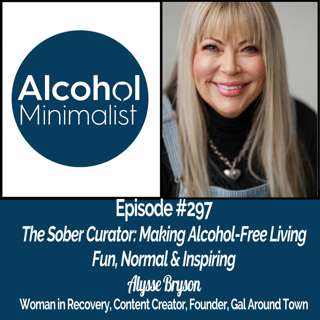
The Sober Curator: Making Alcohol-Free Living Fun, Normal & Inspiring with Alysse Bryson

The Sober Curator: Making Alcohol-Free Living Fun, Normal & Inspiring with Alysse Bryson

What does it look like to build a fun, fulfilling life with less alcohol—or none at all?In this episode of the Alcohol Minimalist Podcast, Molly talks with Elise Bryson, CEO and curator of The Sober C...

14 Sep 45min
Revisiting Think Thursday: Neurodivergence and The Brain's Energy Economy

Revisiting Think Thursday: Neurodivergence and The Brain's Energy Economy

In this revisited Think Thursday episode, Molly explores ADHD through the lens of the brain’s energy economy—how neurodivergent brains may use mental fuel differently, and why that matters for motivat...

10 Sep 13min
Summer's Greatest Hits: Alcohol & ADHD

Summer's Greatest Hits: Alcohol & ADHD

This week on the Alcohol Minimalist Podcast, we’re revisiting the most-downloaded episode from the Alcohol & series: Alcohol & ADHD.ADHD is a personal topic for me, and it also comes up often with coa...

7 Sep 35min
Think Thursday: Hearing Health is Brain Health

Think Thursday: Hearing Health is Brain Health

We tend to think of hearing as something that happens in our ears, but hearing is really a partnership between the ears and the brain. And growing research suggests that when hearing begins to decline...

3 Sep 12min

Populært innen Fakta

fastlegen
dine-penger-pengeradet
relasjonspodden-med-dora-thorhallsdottir-kjersti-idem
rss-strid
treningspodden
rss-bisarr-historie
foreldreradet
jakt-og-fiskepodden
rss-orjasater
tomprat-med-gunnar-tjomlid
takk-og-lov-med-anine-kierulf
hverdagspsyken
sinnsyn
mikkels-paskenotter
rss-impressions-2
rss-kull
gravid-uke-for-uke
rss-kunstig-intelligens-med-elisabeth-maren-og-morten
rss-kunsten-a-leve
fryktlos