Prolepsis
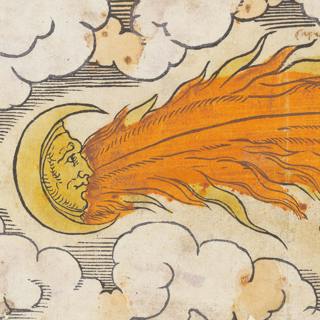
In this episode of High Theory, Gloria Fisk talks to Kim about Prolepsis. Defined by Gerard Genette in the 1970s, prolepsis is a flash forward, the opposite of analepsis, a flash back. Initially the province of high modernism, this rhetorical device has become a well-worn trope with a surprising aptitude for representing violence in our current moment. Fisk shows us how prolepsis dramatizes the workings of structural violence in narrative form. In the episode, Gloria references Stokely Carmichael and Charles Hamilton’s Black Power: The Politics of Liberation (Random House 1967) and Michael Dango's Crisis Style: The Aesthetics of Repair (Stanford UP 2021). The transcript lives here as a WordDoc and here as a PDF. Gloria Fisk writes about contemporary literature in a global context, with a particular interest in the novel. She works as an associate professor of English at Queens College, CUNY. Her areas of interest include the critical debates surrounding world literature in the U.S. as well as novel theory, postcolonial studies, translation theory, and critical writing. In her first book, Orhan Pamuk and the Good of World Literature (Columbia UP 2018), Gloria reads the Turkish novelist Orhan Pamuk as a case study in the unevenness of Western canons’ expansion across the eastern border of Europe. She theorizes the ways the Turkish novelist arrives among his readers in the U.S. and Europe, where he meets a standard for literary value that that emerges in tandem with him. In this episode, we discuss her current book project, in which Gloria theorizes the ethics and politics of prolepsis in contemporary world literature. Her project asks why so many novels that reach Anglophone readers today begin with a scene of terrible violence — a chemical spill, maybe, or untimely death at sea; incarceration, or a terrorist attack — to narrate in retrospect the paths that converge to create it? This use of prolepsis is historically specific to the contemporary period, so Gloria sets out to explain why. She shows that proleptic representations of violence were rare in Western literary traditions until the turn of the twenty-first century, but they have become ubiquitous now, because they work well to express new anxieties and hopes about the limits of our political communities, within and beyond the nation. The working title of her book is We Know How This Will End: Prolepsis, Tragedy, and the Representation of Structural Violence on a Global Scale. Look forward to seeing it in print! The image for this episode is an anonymous illustration from a 1554 broadsheet depicting celestial phenomenon over Salon-de-Provence. It was found for High Theory by Lily Epstein on the Public Domain Image Archive. Learn more about your ad choices. Visit megaphone.fm/adchoices Support our show by becoming a premium member! https://newbooksnetwork.supportingcast.fm/critical-theory

Denne episoden er hentet fra en åpen RSS-feed og er ikke publisert av Podme. Den kan derfor inneholde annonser.

Episoder(2246)

Utku Balaban, "Industrial Islamism: How Authoritarian Movements Mobilize Workers" (U California Press, 2025)

Utku Balaban, "Industrial Islamism: How Authoritarian Movements Mobilize Workers" (U California Press, 2025)

What explains the rise of religious populism in contemporary Turkish politics and society? How does industrialization help to explain change and continuity in social and religious life in Muslim maj...

21 Mai 1h 20min

Shyam Ranganathan, "Moral Philosophy and De-Colonialism: The Irrationality of Oppression" (Bloomsbury Academic, 2026)

Shyam Ranganathan, "Moral Philosophy and De-Colonialism: The Irrationality of Oppression" (Bloomsbury Academic, 2026)

Why have moral philosophers largely ignored colonialism? In Moral Philosophy and De-Colonialism: The Irrationality of Oppression (Bloomsbury Academic, 2026), Shyam Ranganathan tells the story of moral...

21 Mai 53min

Hugo Drochon, "Elites and Democracy" (Princeton UP, 2026)

Hugo Drochon, "Elites and Democracy" (Princeton UP, 2026)

A central paradox of democracies is that they are always ruled by elites. What can democracy mean in this context? Today, it is often said that a populist revolt against elites is driving democratic...

21 Mai 1h 4min

Angharad N. Valdivia and Isabel Molina-Guzmán, "Rebooting Inequality: Critical Takes on Film and Television Remakes" (NYU Press, 2026)

Angharad N. Valdivia and Isabel Molina-Guzmán, "Rebooting Inequality: Critical Takes on Film and Television Remakes" (NYU Press, 2026)

From Ghostbusters to Will & Grace, One Day at a Time to Jurassic Park, the past decade has seen Hollywood reach a new peak in its obsession with reboots, remakes, and revivals. Spearheaded by media gi...

20 Mai 1h 32min

Brett Neilson, "The Rest and the West: Capital and Power in a Multipolar World" (Verso, 2024)

Brett Neilson, "The Rest and the West: Capital and Power in a Multipolar World" (Verso, 2024)

At the heart of the fiercest international conflicts is the struggle for the future of globalization. In the wake of a pandemic that tested economies and societies, geopolitical conflict has taken o...

20 Mai 56min

Benjamin Dalton, "Catherine Malabou and Contemporary French Literature and Film: Witnessing Plasticity" (Edinburgh UP, 2026)

Benjamin Dalton, "Catherine Malabou and Contemporary French Literature and Film: Witnessing Plasticity" (Edinburgh UP, 2026)

Our bodies and brains are radically transformable, mutable and plastic. From the neuroplasticity of the brain to the epigenetic malleability of our bodies and of all organic life, the work of the cont...

18 Mai 1h 29min

Drew M. Dalton, "The Matter of Evil: From Speculative Realism to Ethical Pessimism" (Northwestern UP, 2024)

Drew M. Dalton, "The Matter of Evil: From Speculative Realism to Ethical Pessimism" (Northwestern UP, 2024)

Most of us today would assume that morality and ethics, being value propositions, are questions for inspired leaders, religious creeds, poets—in other words, for the humanities. But what if I told you...

17 Mai 1h 12min

Rebecca Newberger Goldstein, "The Mattering Instinct: How Our Deepest Longing Drives Us and Divides Us" (Liveright Publishing, 2026)

Rebecca Newberger Goldstein, "The Mattering Instinct: How Our Deepest Longing Drives Us and Divides Us" (Liveright Publishing, 2026)

MacArthur Fellow and National Humanities Medalist Rebecca Newberger Goldstein, author of Plato at the Googleplex and The Mind-Body Problem, returns with a revelatory book about the primal drive that i...

12 Mai 43min

Populært innen Vitenskap

fastlegen
tingenes-tilstand
rss-nysgjerrige-norge
sinnsyn
rekommandert
forskningno
villmarksliv
liberal-halvtime
rss-paradigmepodden
rss-zahid-ali-hjelper-deg
jss
tomprat-med-gunnar-tjomlid
kvinnehelsepodden
nordnorsk-historie
fjellsportpodden
rss-inn-til-kjernen-med-sunniva-rose
rss-rekommandert
tidlose-historier
rss-overskuddsliv
rss-bondevennen