YOU DO NOT HAVE TO SAY ANYTHING: Adverse Inferences at Trial

YOU DO NOT HAVE TO SAY ANYTHING: Adverse Inferences at Trial

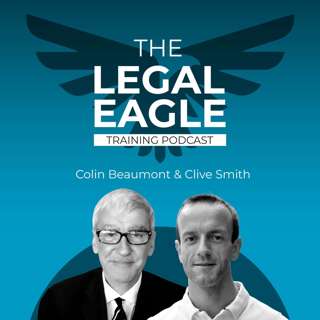
“You do not have to say anything…” – the familiar police caution opens this episode, but Colin Beaumont and Clive Smith unpack what those words really mean in practice, and how adverse inferences can transform the course of a trial.

From the erosion of the absolute right to silence since the Criminal Justice and Public Order Act 1994, through to pre-prepared statements, special warnings, and defence statements, this episode traces the piecemeal development of the erosion of the absolute right to silence and its impact on everyday practice.

The discussion covers the police station interview, where decisions about silence, admissions, or prepared statements can later affect jury perceptions. It moves through the special warning provisions of sections 36 and 37 (objects, substances, marks and presence at the scene), and examines the strategic dilemmas around intimate samples, non-intimate samples, x-rays, and ultrasounds. Colin and Clive highlight key authorities including Knight, Harewood & Raymond, Green, and Hackett, showing how context and judicial discretion shape the drawing of inferences.

They also explore the Crown Court stage under section 35: when a defendant chooses not to testify, how endorsements and practice directions safeguard fairness, and whether “double inferences” are permissible (Chenier). The conversation rounds off with analysis of adverse inferences from failure to serve defence statements and failure to notify witnesses under CPIA provisions, with practical insights for defence practitioners operating at the coalface.

In short, this episode considers the balance between a suspect’s right to silence and the court’s ability to draw adverse inferences, illustrating how both statutory framework and case law have reshaped trial advocacy.

For more information or to book a place on a forthcoming course, please visit:

legal-eagle-training.com.

Referenced Information:

1. Samples at the Police Station

Adverse inferences may be drawn at trial against a defendant who fails, without reasonable cause, to provide intimate samples – see Section 62 (10) of the Police and Criminal Evidence Act 1984

Adverse inferences may be drawn at trial against a defendant who fails, without reasonable cause, to undergo an x-ray or ultrasound scan – see Section 55A (9) of the Police and Criminal Evidence Act 1984

2. Criminal Justice and Public Order Act 1994

Section 34 – Failure to mention when questioned

R v Harewood & Rehman [2021] EWCA Crim 1936

Section 35 – Failure to give evidence

Physical or mental condition makes it undesirable…

Double inferences? R v Chenia [2002] EWCA Crim 2345

Adverse inference or lies direction – R v Hackett [2011] EWCA Crim 380

Section 36 – Failure to account for objects, substances or marks

Section 37 – Failure to account for presence

Can the prosecution refuse to adduce the interview

R (Gonzales) v Folkstone MC [2010] EWHC 3428 (Admin)

2. Witness Notices – Criminal Procedure and Investigations Act 1996

Section 6C – R (Tinnion) v Reading Crown Court [2009] EWHC 2930 (Admin)

3. Defence Statements – Section 6

Can you refuse to serve a defence statement?

R v Rochford [2010] EWCA Crim 1928

Contempt of Court or Adverse Inference?

Admissibility of the defence statement – R v Roehrig [2024] EWCA Crim 539

Denne episoden er hentet fra en åpen RSS-feed og er ikke publisert av Podme. Den kan derfor inneholde annonser.

Episoder(11)

Adjournments: Getting Them, Resisting Them, and What Courts Expect

Adjournments: Getting Them, Resisting Them, and What Courts Expect

Adjournments sound procedural, but they can decide outcomes. In this episode, Clive and Colin unpack when adjournments should (and shouldn’t) be granted, how to prepare and argue them, and the traps t...

12 Des 202558min

Children & Young People In The Criminal Justice System

Children & Young People In The Criminal Justice System

This episode takes a deep dive into the youth justice system - exploring how children and young people are treated differently to adults by the criminal law, and why practitioners often find the youth...

14 Nov 202553min

BAIL - A Dozen Issues to Digest

BAIL - A Dozen Issues to Digest

This month’s episode tackles one of the most technical yet practical areas of criminal law - bail. From time limits to informal hearings and changes in circumstances, Clive Smith and Colin Beaumont ex...

14 Okt 202543min

GOING DOWN - Credit For Guilty Pleas

GOING DOWN - Credit For Guilty Pleas

With significant changes proposed to the way judges and magistrates calculate credit for guilty pleas, this episode examines current practice, Court of Appeal guidance and potential reforms, with the ...

15 Aug 202552min

INDEPENDENT REVIEW of the Criminal Courts

INDEPENDENT REVIEW of the Criminal Courts

With a staggering backlog of over 75,000 cases, this episode explores findings of the recently published Leveson Report - an Independent Review of the Criminal Courts. From the necessity of increased ...

18 Jul 202556min

Digital Strip Search

Digital Strip Search

Could the notion of a "digital strip search" in sexual offence cases be more myth than reality? In this episode, we tackle the intricacies of digital disclosure, focusing on how unused material can ti...

4 Jul 202557min

A Regal Review – Cases from the Kings Bench Division

A Regal Review – Cases from the Kings Bench Division

In the latest episode of the podcast we highlight criminal cases over the last 12 months from the King’s Bench Division, and their implications for legal practitioners. Our first case is a 2024 legal ...

13 Jun 202550min

Populært innen Fakta

fastlegen
dine-penger-pengeradet
relasjonspodden-med-dora-thorhallsdottir-kjersti-idem
foreldreradet
treningspodden
jakt-og-fiskepodden
rss-orjasater
rss-kunsten-a-leve
mikkels-paskenotter
rss-strid-de-norske-borgerkrigene
tomprat-med-gunnar-tjomlid
sinnsyn
hverdagspsyken
rss-var-forste-kaffe
fryktlos
gravid-uke-for-uke
hagespiren-podcast
kvallm
rss-impressions-2
dopet