The Smoking Gun Conundrum

The Smoking Gun Conundrum

For most of modern history, blame followed a path people could trace. A bridge failed, you inspected the materials, the design, the contractor, the inspector. A doctor made a fatal mistake, you reviewed the chart, the decision, the missed signal, the standard of care. The system was messy, but the logic held. Somebody made the call. Somebody owned the failure.


Advanced AI starts to break that logic. At first, the chain still looks familiar. A company trains the model. A team deploys it. A hospital, bank, school, or city agency uses it. If harm happens, you look for the bug, the bad training data, the flawed deployment, the ignored warning. But that model only works while the system remains legible enough to reconstruct. Once AI systems start adapting, fine-tuning themselves, coordinating with other agents, and changing behavior inside live environments, the trail gets harder to follow. The harmful outcome still happened. The damage is still real. But the clean line from action to fault starts to dissolve.


That is where this gets uncomfortable. Society does not only need intelligence to work. Society needs failure to be governable. Courts need defendants. Regulators need standards. Families need answers. Markets need liability. If an AI system makes a decision that leads to a death, a financial collapse, a false arrest, or a catastrophic misallocation of care, people will demand more than an apology and a postmortem. They will want to know who is responsible. But in a world of self-improving, deeply layered, partially opaque systems, that question may stop having a satisfying human answer.


The conundrum:


What do we do when accountability still matters, but traceability breaks down? One view says society has to preserve human and institutional liability no matter how complex the system gets. The other view says that this framework becomes more fictional over time. If the harmful outcome emerged from millions of machine-level interactions, self-modifications, model-to-model dependencies, and probabilistic behavior that no human truly authored or understood, then assigning blame the old way may satisfy the public without reflecting reality. In that world, “who is at fault?” starts to sound like a question built for a simpler age. The deeper problem is not only that the system failed. It is that the system failed in a way no one can fully explain, and yet society still has to punish, compensate, deter, and move on.


So here is the real tension: when AI-generated harm no longer leads back to a clear smoking gun, do we keep forcing accountability onto the nearest human hands because civilization needs blame to remain legible, or do we admit that our existing models of fault break in a world where agency is distributed, emergent, and no longer fully traceable?

Denne episoden er hentet fra en åpen RSS-feed og er ikke publisert av Podme. Den kan derfor inneholde annonser.

Episoder(920)

The Cyrano in Your Ear Conundrum

The Cyrano in Your Ear Conundrum

On October 14, 2026, a startup called Othello announced $8 million in funding for an AI system that listens to sales conversations and tells representatives what to say while the conversation is happe...

17 Okt 29min
Can AI Build an Entire Business Without Your Help?

Can AI Build an Entire Business Without Your Help?

The episode opened with OpenAI's release of GPT-Live 1.1, featuring new voices, improved accents and more natural conversational responses. The hosts compared voice interactions with traditional dicta...

16 Okt 1h 4min

Is Anthropic's IPO In Trouble?

Is Anthropic's IPO In Trouble?

The episode opened with reports of Anthropic approaching $17 billion in revenue for the third quarter and speculation about an IPO as early as November. The hosts also examined political tensions surr...

15 Okt 56min

Arrest Made at OpenAI

Arrest Made at OpenAI

The episode opened with Brian explaining how his automated thumbnail system has improved through months of testing, adjustments and accumulated instructions. By separating image generation, titles, he...

14 Okt 58min

Meta Muse Wonderful? Or Just Benchmark Hype.

Meta Muse Wonderful? Or Just Benchmark Hype.

The episode opened with Meta's new Muse Wonder models climbing the Artificial Analysis Intelligence Index, placing them alongside leading Claude models and ahead of several major competitors. The host...

13 Okt 1h

Are Call Center Jobs Close to Extinction?

Are Call Center Jobs Close to Extinction?

The episode opened with Microsoft's Decision One, a new competitor to JEV that uses Alibaba's Qwen architecture for fast, inexpensive decisions. Beth explained how she uses specialized models to class...

12 Okt 1h 6min
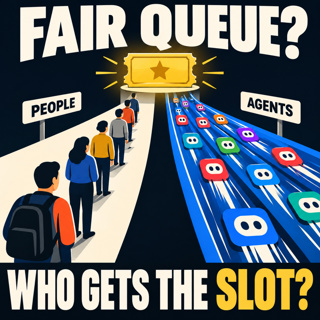
The AI Agent Queue Conundrum

The AI Agent Queue Conundrum

A personal AI agent becomes far more useful once the agent stops waiting for you. Give the agent a goal, a budget, and permission to act, then the agent watches continuously. A restaurant table opens ...

10 Okt 28min

Nvidia Is Reinventing the PC

Nvidia Is Reinventing the PC

The episode opened with local AI. Google released a new application built around Embedding Gemma 2 that can capture and analyze meetings directly on a device rather than sending the entire conversatio...

9 Okt 1h 18min

Populært innen Teknologi

teknisk-sett
energi-og-klima
elektropodden
nasjonal-sikkerhetsmyndighet-nsm
lydartikler-fra-aftenposten
tomprat-med-gunnar-tjomlid
shifter
rss-ai-forklart
fornybaren
rss-alt-som-gar-pa-strom
rss-anleggspraten
rss-kunstig-intelligens-med-elisabeth-maren-og-morten
smart-forklart
rss-teknologioptimistene-en-podkast-om-teknologi-og-mennesker
rss-bak-skyen
rss-larervarelset
i-loopen
rss-hvorfor-ble-det-sann
pedagogisk-intelligens
rss-forenklingspodden