
From Hype to Reality: What Machine Learning Can Actually Do

From Hype to Reality: What Machine Learning Can Actually Do

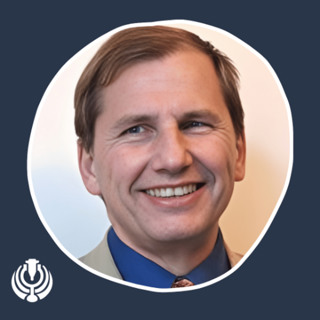
“You can't be stationary in this field. I've never seen anything like it." Machine learning is changing geophysics faster than most people expected, but knowing what actually works versus what is hype is still unclear. Jerry Schuster explains why combining physics, intuition, and hands-on coding is the real advantage that many overlook. He also reveals a surprising shift where AI can act like a “free graduate student,” opening new possibilities while raising important questions about creativity and the future of work. KEY TAKEAWAYS > Big picture plus hands-on learning is the real advantage: Understanding concepts is not enough, doing the work yourself is what turns knowledge into lasting skill. > Physics and machine learning are stronger together: Combining both approaches can outperform either one alone, giving geophysicists a powerful edge. > AI is a tool, not a replacement: Used well, it expands your abilities and speeds up work, but creative thinking still depends on you. LINKS * Practical Machine Learning Methods in Geosciences 2026 virtual (China time zone): 12-13 May -> https://seg.org/shop/product/?id%20=product&id=d7c3ffd8-f69a-f011-b41b-6045bda9b090 * Practical Machine Learning Methods in Geosciences 2026 virtual (North America Time zone): 19-20 May -> https://seg.org/shop/product/?id%20=product&id=c92e0916-51fd-f011-8406-7c1e525c17aa * Buy Machine Learning Methods in Geoscience by Gerard Schuster, featuring hands-on MATLAB and Colab labs. -> https://library.seg.org/doi/epdf/10.1190/1.9781560804048.fm * Listen to his previous interview on his book, Machine Learning Methods in Geoscience -> https://seg.org/podcasts/episode-249-machine-learning-methods-in-geoscience/ GUEST BIO Gerard Schuster has an M.S. (1982) and a Ph.D. (1984) from Columbia University and was a postdoctoral researcher there from 1984 to 1985. From 1985 to 2009, he was a professor of geophysics at the University of Utah and became a professor of geophysics at KAUST (2009–2021). He is currently a research professor at the University of Utah. He received several teaching and research awards while at the University of Utah. He was editor of GEOPHYSICS 2004–2005 and was awarded SEG’s Virgil Kauffman Gold Medal in 2010 for his work in seismic interferometry. SEG published Gerard's book Seismic Inversion in late 2017 and Machine Learning Methods in Geoscience in 2024. ABOUT SEISMIC SOUNDOFF Seismic Soundoff showcases conversations addressing the challenges of energy, water, and climate. Produced by the Society of Exploration Geophysicists (SEG) and hosted by Andrew Geary of 51 features, these episodes celebrate and inspire the geophysicists of today and tomorrow. Three new episodes monthly. See the full archive at https://seg.org/resources/podcast/.

Episoder(301)

OTC 2026 Emerging Leaders on the Future of Offshore Energy Collaboration

OTC 2026 Emerging Leaders on the Future of Offshore Energy Collaboration

“Nothing can happen in a vacuum anymore. We need to have the developers talking to the geoscientists, talking to the environmental professionals.” Two OTC 2026 Emerging Leaders share why the future o...

23 Apr 28min

Why Seismic Acquisition Is Making a Quiet Comeback

Why Seismic Acquisition Is Making a Quiet Comeback

"What has happened in the last few years is exploration overall has taken a little bit of a backseat. So they are starting to relook at seismic acquisition to explore new areas and solve more complex ...

16 Apr 27min

DAS and Seismic Innovation: What Geophysicists Need to Know

DAS and Seismic Innovation: What Geophysicists Need to Know

"For early career geophysicists, I think it's really important to understand that DAS is going to have a unique role in reservoir management, be it onshore or offshore." Distributed acoustic sensing ...

19 Mar 27min

From Oil and Gas to Offshore Wind: Why Everyone Meets at OTC

From Oil and Gas to Offshore Wind: Why Everyone Meets at OTC

“And what the world really needs is this flexibility on energy and the agility to ensure access and affordability. And that's where steering the offshore energy business is really critical.” Offshore...

12 Mar 29min

Applying Near-Surface Geophysics to Agricultural Challenges

Applying Near-Surface Geophysics to Agricultural Challenges

“It’s not only about discovering resources, but about safeguarding them and safeguarding our future. When you understand the subsurface, you understand the foundation of food security, water security,...

5 Mar 26min

Inside the Workflow - Unsupervised Machine Learning for Seismic Interpretation

Inside the Workflow - Unsupervised Machine Learning for Seismic Interpretation

“The major pitfall of machine learning of any kind is to be overly confident in the results. We run the risk of garbage in gospel out.” This discussion offers a rare chance to go a little deeper into...

19 Feb 35min

Why High-Performance Computing Is No Longer Optional in Geophysics

Why High-Performance Computing Is No Longer Optional in Geophysics

“I think that for geophysicists out there, people need to realize that it's an integrated career path. You can't separate the geophysics from the HPC anymore, if we ever did to begin with.” High-perf...

12 Feb 21min

Populært innen Vitenskap

fastlegen
tingenes-tilstand
jss
liberal-halvtime
forskningno
rekommandert
sinnsyn
rss-paradigmepodden
tomprat-med-gunnar-tjomlid
villmarksliv
rss-overskuddsliv
fjellsportpodden
kvinnehelsepodden
rss-nysgjerrige-norge
tidlose-historier
nevropodden
rss-inn-til-kjernen-med-sunniva-rose
dekodet-2
nordnorsk-historie
rss-rekommandert