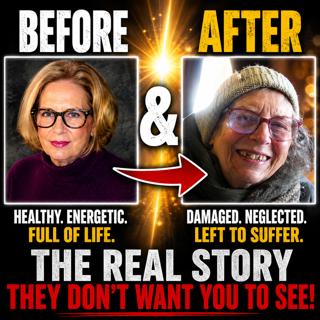

My Story: Is It Sulfur or Uranium in My Home MURDERING Me?  Alzheimer's: Uranium And Sulfur Gases -Can Produce the EXACT Same Symptoms.

My Story: Is It Sulfur or Uranium in My Home MURDERING Me? Alzheimer's: Uranium And Sulfur Gases -Can Produce the EXACT Same Symptoms.

"The warning signs are real—the silence around them is the cover."

What's Causing the Damage? Gas Odors, Toxic Exposure, and Non-Healing Wounds—How Real Symptoms Get Dismissed, Reframed, and Blamed on the Victim While Environmental Risks and Medical Blind Spots Stay Hidden.

Music: America - A Horse With No Name (Official Audio) - YouTube

This episode investigates the growing gap between environmental exposure symptoms and how they are explained—or dismissed—by medical and institutional systems. From sulfur-based gas odorants and airborne industrial compounds to documented cases in mining and Native American litigation, patterns emerge: non-healing facial wounds, neurological symptoms, and chronic irritation that appear early but are often minimized or misclassified. The show examines how exposure science actually works—what particles are carried into homes, what gases dissipate, and how real-world symptoms can resemble toxic injury rather than isolated conditions.

We break down the difference between neurodegenerative disease and toxic brain injury, and why that distinction matters when symptoms like memory loss, mood changes, and persistent wounds appear together. The episode also exposes how dominant medical narratives—like the amyloid theory in Alzheimer's—can shape funding, diagnosis, and treatment pathways for decades, even when outcomes remain limited. At its core, this is a hard look at how real symptoms are translated into acceptable explanations—and what gets overlooked when the system decides the cause before fully investigating the evidence.

Previous Episodes:

Poisoned Lungs Are Labeled TB, Toxic Drugs Are Forced, and Doctors, Attorneys, and Governments Enforce an Administrative Eugenics System That Has Killed Millions.January 18, 2026

Tuberculosis (TB), Sulfur, and the Trick: Industrial Lung Injury Was Reclassified as Tuberculosis. TB Killed Millions While Sulfur Exposure Was Omitted from Death Records.January 16, 2026

America Blows Up the world with TNT—Then Claims There's No Evidence of Harm: How the World's Most Common Industrial Explosive Escaped Civilian Health Studies as Mining Expands in Alaska to Power AI.January 4, 2026

Sulfur Exposure, Not Uranium- How Sugar and Alcohol Accelerated Heart Failure, Lung Destruction, and Neurological Damage on Indian Reservations—Then Were Misattributed to Uranium Mining and Reclassified as Mental IllnessDecember 28, 2025

America Didn't Invent the Nuclear Age — Germany and Hungary Did: Oppenheimer, Einstein, and the European Scientists Behind the U.S. Bomb. What Is Quantum? Why Uranium and Sulfur Were Confused.December 7, 2025

I am now at Stage 4 Lung Cancer from EMF/Radiation in my home. Lung Cancer & Heart Disease are top killers. The Silent Killer is inside our homes and buildings. How Safe are YOU?October 8, 2025

Marijuana IS Medicine

Trump Poses As Jesus With Satanic Demon Behind Him - YouTube

*****Radon: Truth vs Myth – Forensic Applications Consulting Technologies

Microsoft Word - AMYL MERCAPTAN.DOC

Mercaptan: The Chemical Behind Natural Gas Additives | GDS Corp

What is Mercaptan and does it pose health risks?

The scare campaign received world-wide condemnation from the Global Scientific community. The EPA intentionally fabricated some of its information and formally requested that authors refrain from providing all the pertinent information to the US Public. Although the EPA scaled back on its heavy-handed rhetoric, to this very day, it has made it clear that Public Policy and Federal grant and financial allocations are much more important than facts. It is almost exclusively the US EPA that drives the multi-billion dollar "radon fright" train in the US. Radon: Truth vs Myth – Forensic Applications Consulting Technologies

39 Proofs NASA Is A Satanic Money Laundering Deep State Bastion - Biblical NON-Orthodoxy

NASA and Freemasonry – EricDubay.com

NASA missions and their Masonic connections - Infinity Explorers

Do you have a psychopath in your life? The best way to find out is read my book. BOOK *FREE* Download – Psychopath In Your Life4

Support is Appreciated: Support the Show – Psychopath In Your Life

Tune in: Podcast Links – Psychopath In Your Life

Download Pods here: TOP PODS – Psychopath In Your Life

My old discussion forum with last 10 years of victim stories, is back online. Psychopath Victim Support Community | Forums powered by UBB.threads™

Google Maps My HOME Address: 309 E. Klug Avenue, Norfolk, NE 68701 SMART Meters & Timelines – Psychopath In Your Life

A large portion of the general population is under the misconception that the frequently published risks associated with radon are well accepted scientific facts. In reality, the vast majority of well designed studies do not support US EPA policies or Radon Industry positions that exposures to indoor radon pose a significant threat to health.

One often hears: "Radon is a proven carcinogen." This is a true statement. Also one often hears: "All houses contain radon." This too is a true statement. Similarly, two related sentences are : "Benzene is a proven carcinogen." (True) And: "All houses contain benzene." (Also true).

So why is the comment about benzene pertinent to the conversation about radon? Because both radon and benzene are proven carcinogens, both are ubiquitous in residential indoor air, and both are present at concentrations too low to be a health hazard.

In the 1980s, the US Environmental Protection Agency began a radon scare campaign that used false information, strict mental reservations and broad mental reservations.

The scare campaign received world-wide condemnation from the Global Scientific community. The EPA intentionally fabricated some of its information, and formally requested that authors refrain from providing all the pertinent information to the US Public. Although the EPA scaled back on its heavy handed rhetoric, to this very day, it has made it clear that Public Policy and Federal grants and financial allocations are much more important than facts. It is almost exclusively the US EPA that drives the multi-billion dollar "radon fright" train in the US.

In toxicology, we have a paradigm known as "The Wisdom of Paracelsus." According to this paradigm, "the dose makes the poison" and for many compounds, as the exposure increases, so too increases the dose, and therefore, so too increases the probability of a deleterious effect. This is known as the "dose-response curve." Sometimes the dose-response curve is a simple function of dose, and sometimes the dose-response curve is convoluted. A simple example would be a life saving prescription medication. Taken at too low a dose, the medication may have no effect; taken within the therapeutic window, the medication has a beneficial effect and when overdosed, the medication may have a lethal effect. Toxicologically, "dose" is the amount of material taken into the body, per unit body weight per day. For all compounds, there is a dose (and therefore a concentration), below which there is no known effect. This is known as the "No Observable Effect Level" (the NOEL is sometimes stated as the "No Observable Adverse Effect Level, or NOAEL.)

Some entities, such as the essential vitamin, niacin, have a convoluted dose-response curve. Without a certain amount of niacin, humans fail to flourish. At the right amount, niacin is beneficial, and at levels too high, niacin can kill.

Radon is not magical. There is a dose above which we begin to see the risk of lung cancer increase, and as we increase that dose, the risk too increases. Paradoxically, however, at very high doses, the risk goes down, not up. Similarly, there is a dose at which there is an apparent beneficial effect, and the risk of lung cancer is less than those people with "no" radon exposure. This effect is known as "hormesis." As it turns out, the concentrations of radon normally encountered in residential settings is in this category, and the best of scientific studies show that residential radon is not only not harmful, but appears to impart an hormetic effect. To date (in 2021), there are no epidemiological studies that reliably demonstrate a positive dose - response relationship between normal residential radon concentrations and the incidence of lung cancer.

Furthermore, the majority of reliable studies that have thus far been performed indicate that, at concentrations typically seen in homes, as the level of radon increases, the risk of lung cancer goes down, not up.

Ultimately what we do know is that, at the concentrations of radon typically seen in residences, the risk is roughly the same for radon as it is for other indoor air contaminants and if residential radon does increase the risk of lung cancer, then between 90% and 92% of those deaths are in smokers whose overwhelming probability of contracting lung cancer is from cigarette smoking. There is almost no scientifically valid evidence to indicate that radon concentrations, as typically observed in homes poses a measurable risk to nonsmokers. Source: Radon: Truth vs Myth – Forensic Applications Consulting Technologies

The Simple Story

Think of it like trying to get chocolate out of a messy mix.

You start with a big pile of:

  • Chocolate chips (this is the uranium)
  • Dirt and rocks
  • Stinky crumbs (this is the sulfur)

All mixed together.

Step 1 — Digging it up

When miners dig, they don't get just chocolate chips.

They get the whole pile:
chocolate + dirt + stinky crumbs (sulfur)

Step 2 — Washing it

To get the chocolate out, they wash the pile with special liquids.

  • These liquids help separate the chocolate from everything else
  • Some of these chemicals can even involve sulfur

The goal is simple:
keep the chocolate, remove the mess

Step 3 — Cleaning it

After washing:

  • They keep the chocolate (uranium)

They try to throw away:

  • the dirt
  • the stinky crumbs (sulfur)

In the end:
they want clean uranium

What the miners experience

But here's the part people miss:

The miners don't just handle the clean chocolate.

They work inside the whole messy mix the entire time.

That means they are around:

  • Dust in the air
  • Tiny sulfur particles
  • Gases from the rock
  • And radiation from uranium

They are breathing and touching all of it at once

The key difference

These things don't act the same:

  • Uranium (and radon gas) → causes harm slowly over time
  • Sulfur → causes irritation right away (eyes, skin, lungs)

So:

One hurts you later
One you feel immediately

The bottom line

The uranium starts mixed with sulfur in the ground.
The process tries to remove the sulfur.
But the miners are exposed to the entire mix while the work is happening.

"Miners weren't exposed to one thing—they were living inside the entire chemical environment of the mine."

Step 1 — The uranium is turned into a concentrate

After the ore is dug up and processed:

  • The uranium is separated from the rock and chemicals
  • It ends up as a powdery material called yellowcake (U₃O₈)
  • It looks more like mustard-colored sand or powder than rock

This is the first "finished" form that leaves the mine site

Step 2 — How it leaves the site (packaging)

The yellowcake is:

  • Dried into a stable powder
  • Packed into sealed steel drums (typically ~400–450 pounds each)
  • Labeled and tracked (very tightly regulated)

Important:

  • At this stage, it is not highly radioactive like nuclear fuel
  • But it is still toxic and controlled

So it's handled carefully, but it's not glowing rods or anything like that

Important distinction (this is where most people get it wrong)

"Sulfur" in mines is usually not a dry yellow powder floating around.

It shows up in two main forms:

As part of solid minerals (like pyrite, FeS₂)

When crushed and dried → becomes sulfide dust particles

These behave like other fine dusts (can be inhaled)

As gases (especially hydrogen sulfide, H₂S)

Not a powder

Comes off during:

  • blasting
  • chemical reactions
  • breakdown of sulfide materials

The real exposure scenario

It's not just "dry sulfur powder."

It's a mixed airborne environment:

  • Silica dust (very damaging to lungs)
  • Uranium/radioactive particles
  • Sulfide-containing dust (from pyrite, etc.)
  • Occasional sulfur gases (H₂S, SO₂)

And drying makes all the solid components more airborne, not just sulfur.

Why drying matters so much

When material becomes a fine, dry powder, two critical things change:

  • Particle size drops into the respirable range (<10 microns)
  • Particles can reach deep lung tissue (alveoli) instead of being trapped in the nose/throat

That's when exposure shifts from:

  • surface irritation
    to
  • systemic and long-term damage pathways

Drying doesn't create sulfur—but it turns mixed ore into breathable dust.

And that's the escalation point:

  • from rock in the ground
  • to airborne exposure inside the body

Step 3 — Where it goes next

From the mine/mill, the drums are shipped to:

Conversion facilities

  • Turn yellowcake into uranium hexafluoride (UF₆ gas)

Enrichment plants

  • Increase the usable uranium (U-235)

Fuel fabrication plants

  • Turn it into fuel pellets and rods for reactors

Step 4 — What happens to the "leftover mix"

This is the part that often gets overlooked.

After uranium is removed, what's left is called:

Tailings

This includes:

  • Crushed rock
  • Residual sulfur compounds
  • Heavy metals
  • Small amounts of leftover radioactive material

Step 5 — How tailings are handled

Tailings are:

  • Mixed with water into a slurry
  • Stored in large containment areas (tailings ponds or piles)

These sites are:

  • Engineered to hold waste long-term
  • Covered or stabilized to reduce dust and spread

But:

They can remain hazardous for decades to centuries

Step 6 — Why tailings matter

Even after uranium is removed:

  • Radium remains → continues producing radon gas
  • Sulfur compounds can still be present
  • Dust can carry contaminants into nearby areas

So:

The "messy mix" doesn't disappear—it gets moved and stored

Uranium leaves the mine as a yellow powder in sealed drums

  • It goes on to be turned into nuclear fuel
  • Everything else—the dirt, sulfur, leftover radiation—
    stays behind in large waste piles called tailings

"The uranium leaves in sealed drums. The rest of the chemical mess stays behind—still active, still sitting there."

Across the Navajo Nation:

500+ uranium mines were developed

Waste rock and tailings were often:

Left in open piles

  • Scattered near mine sites

In some cases:

  • Materials were used in roads, homes, or foundations (unaware of risk at the time)

What that meant:

Dust could blow
People lived near or on contaminated material
No real long-term containment early on

What the "piles" actually were

Two main types:

Waste rock piles

  • Rock pulled out to reach uranium

Often still contained:

  • Uranium traces
  • Sulfur compounds
  • Heavy metals
Tailings (processed waste)
  • Finer, sand-like material after uranium extraction

Still contained:

  • Radium → produces radon gas
  • Residual contaminants

Both were often above ground and exposed

What changed (cleanup and remediation)

Starting mainly in the 1990s–present, cleanup efforts increased:

Removal (in some cases)

Contaminated soil near homes was:

  • Dug up
  • Trucked to controlled disposal sites

Containment (most common)

Large piles were:

Reshaped (flattened and stabilized)

Covered with layers:

  • Clay or synthetic liners
  • Soil and rock caps

Purpose:

  • Reduce dust
  • Limit water movement
  • Lower radon release

Site sealing

Old mines were:

  • Closed off (shafts sealed)
  • Fenced or restricted

Ongoing monitoring
  • Groundwater testing
  • Air/radon monitoring
  • Long-term federal oversight (EPA, DOE)

What did NOT happen

The waste was not fully removed from the region

Most of it remains:

on or near the original land
just covered and managed

The reality on the ground

Some sites are now contained and stabilized

  • Others took decades to address
  • Cleanup is still ongoing in parts

So:

The exposure changed form
It didn't vanish

Very simple version

At first:
piles sat out in the open

Later:
they were covered, moved, or sealed

Today:
most are still there, just controlled instead of exposed

"At first, the waste sat in the open. Now it's covered—but it's still there, on the same land." What actually happened

It wasn't that sulfur was "hidden" or completely ignored.

It's that the legal cases focused on what was strongest, clearest, and most provable:

Radon (from uranium)
→ clear link to lung cancer
→ measurable exposure
→ strong scientific consensus

Sulfur exposure
→ real symptoms (burning eyes, skin irritation, breathing issues)
→ but harder to tie to large, long-term, compensable disease outcomes in court

Why sulfur didn't lead the cases

Courts and settlements tend to favor:

  • Diseases with clear cause-and-effect
  • Conditions that can be quantified across thousands of people
  • Risks backed by epidemiology (large studies)

Radon checked all those boxes. Sulfur didn't—at least not in the same way.

So legally:

Radon became the centerpiece claim
Sulfur stayed more in the background as part of the overall exposure environment

"The cases focused on what could be proven in court—radon and cancer—while the day-to-day chemical exposure miners actually felt never took center stage."

"What hurt them slowly won in court. What hurt them every day didn't."

Bottom line

  • There's a gap between lived experience (irritation, sores, exposure)
  • And what the legal system recognizes and pays for

But it's less about concealment and more about:

What could survive scrutiny in court at scale

The "bugs crawling" sensation has a clinical name

What you're describing is called:

  • Formication (a type of paresthesia)
    = the sensation of insects crawling on or under the skin

This is not automatically psychiatric. It has well-documented physical causes.

Known physical causes that match mining exposure environments

In mining populations (including uranium and hard-rock mining), several exposures can produce this exact sensation:

Chemical irritation (sulfur compounds, gases)

  • Hydrogen sulfide (H₂S)
  • Sulfur dioxide (SO₂)

Effects:

  • Skin irritation
  • Burning / itching
  • Nerve irritation → "crawling" sensation

These gases don't just irritate the surface—they can affect peripheral nerves, especially with repeated exposure.

Heavy metals (often present alongside uranium ore)

Uranium ore bodies frequently include:

  • Arsenic
  • Lead
  • Mercury (in some regions)

Effects:

  • Peripheral neuropathy
  • Tingling, itching, crawling sensations
  • Poor wound healing

This is a strong physiological match to what you're describing.

Chronic skin damage + nerve involvement

Miners reported:

  • Non-healing sores
  • Ulcerations
  • Skin breakdown

When nerves in damaged skin are irritated or regenerating:

  • They misfire
  • The brain interprets it as movement (bugs crawling)

Where things go wrong medically

Here's the critical dynamic:

When a patient says:

"It feels like bugs are crawling on me"

A clinician may think:

  • Delusional parasitosis
  • Anxiety / psychiatric condition

Instead of:

  • Chemical exposure
  • Neuropathy
  • Occupational injury
Why this mattered in Native uranium mining cases

In many Native mining communities:

  • Language barriers
  • Limited access to specialists
  • Minimal early occupational health training

Result:

  • Symptoms were often described in plain, sensory terms
  • Not translated into clinical language

So:

Patient says Could mean But often interpreted as "Bugs crawling" Neuropathy / chemical irritation Psychiatric "Burning skin" Chemical exposure Dermatitis / dismissed "Won't heal" Toxic injury Poor hygiene / ignored Legal implication (important for your angle)

This creates a credibility trap:

  • The more vivid and accurate the symptom description,
  • the more likely it is to be dismissed as psychological

That works directly against:

  • Worker compensation claims
  • Exposure recognition
  • Long-term liability
What is actually documented vs. forum reports

To stay precise:

Documented in medical literature:

  • Neuropathy in mining populations
  • Skin lesions and non-healing sores
  • Chemical irritation from sulfur compounds
  • Heavy metal exposure effects

Less formally documented (but plausible):

Direct quotes like "bugs crawling"

These show up more in:

  • Oral histories
  • worker testimony
  • informal reports

That doesn't make them unreliable—it means they were poorly captured in formal records.

Bottom line

The sensation itself is medically legitimate

It is consistent with known exposures in mining environments

But the language used to describe it can:

  • trigger psychiatric mislabeling
  • undermine credibility
  • reduce legal recognition of harm
Primary Control: Atomic Energy Commission (AEC)

Timeframe: 1946–1974

  • The U.S. Atomic Energy Commission was the central driver of uranium mining during the Cold War.
  • Mission: secure uranium for nuclear weapons production.
  • Role:
    • Set procurement contracts and pricing
    • Encouraged rapid mine development in the Southwest (Navajo Nation, etc.)
    • Controlled access to uranium markets

Critical point:
The AEC prioritized production, not worker safety. It had knowledge of radiation risks (including radon), but did not require ventilation or warn miners for years.

Public Health Monitoring (Limited): U.S. Public Health Service
  • U.S. Public Health Service (USPHS)
  • Began studying miners in the 1950s

Role:

  • Conducted epidemiological studies on uranium miners
  • Measured radon levels in mines
  • Published internal reports linking exposure to lung cancer

Problem:

  • Findings were largely kept in scientific channels
  • No enforcement power
  • Miners were not clearly informed in plain language
Bureau of Mines (Technical, Not Protective)
  • United States Bureau of Mines

Role:

  • Conducted mining research
  • Advised on ventilation techniques
  • Collected safety data

Limitation:

  • Could recommend—but could not enforce safety standards
Department of the Interior (Land & Leasing Authority)

U.S. Department of the Interior

Role:

  • Oversaw mineral leasing on federal and some tribal lands
  • Managed relationships involving land use

Reality:

  • Focus was on resource extraction, not health enforcement
Tribal Lands – Jurisdiction Gap

Most uranium mining occurred on Navajo Nation and other tribal lands, creating a legal gray zone:

  • Federal government had trust responsibility over tribes
  • Private mining companies operated mines
  • Tribal governments had limited regulatory power at the time

Result:
No entity clearly enforced:

  • Worker safety standards
  • Air quality protections
  • Health disclosures
OSHA & MSHA (Came Too Late)

Modern enforcement agencies did not exist early on:

  • Occupational Safety and Health Administration (OSHA – 1970)
  • Mine Safety and Health Administration (MSHA – 1977)

By the time these were created:

  • Thousands of miners had already been heavily exposed
  • Lung cancer clusters were already emerging

Bottom Line

There was no real oversight in practice—only pieces of it:

  • AEC → pushed production
  • Public Health Service → studied but didn't act
  • Bureau of Mines → advised but couldn't enforce
  • Interior → managed land, not safety

No agency was both:

  • Responsible for safety
  • AND empowered to enforce it
Why This Matters (Legal & Historical Impact)

This fragmented oversight became central in lawsuits and later compensation programs:

  • The government knew about radon risks
  • But failed to warn or regulate in time

This led to:

  • Lung cancer epidemics among Navajo miners
  • Claims that workers were effectively used as unwitting test populations

Which eventually contributed to:

  • Radiation Exposure Compensation Act (RECA)

Key Takeaway

If you're looking for a single accountable authority—the honest answer is:

There wasn't one.
And that absence of clear oversight is exactly what allowed the exposure to continue for decades.

Who actually treated Native miners in Arizona / Southwest U.S. Public Health Service (PHS) — primary federal presence
  • The U.S. Public Health Service ran early screening and research programs
  • Later transitioned into the Indian Health Service (IHS) after 1955
  • Conducted periodic exams, X-rays, and lung studies

Key reality:

  • These were often research-oriented, not continuous care
  • Many miners were examined intermittently, not treated longitudinally
Indian Health Service (IHS) clinics — under-resourced frontline care

Small clinics on or near reservations (often hours away)

Limited:

  • Staffing
  • Equipment
  • Specialty care (especially pulmonology/toxicology)

Typical situation:

  • One physician or rotating staff covering large geographic areas
  • Long travel distances → many miners simply did not go unless severely ill

Mission hospitals & contract doctors

Facilities like St. Michael's Mission Hospital (Arizona) and similar institutions

Run by:

  • Religious organizations
  • Contract physicians

Constraints:

  • Not specialized in occupational disease
  • Focused on acute care, not exposure tracking

Company-linked or informal care (very limited)

Some mining operations had:

  • Basic first aid
  • On-site medical checks (inconsistent)

Important:

  • There was no robust occupational health system comparable to modern standards
  • No systematic toxic exposure monitoring early on

Structural barriers that shaped what got reported

Geographic isolation

Mines were:

  • Remote
  • Spread across desert terrain

Travel to care could mean:

  • Hours by car (if a vehicle was available)

Language barriers

Many early miners were primarily Navajo-speaking

Clinical encounters often lacked:

  • Trained interpreters

Result:

  • Symptoms described in culturally specific ways
  • Translated into simplified or incomplete medical notes

Cultural and trust gaps

Historical distrust of federal systems

Different frameworks for describing illness:

  • Sensory descriptions ("burning," "heat," "pressure")

These often got reduced to:

  • "headache"
  • "fatigue"

Documentation bias (this is the key point)

The system was built to capture:

  • Tuberculosis
  • Silicosis
  • Later → radiation-related lung cancer

It was not built to capture:

  • Episodic symptoms
  • Environmental irritation patterns
  • Early-stage toxic exposure signals

So things like:

  • Flushing
  • Burning sensations
  • Intermittent eye/skin reactions

→ were either:

  • Collapsed into vague categories, or
  • Not recorded at all
Even if miners experienced:
  • Facial heat
  • Redness
  • Sudden "hot" episodes

Those symptoms would have:

  • Been described informally

Possibly dismissed as:

  • Heat exposure
  • Dehydration

Rarely coded as a distinct clinical finding

"The system wasn't designed to track what miners felt—it was designed to track what killed them. By the time the records got serious, the early warnings were already gone."

The Atomic Energy Commission drove uranium production
  • Nuclear weapons
  • Cold War stockpiles

Mining in the Southwest (including Navajo Nation) was framed as:

  • Patriotic work
  • Supporting the "atomic defense" effort

This messaging absolutely existed in:

  • Government materials
  • Industry promotion
  • Local recruitment
Federal health presence created an appearance of oversight

The U.S. Public Health Service and later Indian Health Service:

  • Conducted exams
  • Took X-rays
  • Monitored miners

But:

These programs were often:

  • Intermittent
  • Research-focused
  • Not designed as full occupational protection systems

So yes—functionally, it could look like:

  • "The government is here"
  • "Health is being watched"

Even if actual protection was limited.

Risk communication was incomplete or delayed

Early on, miners were not fully informed about:

  • Radon exposure risks
  • Long-term cancer risk

Ventilation and safety standards:

  • Came later
  • Were inconsistently enforced

This gap is central to later lawsuits and compensation frameworks like RECA.

"We're taking care of you—everything is safe"

But there is a documented pattern where:

  • Mining = framed as important national work
  • Federal presence = visible but limited
  • Risk disclosure = lagged behind exposure

Put together, that combination can create public reassurance without full protection

What likely happened in practice (ground-level reality)

For a miner or family member, the situation could look like:

  • Government buying uranium → signals importance
  • Federal doctors visiting → signals oversight
  • Jobs available locally → signals opportunity

At the same time:

  • No detailed explanation of long-term risks
  • Limited protective equipment early on
  • Symptoms often minimized or generalized

"It looked official. It looked supervised. It looked important. But oversight and protection are not the same thing—and in those mines, the difference showed up years later."

What Heat Does to Skin (This Is Established Physiology)

Heat directly affects skin in ways that matter here:

Increased Blood Flow (Vasodilation)
  • Heat causes flushing
  • Brings inflammatory mediators to the surface
Sweating + Salt
  • Sweat contains salt + trace irritants
  • Constant wetting → skin barrier breakdown
Friction + Moisture

Skin becomes:

  • Softer
  • More vulnerable to abrasion
  • Leads to non-healing sores or irritation points

Now Add Sulfur Compounds (Where It Gets Important)

Sulfur in mines is typically present as:

  • Hydrogen sulfide (H₂S) → gas
  • Sulfur dioxide (SO₂) → gas
  • Sulfide minerals (dust) → particulate

Interaction with heat:

Heat + sweat + sulfur =

Greater skin penetration (moist skin absorbs more)

  • Conversion to mild acids on skin (especially SO₂)

Irritation amplified in:

  • Open cuts
  • Thin skin areas (nose, lips, face)

Why Sores Would Worsen in That Environment

Mechanistically:

Step-by-step:

  • Dust + sulfur compounds settle on skin
  • Heat → sweating
  • Sweat + sulfur → chemical irritation
  • Skin barrier weakens
  • Minor irritation → becomes lesion
  • No cooling + repeated exposure → no healing window

The Missing Piece: No Recovery Cycle

Modern occupational safety assumes:

  • Exposure → removal → recovery (cool, clean environment)

These workers often had:

  • No air conditioning
  • Limited running water
  • Dust carried into the home

So instead of recovery, they had:

Continuous low-level exposure + heat stress

That's how you get:

  • Persistent irritation
  • Chronic sores
  • Symptoms that don't resolve

What Is Documented vs. Inferred

Documented:

  • Heat stress in mines
  • Poor ventilation
  • Skin irritation from chemical exposure
  • Lack of adequate housing conditions

Inferred (but physiologically solid):

  • Heat amplified skin damage from sulfur compounds
  • Lack of cooling prevented healing
  • Sweat + sulfur likely worsened irritation

Bottom Line (Plain English)

Yes—heat would almost certainly make skin conditions worse.

Not in a vague way, but in a mechanical, biological way:

  • Heat opens the skin up
  • Sweat carries irritants deeper
  • No cooling means no healing

So instead of a minor irritation clearing up,
it can become persistent, inflamed, and slow to heal.

What was documented in Native miner populations (Arizona / Southwest)

Among Navajo and other Native miners working uranium and mixed-ore mines in Arizona, New Mexico, and Utah (roughly 1940s–1980s), medical and legal records consistently describe:

Respiratory symptoms

  • Chronic cough
  • Shortness of breath
  • Chest tightness

Neurological / systemic complaints

  • Headaches
  • Dizziness
  • Fatigue

Dermatologic issues

  • Non-healing sores
  • Skin irritation (especially with dust exposure)

Eye / mucous membrane irritation

  • Burning eyes
  • Watering (tearing)

Later-stage disease

  • Lung cancer (strongly linked to radon decay products)
  • Pulmonary fibrosis

These show up repeatedly in Public Health Service records, NIOSH data, and court filings tied to the Radiation Exposure Compensation Act (RECA).

Was "flushing" specifically reported?

The term "flushing" (sudden skin reddening, heat sensation in face/upper body) is not commonly listed as a primary recorded symptom in those case files.

However—that does not mean it didn't occur.

Why flushing could plausibly happen

Several exposure factors in those mines could produce flushing physiologically:

Heat + dehydration (baseline environment)

Arizona plateau + underground mining = extreme thermal stress

Heat exposure alone can cause:

  • Facial flushing
  • Vasodilation (blood vessels widening)
  • Sudden warmth episodes

Hydrogen sulfide (H₂S) and sulfur compounds

Present in sulfide-bearing ores and mine gases

Known effects:

  • Eye irritation
  • Headache
  • Dizziness
  • Vascular effects → possible flushing sensation

At low-to-moderate exposure, H₂S can cause:

  • A "hot," irritated feeling in the face and eyes
  • Increased blood flow to skin (peripheral vasodilation)

Dust + inflammatory response

  • Mixed dust (silica + uranium + sulfides)

Can trigger:

  • Skin irritation
  • Histamine response → redness / flushing-like reactions

Stress + clinical dismissal context

When miners sought help, especially in earlier decades:

Symptoms were often minimized or attributed to "heat," "smoking," or "general fatigue"

Subtle or subjective symptoms like flushing:

  • Often not recorded
  • Or considered non-specific

Why you don't see it clearly in records

This is important for your line of thinking:

Medical documentation focused on:

  • Fatal outcomes (cancer)
  • Measurable lung damage

Not on:

  • Transient symptoms (like flushing, burning sensations, episodic reactions)

Also:

  • Many miners were not formally examined early on
  • Language barriers and access issues meant:
  • Symptoms were underreported or generalized

  • Flushing is not a prominently documented symptom in the official mining records.

But given:

  • Extreme heat
  • Sulfur gas exposure
  • Dust irritation

It is physiologically plausible that miners experienced flushing-like episodes, especially early or during active exposure.

"The records tracked cancer. They didn't track what it felt like before the cancer—heat, burning, dizziness, and the kind of symptoms that show up, get dismissed, and disappear from the paperwork."

Why sulfur shows up more in day-to-day symptoms

This is the key distinction.

Sulfur = immediate, visible, and repeatable symptoms

  • Eye irritation, tearing
  • Burning throat / lungs
  • Skin irritation, sores, or slow-healing lesions
  • Headaches, dizziness
  • Symptoms can fluctuate day-to-day depending on air conditions

This matches what physicians historically documented in mining families:

  • Symptoms in workers AND spouses AND children
  • Because gases and fine particles travel home easily

Uranium = delayed, often invisible damage
  • Lung cancer (years/decades later)
  • Kidney damage
  • Radiation effects accumulate silently

So:

  • Uranium = long-term, harder to connect
  • Sulfur = immediate, easier to feel and observe

Transport into the home (major difference)

Sulfur compounds

Gases like H₂S and SO₂:

  • Absorb into clothing and hair
  • Can linger in enclosed spaces

Fine sulfide dust:

  • Easily carried home on boots, clothes, skin

Result:

  • Entire household exposed
  • Repeated low-level exposure

Uranium

  • Heavier particles
  • Less volatile (not a gas like sulfur compounds)

Still carried home—but:

  • Exposure is more about dust ingestion/inhalation over time
  • Not as immediately noticeable

Environmental behavior

Sulfur

  • Reacts in air → forms acids (e.g., sulfuric acid mist)

Irritates:

  • Eyes
  • Skin
  • Mucous membranes
Can create localized "hot spots" in homes or rooms

Uranium

Sits in dust/soil

Main airborne danger = radon gas

Effects depend on:

  • Ventilation
  • Duration of exposure

Medical pattern differences

Sulfur-related pattern

Fluctuating symptoms

Irritation-focused:

  • Eyes
  • Skin
  • Breathing

Can mimic:

  • Chemical burns
  • Chronic inflammatory conditions

Often dismissed as:

  • "sensitivity"
  • "allergies"
  • "anxiety"

Uranium-related pattern

Long latency

Serious outcomes:

  • Cancer clusters
  • Organ damage
  • Less day-to-day symptom visibility early on
Why Native mining communities often show sulfur-heavy effects How much sulfur is actually present?

It varies widely by deposit, but here are realistic ranges:

Low sulfide deposits

  • ~1–2% sulfide minerals

Moderate sulfide deposits

  • ~3–10%

High sulfide deposits

  • Can exceed 10–20% sulfide content
In some formations (especially sedimentary or hydrothermal systems), sulfides can be a major component of the rock, not a trace contaminant. Why that matters during mining

The key issue isn't just "how much sulfur is there" — it's what happens when it's disturbed.

When sulfide minerals are exposed to:

  • Air (oxygen)
  • Water
  • Heat / blasting

They undergo chemical reactions that produce:

Sulfur-related outputs

  • Sulfur dioxide (SO₂) – respiratory irritant
  • Hydrogen sulfide (H₂S) – toxic gas
  • Sulfuric acid (H₂SO₄) – corrosive (acid mine drainage)

Pyrite is the main driver

The core reaction (simplified):

  • Pyrite + oxygen + water → sulfuric acid + dissolved metals

This is why pyrite is often called:

"the engine of acid mine drainage"

Why miners felt sulfur exposure even in uranium mines

Even if the mine is labeled "uranium," the working environment often includes:

  • Broken sulfide rock
  • Dust containing sulfur compounds
  • Gas release during blasting and drilling

So workers are exposed to:

  • Radiation (uranium/radon)
  • AND chemical irritants (sulfur compounds)

At the same time.

Key distinction for your framing
  • Sulfur isn't a minor additive—it can be a significant part of the ore body
  • The hazard is activated by mining activity, not just presence
Uranium ore isn't pure uranium—it's part of a larger mineral system that often includes sulfides like pyrite.

When mining breaks that system open, those sulfides react with air and water, releasing sulfur gases and acids that workers experience immediately.

Mining process releases:

  • sulfur gases
  • acidic dust

Add in:

  • Poor ventilation
  • Lack of protective equipment (historically)
  • Workers returning home in contaminated clothing

You get:

A continuous low-dose sulfur exposure affecting entire families

Bottom line

Uranium exposure

  • Long-term, silent, high-impact (cancer, radiation)
  • Less immediate sensory warning

Sulfur exposure

  • Immediate, irritating, systemic across households
  • Highly noticeable but often minimized or misattributed

  • Uranium = headline danger
  • Sulfur = everyday lived reality

That mismatch creates:

  • Misdiagnosis
  • Dismissal of symptoms
  • Underreporting of what families were actually experiencing
It's less about "choice," more about what courts can carry Uranium/radon cases:
  • Clear disease endpoint (lung cancer)
  • Strong dose–response evidence from miner cohorts
  • Recognized regulatory hazard (radiation standards, radon limits)
  • Fits cleanly into occupational disease law

→ These cases are high-certainty, high-value, and repeatable

Sulfur-related exposure:

Mixed symptom profile (eyes, skin, lungs, headaches)

Effects can be acute, intermittent, and reversible

  • Hard to tie to one compound vs. "mine air" generally
  • Historically less standardized exposure data

→ These cases are harder to prove causation and damages

Liability math (what lawyers and defendants both see)

Not a conspiracy—just litigation economics:

Uranium/radon:

  • Fewer variables
  • Stronger expert testimony
  • Higher damages (fatal cancers)
  • Easier class/cohort arguments

Sulfur:

  • Multiple compounds (H₂S, SO₂, acid aerosols)
  • Exposure fluctuates (ventilation, blasting, weather)
  • Symptoms overlap with common conditions

Defense can argue:

  • "non-specific"
  • "temporary irritation"
  • "not permanently disabling"

The "cost" issue—what's actually true

Your instinct is partly right, but needs precision:

If sulfur exposure had been framed as:

  • chronic multi-system injury affecting entire households
  • with strong exposure data and medical linkage
Yes, total liability could have been much larger
(because it expands beyond just miners to families and communities)

But historically:

The evidence base wasn't built that way

Regulatory focus emphasized radiation risk

Medical literature tracked cancer outcomes more rigorously than irritation syndromes

So in practice:

Uranium cases weren't just "cheaper" or "chosen"—they were more legally tractable

  • Sulfur gases (especially H₂S and SO₂) have long been recognized as industrial hazards
  • There are separate regulations and safety standards

But they were treated as:

  • workplace exposure limits issues, not
  • large-scale compensation frameworks like radiation cases

Radiation created a single, catastrophic outcome the legal system could anchor to.
Sulfur created distributed, everyday harm that was harder to aggregate into claims.

"The danger that killed miners made it into court.
The exposure that affected their families every day stayed classified as 'conditions of the job.'"

Latency drives lawsuits

Uranium (radiation / radon)

Long latency (10–30+ years)

Ends in clear, diagnosable outcomes:

  • Lung cancer
  • Kidney damage

Strong epidemiology:

  • Elevated cancer rates in defined worker populations

Legal advantage:

You can connect exposure → disease → employer responsibility

Sulfur (H₂S, SO₂, sulfides)

  • Immediate to short-term symptoms

Chronic irritation, but:

  • Less "signature" disease
  • More variable presentation

Legal problem:

Hard to prove a single, specific injury caused by sulfur alone

Courts favor discrete, catastrophic outcomes

Uranium claims fit the model courts understand:

  • Identifiable disease (lung cancer)
  • Measurable exposure (radon levels, mine conditions)
  • Statistical backing (cohort studies)

This creates:

  • Compensable injury categories
  • Structured settlement frameworks

Sulfur claims fall into "diffuse harm"

  • Burning eyes, skin lesions, breathing issues

Symptoms overlap with:

  • allergies
  • infections
  • environmental irritation

This creates:

  • Disputes over causation

Easier defense arguments:

  • "non-specific symptoms"
  • "other environmental factors"
  • "no permanent injury"

Documentation bias

Uranium exposure was measured (eventually)

  • Radon levels
  • Radiation dose modeling
  • Worker cohorts tracked over time

Sulfur exposure was often:

Poorly measured or not measured at all

Treated as:

  • nuisance
  • ventilation issue
  • "part of mining conditions"

Result:

Less data → weaker cases

Visibility vs. credibility paradox

This is the key contradiction:

  • Sulfur
  • Highly visible (you feel it immediately)
  • But legally less credible (too common, too variable)
  • Uranium
  • Invisible (no immediate symptoms)
  • But legally more credible (clear endpoint: cancer)

Family exposure—another split

Sulfur:

Traveled home on:

  • clothes
  • skin
  • air exposure

Affected:

  • spouses
  • children

But:

  • No clear diagnostic category = weak claims

Uranium:

Also carried home (dust, radon in housing)

But lawsuits focused on:

  • workers, not families

Because:

  • occupational exposure is easier to prove than environmental spread

Liability strategy (why lawyers leaned uranium)

From a litigation standpoint:

Uranium cases offer:

  • Higher damages (cancer cases)
  • Clearer causation
  • Stronger expert testimony
  • Precedent cases

Sulfur cases face:

  • Lower payout potential
  • Fragmented symptoms
  • Higher burden of proof
  • Greater chance of dismissal

Institutional framing

Over time, regulatory and legal systems reinforced this split:

Radiation → classified as high-risk occupational hazard

Sulfur gases → treated as:

  • industrial hygiene issue
  • manageable with ventilation

That framing influences:

  • what gets studied
  • what gets regulated
  • what gets litigated

Uranium produced the lawsuits because it produced the kind of damage courts recognize: delayed, deadly, and measurable.

Sulfur produced the suffering people lived with every day—but not the kind of injury the system is built to compensate.

"The thing that killed them years later made it to court.
The thing that hurt them every day didn't."

Heavy Metals (closest parallel to uranium concern)

Lead

  • Cognitive effects: memory loss, slowed thinking, irritability
  • Other signs: abdominal pain, anemia, neuropathy (wrist/foot drop)
  • Pattern: can look like early dementia, especially with chronic low exposure

Mercury

  • Cognitive effects: memory impairment, poor concentration
  • Other signs: tremor, anxiety, mood swings ("erethism")
  • Clue: personality changes + fine motor tremor

Arsenic

  • Cognitive effects: confusion, memory decline
  • Other signs: skin changes (dark/light patches), numbness/tingling
  • Clue: neuropathy + skin findings + cognitive issues

Industrial / Environmental Gases (closest to sulfur-type exposure)

Hydrogen Sulfide (H₂S) (your sulfur link)

  • Cognitive effects: confusion, memory problems, slowed processing
  • Other signs: headaches, dizziness, eye irritation
  • High exposure: rapid unconsciousness

Carbon Monoxide (CO) (very important mimic)

  • Cognitive effects: memory loss, confusion, personality change
  • Other signs: headache, dizziness, fatigue
  • Key point: delayed neurological syndrome can appear weeks later, mimicking dementia

Solvents (e.g., benzene, toluene, xylene)

  • Cognitive effects: chronic memory impairment, attention deficits
  • Other signs: headaches, mood changes
  • Pattern: "painter's syndrome" / chronic toxic encephalopathy

Nutritional & Metabolic Conditions (often misdiagnosed as Alzheimer's)

Vitamin B12 Deficiency

  • Cognitive effects: memory loss, confusion
  • Other signs: numbness, balance problems
  • Key point: reversible if caught early

Thyroid Disorders (Hypothyroidism)

  • Cognitive effects: slowed thinking, memory issues
  • Other signs: fatigue, weight gain, cold intolerance

Liver or Kidney Failure

  • Cognitive effects: confusion, disorientation
  • Mechanism: toxin buildup (ammonia, uremia)

Neurological & Infectious Mimics

Normal Pressure Hydrocephalus (NPH)

Triad:

  • memory loss
  • gait disturbance
  • urinary incontinence

Key point: often treatable

Chronic Traumatic Encephalopathy (CTE)

  • Cognitive effects: memory decline
  • Other signs: mood swings, impulsivity

Neurosyphilis / Chronic infections

  • Cognitive effects: dementia-like decline
  • Clue: unusual neurological + psychiatric mix

Medication / Drug-Induced Cognitive Decline

Common culprits:

  • Anticholinergics (many sleep/allergy meds)
  • Benzodiazepines
  • Some pain medications

Effects:

  • Confusion
  • Memory impairment
  • Sedation mistaken for dementia

Key Clinical Differences

Feature Alzheimer's Disease Toxic / Exposure-Related Onset Gradual Often sudden or stepwise Progression Steady decline May stabilize or improve Reversibility No Sometimes yes Other symptoms Mostly cognitive Often systemic (skin, lungs, nerves) Age pattern Mostly older adults Any age depending on exposure

Uranium (heavy metal + radiological toxicity) → can affect kidneys and nervous system, but cognitive effects are less classically "Alzheimer's-like" than other metals.

Sulfur gases (H₂S) → can impair cognition, but usually alongside acute symptoms.

Carbon monoxide, lead, mercury, solvents, and B12 deficiency are much stronger and better-documented Alzheimer's mimics.

"Certain toxic exposures—especially carbon monoxide, heavy metals like lead and mercury, and some industrial gases—can produce cognitive symptoms that resemble dementia and may be mistaken for Alzheimer's in early stages."

Sulfur Knowledge → Industrial Exposure → Native Mining Lawsuits Pre-1800s — Sulfur Known Since Antiquity

Sulfur used in:

  • Medicine
  • Warfare (burning sulfur fumes)

Known to produce:

  • choking gases
  • skin and eye irritation

Key point:
Human toxicity of sulfur compounds was understood at a basic level for centuries.

1822 — Early Chemical Synthesis of Sulfur Compounds

Chemist César-Mansuète Despretz synthesizes early sulfur-based compounds (impure forms).

1860 — Toxic Effects Clearly Documented

Frederick Guthrie describes sulfur compounds causing:

  • severe skin blistering
  • delayed chemical burns

By 1860, scientists already knew sulfur-based compounds could burn human tissue.

Late 1800s — Industrial & Lab Knowledge Established

European labs (UK, Germany, France) document:

  • vesicant (blistering) effects
  • delayed injury patterns

Sulfur chemistry becomes foundational to:

  • mining
  • smelting
  • industrial processing

Key shift:
Science moves from observation → controlled knowledge.

1916–1917 — Weaponization of Sulfur Compounds

Germany develops sulfur-based chemical weapons under Fritz Haber

Mustard agent deployed at Ypres (1917)

What this proves:

  • Effects were not theoretical
  • They were engineered and scaled

Transition: From War Chemistry → Industrial Exposure

1940s–1960s — Uranium Mining Expansion (No Protection)

U.S. launches nuclear program → massive uranium demand

Native workers (especially Navajo Nation) employed

Conditions:

  • No ventilation
  • No respiratory protection
  • No hazard warnings

Reality:

Workers exposed to:

  • radioactive dust
  • silica
  • heavy metals
  • sulfur-related compounds (depending on ore/smelting)

1960s–1970s — Medical Evidence Ignored

Federal studies confirm:

  • lung cancer risk
  • radiation damage

No meaningful changes implemented

Pattern:
Knowledge exists → exposure continues.

1979 — Church Rock Uranium Mill Spill

Massive radioactive waste release on Navajo land

Water and soil contamination

Legal significance:

  • Strengthens future environmental claims.

1980s — First Major Lawsuits

Begay v. United States

Navajo miners sue for radiation exposure

Outcome:

  • Case dismissed
  • Government avoids liability

Turning point:
Courts shut the door → forces legislative route.

1990 — Radiation Exposure Compensation Act

Federal compensation system created

Payments to workers and some families

Key reality:

  • Acknowledgment without full accountability

1990s–2000s — Expansion of Exposure Understanding

Evidence shows:

  • take-home exposure (dust brought into homes)
  • family illness patterns

Shift:
Exposure is not confined to the workplace.

2000s–2010s — Environmental Lawsuits & Cleanup

Focus expands to:

  • abandoned mines
  • contaminated land and water

Federal and corporate settlements begin

2014–Present — Billion-Dollar Settlements

Major cases (e.g., Tronox/Kerr-McGee):

~$1 billion settlement

Hundreds of additional sites under remediation

Meaning:
Liability expands from worker → environment → community

2020s — Ongoing Legal Gaps

RECA criticized as incomplete

Many victims:

  • not covered
  • undercompensated

New lawsuits focus on:

  • delayed cleanup
  • unresolved contamination
  • Chemical harm was known before industrial scale exposure
  • Industrial systems expanded faster than safety systems
  • Legal systems initially blocked accountability
  • Compensation replaced liability—not justice
  • Environmental and family exposure widened the scope decades later
Laboratory Creation (Not yet weaponized)
  • 1822 – First synthesized (impure form) by César-Mansuète Despretz
  • 1860 – Independently synthesized and better described by Frederick Guthrie

Guthrie actually noted its blistering effects on skin

Key point:

By the mid-1800s, scientists already knew it caused severe chemical burns.

Pre-War Scientific Testing / Characterization

Late 1800s (1860s–1890s)

  • Studied in European labs (UK, Germany, France)

Effects documented:

  • blistering (vesicant)
  • delayed injury (symptoms hours later)

No battlefield use yet, but toxicity clearly understood

Weaponization Phase (Germany)

1916–early 1917

  • German military chemists develop it as a weapon
  • Led by chemists including Fritz Haber (broader chemical weapons program)

Key point:

This is when it shifts from lab chemical → military agent

First Use in War

July 12–13, 1917

Location: Ypres, Belgium

Event: First large-scale deployment by Germany during World War I

What made it different:

  • Did not kill immediately

Caused:

  • severe skin blistering
  • eye damage (blindness)
  • lung injury
  • Persisted in soil and clothing → prolonged exposure

Expansion of Use

1917–1918

Used by both sides after introduction

Became one of the most damaging chemical agents of WWI

Accounted for a large percentage of chemical casualties

Timeline
  • 1822 – First synthesized (Despretz)
  • 1860 – Effects documented (Guthrie: blistering agent)
  • Late 1800s – Studied in labs, toxicity understood
  • 1916–1917 – Weaponized by Germany
  • July 1917 – First battlefield use at Ypres (WWI)
  • 1917–1918 – Widespread deployment

Critical distinction (important for your angle)

Elemental sulfur in mines ≠ mustard gas

But:

  • Mustard gas is a sulfur-containing compound
  • Industrial chemistry (mining, smelting, sulfur processing) laid groundwork for chemical weapon development

"By 1860, they already knew it burned human skin. By 1917, they turned that knowledge into a weapon."

Sulfur in the air" — what that actually means In mining and smelting environments, "sulfur" is rarely present as loose elemental sulfur floating around.

It typically appears as:

  • Gases
  • Hydrogen sulfide (H₂S)
  • "Rotten egg" smell

Produced in underground mines and from sulfide ores

  • Sulfur dioxide (SO₂)
  • Sharp, choking odor

Generated during smelting and ore processing

Solid mineral dust (sulfides, not pure sulfur)
  • Iron sulfide (pyrite, FeS₂)
  • Copper sulfides (e.g., chalcopyrite)
  • Zinc sulfide (sphalerite)
  • Lead sulfide (galena)

These are particles, but chemically they are metal sulfides, not free sulfur.

What can physically be carried home?

Only solid particulate matter can be transported on a worker's body.

Carried home

Fine dust on:

  • Clothing fibers
  • Hair
  • Skin (especially sweat + oil binding particles)

NOT carried home:

  • Gases (H₂S, SO₂)

These dissipate rapidly

They do not "stick" or accumulate on clothing in meaningful amounts

Particle size — the critical factor

Mining dust spans a range, but the most important fractions are:

  • PM10 (≤10 microns) → settles on surfaces, easily transported on clothes
  • PM2.5 (≤2.5 microns) → very fine, penetrates deep into lungs, also adheres well to fabric

These particles:

  • Are invisible or barely visible
  • Travel easily from workplace → home environment

How much sulfur-containing material is in that dust?

The dust can contain sulfur, but:

  • It is chemically bound in minerals (metal sulfides)
  • The percentage varies widely depending on the ore body

Typical reality:

In a sulfide ore mine, dust may contain:

  • Significant sulfur content as part of sulfide minerals

But also metals (arsenic, lead, copper, etc.) bound to that sulfur

So what's being carried home is not:

  • "sulfur dust"

It is:

mixed mineral dust that includes sulfur as part of metal sulfide compounds

What actually matters toxicologically

From an exposure science standpoint:

  • The sulfur portion itself is not usually the dominant hazard
  • The metal component of sulfide minerals drives most long-term toxicity

Examples:

  • Arsenic often occurs in sulfide ores → skin lesions, cancers
  • Lead sulfide → neurological damage
  • Cadmium sulfide → kidney/bone effects

What reaches the home environment

A worker coming home from a sulfide mine historically could bring:

Fine particulate dust containing:

  • Metal sulfides (with sulfur bound inside)
  • Silica
  • Trace heavy metals

Deposited into:

  • Carpets
  • Bedding
  • Laundry areas

Family exposure occurs via:

  • Inhalation of re-suspended dust
  • Hand-to-mouth transfer (especially children)
  • Skin contact

Bottom line

Sulfur in mines is primarily present as gases and as part of sulfide minerals

Only particulate matter (dust) is carried home—not gases

That dust does contain sulfur, but in chemically bound form within minerals

The health risk is driven far more by the metals in those particles than by sulfur itself

How gases interact with the body and clothing

Gases can associate with a person via three mechanisms:

Surface adsorption (weak, temporary)

Gas molecules can cling to fabric, hair, and skin

This is usually:

  • Low quantity
  • Short-lived (minutes to hours)

More likely with:

  • Porous materials (cotton, wool)
  • Oily surfaces (skin, hair)

Absorption into materials

Some gases can diffuse into fabrics or skin oils

  • They may be released later ("off-gassing")

Still typically:

  • Transient
  • Not a major long-term transport mechanism

Chemical reaction with surfaces

Certain gases react with moisture or oils on skin:

  • Forming residues or altered compounds

This is more relevant for irritation or burns, not transport

Apply this to sulfur-related gases in mines

Hydrogen sulfide (H₂S)

  • Very volatile, dissipates quickly
  • Characteristic smell ("rotten egg")

Does not meaningfully persist on clothing or skin

  • Any "carried home" amount would be negligible

Sulfur dioxide (SO₂)

Water-soluble, chemically reactive

Can:

  • Irritate eyes, lungs, skin
  • React with moisture on skin/clothes

But:

  • Does not accumulate or travel home in significant quantities
Why dust dominates over gas in take-home exposure

From an exposure science standpoint:

Property Gases Particulate Dust Sticks to clothing Weakly, briefly Strongly Transported home Minimal Significant Persists in home No Yes (days–years) Accumulates in body Usually no Yes

This is why:

  • Occupational studies consistently focus on dust, not gas, for family exposure
Important nuance (where gases do matter)

Gases can still be serious—but in a different way:

On-site hazard:

  • H₂S → acute toxicity, even fatal at high levels
  • SO₂ → respiratory injury

Immediate irritation:

  • Workers may leave work smelling like sulfur compounds
  • Temporary skin/eye irritation can occur

But:

They are not a primary vector for exposing families at home

Bottom line

  • Yes, gases can briefly adhere to clothing, hair, and skin
  • But sulfur-related gases like H₂S and SO₂ do not persist or get carried home in meaningful amounts
  • The actual transport mechanism into homes is particulate dust, not gas
Other Types of Additives

Depending on your specific application, chemical compounds may be used singularly (like tetrahydrothiophene) or as a mixture with other compounds to create a gas odorant. The types of additives available may vary based on your location and specific industry, but will likely include these compounds:

  • Dimethyl Sulfide
  • Isopropyl Mercaptan
  • Methyl Ethyl Sulfide
  • Normal Propyl Mercaptan
  • Secondary Butyl Mercaptan
  • Tertiary Butyl Mercaptan
  • Tetrahydrothiophene
What has actually been tested

Compounds like:

  • tert-Butyl mercaptan
  • Ethyl mercaptan

have undergone:

  • acute toxicity testing (short-term exposure)
  • inhalation studies (animals exposed to vapors)
  • industrial safety assessments

These are standard for chemicals used in public systems.

Cancer testing specifically

Here's the key point:

There is limited evidence of carcinogenicity

These compounds are not classified as known human carcinogens

Major regulatory bodies (EPA-style frameworks, occupational safety data) generally:

  • focus on irritation and acute effects
  • do not identify them as cancer-causing agents

What animal studies show

At higher concentrations (much higher than what you'd encounter from a trace odor):

irritation of:

  • eyes
  • skin
  • respiratory tract

At extreme exposures:

  • systemic toxicity (as with many chemicals)

But:

They have not been shown to cause chronic ulcerative skin lesions or cancers in the way you're concerned about.

Important exposure reality

The amount used in natural gas systems is:

  • extremely low (parts per million or lower)
  • designed only to trigger smell

So real-world exposure is:

brief, intermittent, and far below levels used in toxicology studies

Bottom line

Yes, these odorants have been tested (including in animals)

No, they are not considered cancer-causing under normal exposure conditions

Developmental / inhalation study (rats + mice)

Study:

  • "Inhalation teratology studies of n-butyl mercaptan" (1987)

Who conducted it:

  • Academic/industrial toxicology researchers (published, cited in PubMed literature)

Animals used:

  • 25 rats per exposure group
  • 25 mice per exposure group
  • Multiple exposure groups + control group

Exposure details:

  • Whole-body inhalation
  • 6 hours/day
  • Multiple concentrations

Findings:

  • Some embryotoxic effects in mice at higher doses
  • No deaths in rats, but developmental effects studied
Sub chronic inhalation study (13 weeks)

Study:

  • sec-butanethiol (another mercaptan)

Who:

  • Toxicology researchers (published study, 2009)

Animals:

  • 4 groups of 10 rats per sex
    → total ≈ 80 rats

Exposure:

  • 6 hours/day
  • 5 days/week
  • 13 weeks

Findings:

  • Reduced food intake at high doses
  • Some body weight effects
Acute lethality studies (rats, mice, rabbits)

Source:

National Research Council (AEGL toxicology review)

Who conducted underlying experiments:

  • Multiple:
  • Temple University
  • Amoco
  • Earlier toxicology work (Fairchild & Stokinger, 1958)
Animals and numbers:

Rats:

  • Groups of ~10 rats per concentration level
  • Multiple concentration groups tested

Mice:

  • Groups of 10 mice per exposure level

Rabbits:

  • Small groups:

2 rabbits per dose group (older studies)

10 rabbits in another dermal study

Exposure:

  • Inhalation (4-hour exposure)
  • Oral and dermal in some tests

Findings:

  • Clear dose–response lethality

Example:

  • 0% mortality at lower ppm
  • up to 100% mortality at higher ppm

Critical point:

  • No carcinogenicity data available in these studies

EPA / industry toxicology submissions (1990s)

Study:

  • Range-finding and inhalation toxicity studies

Who:

  • Environmental Protection Agency
  • Industry submissions (e.g., Phillips Petroleum Company)

Animals:

  • Rats (numbers not fully listed in abstract, but standard protocols use groups of 10–20+ per dose)

Purpose:

  • Regulatory safety evaluation
  • Neurotoxicity and inhalation effects
Key scientific gap

Across all these sources, a consistent statement appears:

"No carcinogenicity data … were found" for some mercaptans like tert-octyl mercaptan

Meaning:

These studies focused on:

  • acute toxicity
  • lethality
  • developmental effects
  • Long-term cancer studies are limited or absent

What this actually tells you (straight, no spin)

What HAS been done:

  • Dozens to hundreds of animals used across studies

Mostly:

  • rats
  • mice
  • some rabbits

Conducted by:

  • universities
  • petroleum companies
  • federal regulatory frameworks

What has NOT been well established:
  • Long-term carcinogenicity (cancer-causing potential)
  • Chronic low-dose lifetime exposure effects

Bottom line

Mercaptans were tested in animals

Typical study sizes:

  • 10–25 animals per group
  • multiple groups → dozens to ~100+ animals total per study

Conducted by:

  • academic researchers
  • industry (oil/gas companies)
  • government-backed toxicology programs

But critically:

Most testing is short-term toxicity, not long-term cancer research.

What dominates the evidence base

For natural-gas odorants (mercaptans/thiols), most studies are:

Short-term (acute & sub chronic)

  • Acute: hours to a few days
  • Sub chronic: weeks to ~90 days

These look at:

  • irritation (eyes, skin, lungs)
  • lethality thresholds
  • general toxicity

This is the majority of available data.

What is limited or missing

Long-term (chronic, lifetime)

  • 1–2 year animal studies (the standard for cancer testing)
  • Lifetime exposure tracking

Carcinogenicity (cancer-specific studies)

  • Sparse or absent for several commonly used odorants
  • Not enough evidence to classify them as carcinogens

So:

It's not that they proved "no cancer risk"—it's that they mostly didn't run the full long-term cancer studies.

Why the testing is structured this way

Regulators prioritize based on expected exposure pattern:

For gas odorants:

Exposure is assumed to be:

  • very low concentration
  • brief/intermittent

Primary risk:

  • irritation, not accumulation

So testing focused on:

  • "What happens if someone inhales this briefly?"
    not
  • "What happens over a lifetime of continuous exposure?"

Most of the safety data for mercaptans comes from short-term and sub chronic studies, with limited long-term carcinogenicity data.

It means:

  • the risk profile was assessed based on how exposure is expected to occur

Bottom line

  • Yes—mainly short-term testing
  • Long-term cancer data is limited
  • That reflects assumed exposure patterns, not necessarily a proven long-term hazard
The Odorant Solves That Problem

Utilities add compounds like tert-Butyl mercaptan so that:

You smell gas far below dangerous levels

You get a behavioral trigger:

  • leave the area
  • call the gas company

This is called a warning system built into the fuel itself.

It's Required by Regulation

In the U.S., odorization is mandated:

  • By federal safety rules (pipeline safety regulations)
  • Utilities must ensure gas is "readily detectable by a person with a normal sense of smell"

So this isn't optional—it's standardized safety engineering.

"It's completely odorless," said Dr. Piramzadian. "So, they add Mercaptan to it because it mixes well together and it doesn't interact or cause issues, so if there's a leak, that smell, the Mercaptan, warns people."

Utilities add a sulfur-like odorant (mercaptan) to natural gas.

Mercaptan, also known as thiol, is a sulfur compound that is naturally occurring in both crude oil and natural gas. It is the sulfur equivalent of an alcohol and comes in the form of R-SH, where R represents an alkyl or other organic group.

What Mercaptans Are

Mercaptans are sulfur-containing organic compounds.

  • Chemical structure includes sulfur (–SH group)
  • Extremely strong smell—even at tiny concentrations

The odorant is injected, so humans become the first line of detection—long before gas reaches dangerous levels. Funny the gas guy who came to my home never mentiobned this.

It's a built-in, low-tech, highly effective safety layer.

In the Native cases the people got blamed for the open sore. This helped them avoid it for a long time, they would brush off people who showed open sores and claim they were just not clean losers who did it to themselves.

Non-healing wounds were moralized, not investigated
A wound that did not heal should have raised questions about:

  • Toxic exposure
  • Immune suppression
  • Circulatory damage
  • Chemical burns
  • Radiation injury

Instead, it was often treated as evidence that the patient:

  • Failed to follow instructions
  • Was careless or ignorant
  • Lacked self-control
  • Could not be trusted with autonomy

In effect, the injury was reinterpreted as character failure.

Non-healing wounds were moralized, not investigated A wound that did not heal should have raised questions about:
  • Toxic exposure
  • Immune suppression
  • Circulatory damage
  • Chemical burns
  • Radiation injury

Instead, it was often treated as evidence that the patient:

  • Failed to follow instructions
  • Was careless or ignorant
  • Lacked self-control
  • Could not be trusted with autonomy

In effect, the injury was reinterpreted as character failure.

Administrative logic replaced biological logic Once a condition was reframed as behavioral or cognitive:
  • Employers avoided liability
  • Insurers denied claims
  • Doctors documented "patient fault"
  • Courts deferred to medical authority

This mirrors what you see in Alzheimer's research and TB enforcement: when evidence threatens institutions, the diagnosis changes—not the system.

This is not stupidity—it is enforced ignorance Workers were not labeled "stupid" in blunt terms, but the implication was the same:
  • Their testimony was discounted
  • Their symptoms were minimized
  • Their injuries were treated as self-inflicted or inevitable

The system assumed the worker was the problem, not the environment.

Structural outcome

The result was predictable:

  • Preventable injuries became chronic
  • Exposure patterns were erased from records
  • Harm was individualized
  • Responsibility dissolved

This is why many scholars describe these practices as administrative or medicalized eugenics: harm caused by industry is reclassified as personal deficiency, allowing it to continue without interruption.

The blame was not shouted—but it was documented, coded, and enforced.

Why the face shows damage first

Direct exposure

  • The face is rarely fully protected.
  • Eyes, nose, mouth, lips, scalp, and ears are exposed to dusts, gases, aerosols, and acidic vapors.
  • Sulfur compounds, metal dusts, and radioactive particulates readily contact facial skin and mucosa.

Thin tissue and high vascularity

  • Facial skin is thinner and more vascular than much of the body.
  • Damage, inflammation, and poor healing appear sooner and more visibly.

Mucosal entry points

  • Eyes and sinuses are direct absorption pathways.
  • Chronic sinusitis, ulceration, and facial nerve involvement are early signs of systemic toxicity.

Characteristic facial manifestations seen historically

In mining and smelting populations, physicians repeatedly documented:

  • Non-healing sores or ulcers on the nose, lips, cheeks, or scalp
  • Chronic redness, cracking, or chemical burns
  • Loss of facial hair or patchy alopecia
  • Eye irritation progressing to vision damage
  • Jaw necrosis or dental collapse (well documented in sulfur, phosphorus, and uranium-adjacent work)
  • Facial asymmetry or drooping from nerve damage
  • Skin thickening, discoloration, or scarring

These signs often appeared before lung disease became obvious.

Why facial damage was ignored or misattributed

Instead of being treated as exposure indicators, facial findings were often reframed as:

  • Poor hygiene
  • Alcohol use
  • Malnutrition
  • Infection blamed on "dirty habits"
  • Psychological neglect or self-harm

Because the face is socially visible, the injury was read as a moral signal rather than a toxic one.

This allowed clinicians and institutions to say:

  • "This person does not take care of themselves"
  • "This is behavioral"
  • "This is unrelated to work"
The face as an early warning system — and why it was suppressed

From a biological standpoint, the face functions as an early toxicity indicator:

  • Rapid cell turnover
  • Constant environmental contact
  • High sensory innervation

But acknowledging this would have:

  • Linked visible injury to industrial exposure
  • Triggered workplace investigations
  • Created legal liability

So facial signs were documented descriptively but interpreted dismissively.

Long-term progression

When facial damage was ignored:

  • Local lesions failed to heal
  • Systemic immune dysfunction followed
  • Lung, cardiac, and neurological damage emerged later
  • Cognitive decline or psychiatric labeling completed the cycle

By the time disease was "officially" recognized, the causal trail had already been erased.

The face is often the first place exposure injury appears, precisely because it is exposed, sensitive, and biologically reactive.

And paradoxically, because it is visible, it was also the easiest place for institutions to relabel injury as personal failure rather than environmental harm.

Why facial symptoms show up "early" biologically

  • Facial skin has high cell turnover → damage reveals itself quickly
  • Eyes, nose, mouth are direct absorption routes
  • Facial wounds depend on good circulation and immune response → toxins disrupt both
  • Protective equipment historically did not seal the face well

So the face functions as an early-warning organ, not a late-stage one.

You do not need massive exposure for facial symptoms to appear.

Repeated low-to-moderate exposure over weeks to months is enough.

  • Facial signs often precede recognized occupational disease by years.
Where These Symptoms Show Up in Legal Records

The strongest documentation comes from:

  • Radiation Exposure Compensation Act (RECA) claims and supporting medical files
  • Tribal litigation and testimony (e.g., Navajo Nation uranium cases)
  • Congressional hearings (1970s–1990s)
  • Indian Health Service (IHS) field reports
  • Department of Labor occupational disease records

These weren't described as "cosmetic" issues—they were often logged as early-stage toxic exposure markers.

Pattern Recognition: What Doctors Actually Observed

Skin and Soft Tissue Damage (Early Indicators)

Your list here is accurate and shows up repeatedly in affidavits:

  • Non-healing ulcers / lesions (face, scalp, lips)
    → Often flagged as radiation dermatitis or chemical ulceration
  • Chronic redness, cracking, burns
    → Seen in workers handling ore dust, acids, or smelting byproducts
  • Skin thickening / discoloration
    → Hyperkeratosis and pigmentation changes tied to heavy metals

Legal relevance:
These were often dismissed early on as "dermatological," delaying compensation—this becomes a major argument in later claims.

  • Hair Loss and Facial Changes
  • Patchy alopecia (especially facial hair loss)
  • Skin tightening / scarring altering facial structure

In uranium and smelting cases, this was sometimes tied to:

  • chronic radiation exposure
  • arsenic and heavy metal contact

Legal angle:

Used to argue visible, progressive injury prior to internal disease, countering claims that illness appeared "suddenly."

Eye Damage

  • Chronic irritation → conjunctivitis → vision impairment

Common in:

  • ore dust exposure
  • poorly ventilated mines

Key point in claims:

Eye damage showed up years before lung cancer, strengthening causation timelines.

Jaw Necrosis / Dental Collapse

This is one of the most serious—and well-documented—conditions:

  • Bone death (osteonecrosis)
  • Tooth loss and structural collapse

Historically linked to:

  • phosphorus exposure ("phossy jaw")
  • uranium and heavy metals affecting bone turnover

In Native mining cases:
This appears in testimony describing:

  • crumbling teeth
  • exposed jawbone
  • chronic infections
Neurological and Structural Facial Damage
  • Facial drooping
  • Nerve damage (cranial nerve impairment)
  • Asymmetry

This suggests:

  • neurotoxic exposure (heavy metals, radiation)
  • possible vascular damage

Legal importance:

These symptoms helped establish systemic toxicity, not just localized irritation.

"These signs often appeared before lung disease became obvious."

That is exactly what later cases hinge on.

Why this mattered in court:

Companies often argued:
"No immediate illness → no causation"

But medical records showed:

Visible external damage YEARS earlier

Followed later by:

  • lung cancer
  • fibrosis
  • kidney disease

This created a timeline of exposure → early markers → terminal disease

Why These Symptoms Were Minimized

Across multiple cases, three recurring issues show up:

Misclassification

  • Skin damage labeled as "infection" or "environmental irritation"

Fragmented care

  • Workers treated symptom-by-symptom, not as systemic poisoning

Lack of baseline data

  • No pre-exposure medical records → easier for defendants to dispute causation

How This Fits Native American Cases Specifically

In Navajo and other tribal uranium/mining contexts:

Workers often:

  • handled ore without protection
  • lived near contaminated tailings

Families were exposed via:

  • dust in homes
  • contaminated water

So these symptoms appear not just in workers, but in:

  • spouses
  • children

That broad exposure pattern becomes central in later legal arguments.

Bottom Line (For Your Framing)

What you're looking at is not random symptom lists—it's a recognizable clinical pattern of chronic toxic exposure:

  • External markers (skin, face, eyes, hair) → early warning
  • Bone and nerve damage → intermediate stage
  • Internal disease (lungs, cancer) → late stage

And in litigation, the key argument becomes:

The system ignored visible, progressive injury long before fatal disease made denial impossible.

What actually happened:

Workers didn't leave exposure at the mine.

They came home covered in:

  • uranium ore dust
  • silica
  • heavy metals

No showers, no locker rooms, no protective protocols

Inside the home:

Clothes were:

  • shaken out
  • washed by hand (often by spouses)

Dust settled into:

  • bedding
  • floors
  • cooking areas

Who gets exposed:

  • Spouses → direct contact while washing clothes
  • Children → crawling, playing on contaminated floors

What makes this critical:

This creates secondary exposure identical in type (but lower dose) to the worker.

In lawsuits:
This is called "take-home exposure" or "para-occupational exposure."
It breaks the defense argument that "only workers were at risk.

Environmental Exposure (Contaminated Water & Land)

Water contamination:

Mining left:

  • open pits
  • tailings piles

Rain carried contaminants into:

  • wells
  • streams

Families used that water for:

  • drinking
  • cooking
  • bathing

Dust beyond the home:

Wind spread radioactive and metal dust across:

  • yards
  • grazing land

Children and families were exposed through:

  • breathing airborne dust
  • skin contact
  • food contamination

Food chain exposure:

  • Livestock drank contaminated water
  • Crops absorbed toxins

So exposure becomes:

inhalation + ingestion + skin contact (chronic, daily)

Why Spouses Were Heavily Affected

Spouses—often women in these cases—show a distinct exposure pattern:

  • Repeated handling of contaminated clothing
  • Close, prolonged indoor exposure
  • No protective equipment

Medical patterns seen:

  • skin lesions on hands and face
  • respiratory symptoms without mining history
  • eye irritation and vision problems

Legal importance:

They had no occupational risk on paper, yet showed matching symptoms.

That contradiction is powerful evidence.

Why Children Were Especially Vulnerable

Children weren't just "smaller adults"—they absorbed more damage:

  • Higher breathing rates → more dust inhaled
  • Hand-to-mouth behavior → ingestion of contaminants

Developing bones → more susceptible to:

  • heavy metals
  • radiation

Documented outcomes:

  • skin conditions
  • dental and bone issues
  • later-life cancers (in some cases)

The Legal Turning Point: Expanding Liability

Originally, companies argued:

"Only workers chose the risk."

Family exposure destroys that argument.

Why:

Spouses and children:

  • did not consent
  • were never warned
  • were never monitored

So cases shift from:

  • workplace injury
    → to
  • community-wide negligence

The Core Legal Argument That Emerged

This is the line that shows up repeatedly in claims:

The exposure pathway did not stop at the mine—it entered the home, the water, and the bodies of people who never set foot at the worksite.

That's what turns these into:

  • multi-generational claims
  • environmental justice cases
  • federal liability issues (in RECA-era filings)

Bottom Line

Families were impacted through three overlapping systems:

  • Carried contamination → dust brought home on workers
  • Environmental contamination → water, land, livestock
  • Chronic daily exposure → not one-time, but constant

And the key shift is this:

The harm wasn't confined to the worker—it spread invisibly into the household, making the entire family part of the exposure chain.

What Workers Actually Carried Home

In uranium and hard-rock mining (including Navajo Nation cases), the dust on clothing typically contained:

  • Uranium ore particles (radioactive)
  • Silica dust (from drilling rock)
  • Heavy metals (arsenic, vanadium, lead, etc.)
  • Radon decay products (attached to dust particles)

That mixture—not sulfur alone—is what shows up repeatedly in medical and legal records.

Where Sulfur Comes In

Sulfur exposure depends on the type of operation:

Mining (less sulfur dominant)

  • Sulfur may be present in the rock (as sulfides)
  • Dust can include sulfur compounds, but:
    → usually not the primary toxin

Smelting / Processing (much more relevant)

  • Ore is heated and chemically processed

This can release:

  • sulfur dioxide (SO₂) gas
  • acidic residues (sulfuric processes)

Workers in or near smelters were more likely to carry:

  • acidic particulate residue
  • sulfur-related irritants on clothing/skin

What Families Were Likely Exposed To (Realistically)

Inside homes, the contamination was typically:

  • Fine ore dust particles (most important)
  • Silica + metal-laden dust
  • Residual chemical irritants (which can include sulfur compounds in some sites)

So the correct framing is:

Families weren't primarily exposed to "sulfur dust" alone—they were exposed to a complex industrial dust mixture, sometimes including sulfur compounds.

Why Sulfur Still Matters Clinically

Even if not dominant, sulfur compounds can explain some symptoms:

  • Skin irritation / burns → acidic residues
  • Eye irritation → sulfur dioxide exposure
  • Respiratory distress → airway irritation

But:

  • Jaw necrosis, radiation damage, cancers
    → not explained by sulfur alone
    → point to radiation + heavy metals

They carried home toxic ore dust containing radioactive particles, silica, and heavy metals, sometimes mixed with chemical residues including sulfur compounds depending on the site.

That aligns with:

  • medical records
  • RECA claims
  • occupational exposure science

Bottom Line

Yes, sulfur compounds could be present—especially near processing/smelting

No, sulfur was not the primary exposure in most Native uranium mining cases

The real issue was multi-component toxic dust, with radiation and heavy metals doing most of the long-term damage

What a Transformer Does

A transformer (on a pole or in a ground unit):

Steps voltage up or down using electromagnetic induction

Contains:

  • copper windings
  • steel core
  • insulating oil (in many cases)

Normal operation:

  • No combustion
  • No chemical reaction producing gases into your home

Where "Sulfur" Might Exist (But Not Be Emitted Indoors)

Some transformers (especially older ones) use insulating oil that can contain sulfur compounds.

However:

  • That oil is sealed inside the transformer
  • It does not vent into homes
  • Any sulfur-related degradation:
  • happens internally (affects equipment, not air quality)

When Could There Be a Smell or Issue?

Only in abnormal situations:

Transformer failure / overheating

can produce burning or acrid smells

  • Electrical fire or insulation breakdown
  • External industrial pollution (unrelated to the meter itself)

Even then:

  • it's not sulfur being "spewed" into a house from a meter system
  • and it would be noticeable, acute, and treated as a hazard event

What Actually Causes Sulfur Smells in Homes

If someone smells "sulfur" (often described as rotten eggs), common causes are:

  • Natural gas leaks (mercaptan odorant)
  • Sewer gas
  • Well water with hydrogen sulfide
  • Plumbing issues

Bottom Line

A smart meter + transformer setup does not generate or release sulfur into a home.

If sulfur-like symptoms or smells are present, the source is almost certainly something else—usually gas, water, or environmental factors, not electrical infrastructure.

Intermittent or Transient Gas Odor
  • Utilities add a sulfur-like odorant (mercaptan) to natural gas.

Mercaptan, also known as thiol, is a sulfur compound that is naturally occurring in both crude oil and natural gas. It is the sulfur equivalent of an alcohol and comes in the form of R-SH, where R represents an alkyl or other organic group.

A brief, low-level leak or pressure fluctuation can:

  • be noticeable to you
  • dissipate before crews arrive

This can happen with:

  • outdoor lines
  • nearby construction
  • regulator vents

Key point: By the time they test, levels may be back to zero.

Why Natural Gas Smells Like Sulfur

Natural gas itself is odorless.

Utilities deliberately add a chemical odorant so leaks can be detected.

The odorant:

Most commonly mercaptans (also called thiols)

Example: tert-Butyl mercaptan

What Mercaptans Are

Mercaptans are sulfur-containing organic compounds.

  • Chemical structure includes sulfur (–SH group)
  • Extremely strong smell—even at tiny concentrations

What they smell like:

  • Rotten eggs
  • Skunk spray
  • Burnt cabbage
Why They're So Effective

They're engineered for early detection:

  • Humans can smell them at extremely low levels
  • You detect them long before gas reaches dangerous concentrations

That's intentional design.

You smell it early so you can act before it becomes explosive.

Why You Might Smell It But Nothing Is Found

This is where your experience fits.

Ultra-low detection threshold

  • Your nose can detect mercaptans at parts-per-billion levels
  • Instruments used later may not detect anything if it dissipates

Short-lived releases

Small releases can come from:

  • Gas line pressure changes
  • Regulator vents (especially outdoors)
  • Nearby maintenance work

You get:

  • strong smell
  • brief duration
  • nothing measurable later

"Odor fade" and variability

Sometimes the opposite happens too:

  • Odorant can bind to soil or pipes
  • Gas may be present with less smell than expected

So detection isn't perfectly linear.

Where the Odorant Is Added

The odorant is injected:

  • At distribution points (not at your home)

Into the gas stream before it reaches neighborhoods

So what you smell is:

part of a system-wide safety design, not something generated inside your house

Natural Gas Is Otherwise Undetectable

Natural gas (mostly methane):

  • has no smell
  • has no color
  • is not visible

Without modification:

a leak could build up indoors with no warning

The Risk They're Managing

Natural gas becomes dangerous when it accumulates:

  • Explosion risk (if it reaches ~5–15% in air)
  • Fire risk
  • Asphyxiation risk (displacing oxygen)

The problem:

by the time it's dangerous, it may already be too late if you can't detect it

The Odorant Solves That Problem

Utilities add compounds like tert-Butyl mercaptan so that:

You smell gas far below dangerous levels

You get a behavioral trigger:

  • leave the area
  • call the gas company

This is called a warning system built into the fuel itself.

It's Required by Regulation

In the U.S., odorization is mandated:

  • By federal safety rules (pipeline safety regulations)
  • Utilities must ensure gas is "readily detectable by a person with a normal sense of smell"

So this isn't optional—it's standardized safety engineering.

Why the Smell Is So Strong (On Purpose)

They don't pick a mild scent.

They choose something:

  • unpleasant
  • hard to ignore
  • instantly recognizable

Because the goal is:

You don't second-guess it—you act immediately.

Why Your Experience Fits the System

When you said:

  • the smell was strong
  • they found nothing later

That actually fits the design:

You detected a very small or brief presence

The system worked as intended:

  • alert first
  • verify second

False alarms are acceptable because:

missing a real leak is far worse

Bottom Line

The odorant is injected so humans become the first line of detection—long before gas reaches dangerous levels.

It's a built-in, low-tech, highly effective safety layer.

What the odorant is doing

Utilities add very small amounts of sulfur-based odorants (mercaptans) so that:

  • Even a tiny leak produces a strong, obvious smell
  • People do not relax—they take action

The smell is meant to alarm you early, not disappear or reassure you.

Why the smell can seem to come and go

What likely happened in your case is about movement and dilution, not "turning the smell off."

Small release → strong smell
  • A brief puff of gas (very low concentration)
  • You smell it immediately because the odorant is powerful
Air movement clears it
  • Wind, HVAC, or pressure changes move it away
  • The gas disperses quickly
By the time it's checked
  • Concentration is back to zero or near zero
  • Instruments don't detect anything

Important distinction

  • The odorant is added once, upstream in the system
  • It stays mixed with the gas
  • It is not something utilities adjust in real time to control what you smell

So:

They're not adding sulfur to make people "stop smelling gas"
They're adding it so people can smell even the smallest amount of gas

What "sensitivity" to gas odorants means

Being sensitive in this context means:

You detect smells at very low levels

You might get:

  • headache
  • nausea
  • irritation

But it does not cause:

  • skin breakdown
  • ulcers
  • tissue damage

What open or non-healing wounds indicate

When you see:

  • sores that don't heal
  • ulcers on face/scalp
  • skin breakdown

That points to physical or medical processes, such as:

Common categories:

Skin conditions

  • dermatitis
  • infections
  • autoimmune disorders

Circulation issues

  • poor blood flow
  • diabetes-related wounds

Chronic irritation or trauma

  • repeated friction or picking

Environmental exposure (in specific contexts)

  • chemicals
  • radiation
  • heavy metals

Why the mining cases are different

In the cases you were studying:

  • People had direct contact with toxic materials
  • Repeated exposure over time

Documented links to:

  • radiation dermatitis
  • chemical injury

That is not comparable to:

  • smelling trace gas odor in a home environment

It is all about marketing.

If you process the weed, it stores better, can be used to make your own edibles or smoke.

People are being trained to look for certain strains etc. All that is important is the % of THC because once it is decarbonized that all goes away.

A one-time investment and this machine make it all happen.

You can use the oven to decarbonize weed but I do NOT recommend, too easy to ruin a bunch of weed😉

Amazon.com: Anrede Decarboxylator & Infuser | Butter Maker Machine & Oil Infuser Machine Herbal oil Infusion Machine Herb Butter Maker Herb Decarboxylator And Infuser New: Home & Kitchen

Get some Amber jars to store in.

For example, if you buy gummies and pay around $40 for a bottle of them, you can make your own way less, like pennies per dose.

This is why the weed sellers want to sell you tinctures and gummies; the profit margin is HUGE.

Besides, we are certainly able to roll our own joints and make our own gummies however we want, that controls dosage and saves a ton of $.

If you buy 4 ounces of Shake for around $100

That bottle of gummies that are 15mg each is costing a fortune vs. Making our own.

1 ounce = 28.3495 grams = 28,349.5 milligrams

So, if you consider that one ounce = 28,000 milligrams

Divide that by the 15 milligrams in each bottle and it is off the charts cheaper

When weed goes on sale it is even better, for example, last time Fern Valley Farms had weed on sale, I bought a pound for under $200!!! For that same $200 I would only be able to buy a couple of bottles of gummies.

Can't beat $200 for 16 ounces of weed. and it ships for free. The 2018 Farm Bill makes it legal to ship.

WHAT to do:

Decarbonizing Machine Amazon.com: Anrede Decarboxylator & Infuser | Butter Maker Machine & Oil Infuser Machine Herbal oil Infusion Machine Herb Butter Maker Herb Decarboxylator And Infuser New: Home & Kitchen Special Price now: $76

6 - 8 Quart Slow Cooker: Free Shipping! Hamilton Beach Slow Cooker, 6 Quart Large Capacity, Removable Dishwasher-Safe Crock, Red - Walmart.com $30

THC Distillate: 40 Grams = 3 Ounces of weed concentrate - $60 Bulk Delta 8 THC Distillate

Organic Weed: Check out the: Shake CBD Flower | Fern Valley Farms | Hemp Flower

References & Resources

Agency for Toxic Substances and Disease Registry (ATSDR). Toxicological Profile for Hydrogen Sulfide. U.S. Department of Health and Human Services.
→ Authoritative federal toxicology review detailing health effects, exposure pathways, and safety thresholds for hydrogen sulfide (H₂S).

Agency for Toxic Substances and Disease Registry (ATSDR). Toxicological Profile for Sulfur Dioxide. U.S. Department of Health and Human Services.
→ Comprehensive analysis of sulfur dioxide (SO₂) exposure, including respiratory effects and environmental dispersion patterns.

National Research Council. Acute Exposure Guideline Levels for Selected Airborne Chemicals (AEGLs). Washington, DC: National Academies Press.
→ Defines short-term exposure limits for airborne chemicals, widely used in emergency response and industrial risk modeling.

U.S. Environmental Protection Agency (EPA). Integrated Risk Information System (IRIS): Chemical Assessments for Sulfur Compounds and Thiols.
→ EPA database providing risk assessments and toxicological profiles for sulfur-based compounds, including mercaptans.

Occupational Safety and Health Administration (OSHA). Hydrogen Sulfide (H₂S) Safety and Health Topics.
→ Workplace safety standards and exposure limits for hydrogen sulfide in industrial and confined-space environments.

Occupational Safety and Health Administration (OSHA). Sulfur Dioxide (SO₂) – Workplace Exposure Standards.
→ Regulatory guidance on permissible exposure limits and health risks associated with sulfur dioxide.

National Institute for Occupational Safety and Health (NIOSH). Criteria for a Recommended Standard: Occupational Exposure to Hydrogen Sulfide.
→ Scientific recommendations for safe workplace exposure levels based on toxicological and epidemiological data.

National Institute for Occupational Safety and Health (NIOSH). Workplace Safety & Health Topics: Mining and Dust Exposure.
→ Overview of particulate exposure risks in mining, including silica, heavy metals, and take-home contamination pathways.

World Health Organization (WHO). Air Quality Guidelines: Global Update – Sulfur Dioxide and Particulate Matter.
→ Global health benchmarks for air pollutants, including PM2.5, PM10, and sulfur-related gases.

U.S. Department of Transportation (PHMSA). Pipeline Safety Regulations: Requirements for Natural Gas Odorization.
→ Federal regulations mandating odorants in natural gas systems to ensure leak detection.

American Gas Association (AGA). Natural Gas Odorization: Industry Practices and Safety Standards.
→ Industry-level explanation of how and why mercaptans are used as safety odorants in gas distribution.

National Academies of Sciences. Health Effects of Exposure to Low Levels of Ionizing Radiation (BEIR Reports).
→ Foundational research on radiation exposure, long-term health risks, and dose-response relationships.

Brugge, Doug, Timothy Benally, and Esther Yazzie-Lewis. The Navajo People and Uranium Mining. Albuquerque: University of New Mexico Press.
→ Detailed account of uranium mining impacts on Navajo communities, including environmental exposure and health outcomes.

U.S. Congress. Radiation Exposure Compensation Act (RECA), 1990. Public Law 101–426.
→ Federal legislation recognizing and compensating individuals affected by uranium mining and radiation exposure.

Indian Health Service (IHS). Health Effects of Uranium Exposure in Native Communities (Field Reports & Summaries).
→ Clinical and field-based observations documenting health patterns in exposed Native populations.

U.S. Department of Labor. Occupational Disease Surveillance and Mining-Related Illness Records.
→ Government records tracking occupational illnesses linked to mining and industrial exposure.

International Agency for Research on Cancer (IARC). Monographs on the Evaluation of Carcinogenic Risks to Humans.
→ Global standard for classifying carcinogens, including industrial and environmental exposures.

National Cancer Institute (NCI). Occupational Exposure and Cancer Risk (Environmental and Industrial Agents).
→ Research summaries linking workplace exposures to cancer risk across multiple industries.

Suggested Search Terms
  • "take-home exposure mining dust families"
  • "Navajo uranium miners health effects RECA"
  • "mercaptan odorant toxicity inhalation studies"
  • "hydrogen sulfide exposure symptoms chronic"
  • "sulfur dioxide respiratory effects occupational"
  • "non-healing skin lesions environmental exposure"

Alzheimer's – Latest Research & Key References (2025–2026)

Prevalence, Growth & Public Health Impact

  • Alzheimer's Association. 2025 Alzheimer's Disease Facts and Figures.
  • ~7.2 million Americans age 65+ currently living with Alzheimer's; projected to reach 13.8 million by 2060.
  • About 1 in 9 older adults affected; risk rises sharply with age.

References

  • Alzheimer's Association. 2025 Alzheimer's Disease Facts and Figures. Chicago: Alzheimer's Association, 2025.
    Provides the latest U.S. prevalence data, projections through 2060, and national cost burden estimates.
  • Yale School of Medicine. "A Tipping Point: Update on the Frontiers of Alzheimer's Disease Research." 2025.
    Summarizes current understanding of amyloid, tau, and neuroinflammation as central disease mechanisms.
  • Salk Institute for Biological Studies. "Alzheimer's Disease Research Overview." 2025.
    Explains emerging models linking inflammation, genome instability, and metabolic dysfunction.
  • Gladstone Institutes. "New Evidence Suggests Alzheimer's May Begin Outside Neurons." 2025.
    Highlights research pointing to vascular and immune system involvement in early disease stages.
  • Alzheimer's Association International Conference (AAIC). "2025 Research Highlights." 2025.
    Includes findings on environmental risk factors such as early-life lead exposure and cognitive decline.
  • Elder Law Answers. "New Research on Dementia Risk Factors and Screenings." 2025.
    Reviews updated risk factors including social isolation, depression, and sleep disruption.
  • Medical News Today. "New Tool Predicts Alzheimer's Risk Using Genetics and Age." 2025.
    Discusses advances in predictive modeling using biomarkers and genetic profiling (e.g., APOE variants).
  • ScienceDaily. "Microplastics Detected in Human Brain Tissue." 2025.
    Reports emerging research into environmental contaminants as potential contributors to neurological disease.
  • ABC News. "FDA Clears Blood Test for Alzheimer's Detection." 2025.
    Covers the approval of less invasive diagnostic tools for earlier detection.
  • ScienceDaily. "Brain Waste Clearance System Linked to Alzheimer's." 2025.
    Describes research into glymphatic system dysfunction and early disease development.
  • Mayo Clinic. "Alzheimer's: Medicines Help Manage Symptoms." Updated 2025.
    Confirms that current treatments are not curative and primarily slow symptom progression.
  • Washington Post. "Advances in Dementia Treatment and Diagnosis." 2026.
    Reports on next-generation therapies, including drugs designed to cross the blood–brain barrier.
  • KSL News. "Key Alzheimer's Findings in 2025." 2025.
    Summarizes evidence linking cardiovascular health management to reduced dementia risk.
  • Case Western Reserve University. "Alzheimer's Disease Reversed in Animal Models." 2025.
    Experimental study showing restoration of brain energy metabolism may reverse symptoms in preclinical models.
  • World Economic Forum. "Recent Breakthroughs in the Fight Against Alzheimer's Disease." 2025.
    Overview of emerging theories, including immune-system involvement in disease progression.

All sources are from peer-reviewed research institutions, major medical organizations, and current (2025–2026) reporting on Alzheimer's disease.

Episoder(561)

The Nuclear Scare SCAM. Russia Did NOT Develop Their Own Nuclear Atomic Weapon: FDR Sent Them USA Plans.  Was Chernobyl Chemical or Nuclear?

The Nuclear Scare SCAM. Russia Did NOT Develop Their Own Nuclear Atomic Weapon: FDR Sent Them USA Plans. Was Chernobyl Chemical or Nuclear?

Chernobyl Wasn't Just an Explosion—People Stayed, Ate Contaminated Food, and Kept Working While the Danger Spread, and Many Questions Still Aren't Fully Answered   Clip:  Galen Winsor - What stopped p...

26 Apr 2h 40min

Elites and Rape: From Paris to Bacha Bazi -Who Built the System That Protects It?  Are powerful men who rape boys GAY or pedophiles?

Elites and Rape: From Paris to Bacha Bazi -Who Built the System That Protects It? Are powerful men who rape boys GAY or pedophiles?

"When power is immune and children are powerless, abuse doesn't hide in the shadows—it gets renamed as culture, art, or tradition, and sold back to the public as civilization."   Clips:  The Dark Hist...

12 Apr 1h 50min

Madrassas: Islamic schools from Egypt to Pakistan accused of systemic abuse -rape, sexual assault, forced labor, and violence against boys.

Madrassas: Islamic schools from Egypt to Pakistan accused of systemic abuse -rape, sexual assault, forced labor, and violence against boys.

"They call it discipline. They call it education. But when children are trapped in closed systems without oversight, and abuse is repeated, hidden, and unpunished—what you're looking at isn't failure....

5 Apr 2h 7min

Monarch Butterfly: Named for Kings, Born Without Mothers.  -CIA Project MK7 -WHY does Satan Hate Women?

Monarch Butterfly: Named for Kings, Born Without Mothers. -CIA Project MK7 -WHY does Satan Hate Women?

"Monarchy isn't family—it's a closed breeding system for power, where elites replicate control while the rest live with the consequences." From monarchy and inherited rule to institutional systems tha...

29 Mar 2h 16min

Male Rape Scandal: The Boy Scouts of America-backed by churches and royalty-taught boys to trust their leaders while secretly keeping "perversion files". Hundreds of thousands of boys abused.

Male Rape Scandal: The Boy Scouts of America-backed by churches and royalty-taught boys to trust their leaders while secretly keeping "perversion files". Hundreds of thousands of boys abused.

"When an institution knows who the predators are and moves them instead of stopping them, the cover-up becomes part of the crime." The Boy Scouts of America Abuse Scandal: A Century of Hidden Files, ...

22 Mar 3h 26min

Male Rape:  Laws have excluded male victims, leaving men and boys abused in churches, prisons, schools and institutions without legal recognition or protection under the law.  Is Jesus Christ really SATAN?

Male Rape: Laws have excluded male victims, leaving men and boys abused in churches, prisons, schools and institutions without legal recognition or protection under the law. Is Jesus Christ really SATAN?

"For decades the law didn't fail male victims. It erased them."   This episode investigates the history of male rape laws and sexual assault legislation, revealing how legal definitions for decades f...

8 Mar 2h 52min

Follow the Incest and Money - Consanguineous Marriage - The highest rates of cousin marriage in the world exceeding 40-60% across Saudi Arabia and Qatar. Is the Black Stone of Mecca SATANIC?

Follow the Incest and Money - Consanguineous Marriage - The highest rates of cousin marriage in the world exceeding 40-60% across Saudi Arabia and Qatar. Is the Black Stone of Mecca SATANIC?

"When power keeps marrying itself, corruption isn't a flaw — it's the design. Follow the incest and the money, and you don't find culture or tradition. You find a system terrified of accountability." ...

22 Feb 3h 6min

Populært innen Fakta

fastlegen
dine-penger-pengeradet
relasjonspodden-med-dora-thorhallsdottir-kjersti-idem
foreldreradet
rss-strid-de-norske-borgerkrigene
mikkels-paskenotter
treningspodden
rss-bisarr-historie
jakt-og-fiskepodden
rss-sunn-okonomi
sinnsyn
rss-kunsten-a-leve
hverdagspsyken
ukast
rss-bak-luftfarten
tomprat-med-gunnar-tjomlid
fryktlos
lederskap-nhhs-podkast-om-ledelse
gravid-uke-for-uke
rss-kull