Cadet Berths, Industry Incentives, and AI Labour

Cadet Berths, Industry Incentives, and AI Labour

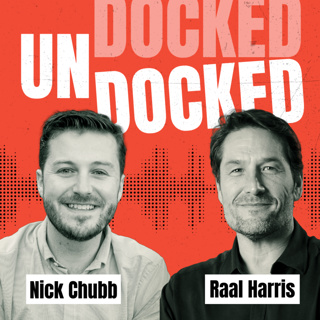
Nick and Raal examine seafarer risk in conflict zones, the worsening shortage of cadet berths, and the industry’s misaligned incentives. The discussion expands into AI’s growing role in maritime operations, from performance data to decision support, before confronting wider questions around automation, labour displacement, and human accountability in increasingly machine-led environments.

Chapters
  • 00:00 Reconnecting after travel and reflections on Japan
  • 02:00 Strait of Hormuz, seafarer risk, and media attention
  • 07:30 Cadet berth shortages and training pipeline pressures
  • 12:30 Onboard realities: risk, cost, and declining access
  • 16:40 Human data, AI, and performance insights
  • 21:00 Personality profiling and crew dynamics
  • 27:00 Workflow data and real-time decision support
  • 30:30 Automation, aviation, and human disengagement
  • 33:20 AI labour and workers training their replacements
  • 37:00 Claude, coding tools, and accelerating capability
  • 41:00 Cybersecurity risks and unintended consequences
  • 43:30 Closing reflections

Episode Shownotes

Nick and Raal open with a catch-up after time on the road, before quickly turning to the situation in the Strait of Hormuz. With tens of thousands of seafarers still operating under heightened risk, they reflect on the limited but growing mainstream media attention on the human impact of geopolitical disruption.

The conversation then moves to a persistent structural issue: the shortage of cadet berths. While the need to train the next generation of officers is widely accepted, the burden of doing so remains unevenly distributed. The result is a familiar industry dynamic—collective benefit, individual cost—with long-term consequences for the maritime talent pipeline.

From there, the discussion shifts toward data and technology. Drawing on examples from industry initiatives and emerging platforms, Nick and Raal explore how fragmented human performance data could be brought together. The opportunity lies in moving beyond retrospective analysis toward real-time decision support. However, this raises a more complex question: as systems become more capable, what happens to human accountability when decisions are increasingly machine-informed?

The episode then broadens beyond shipping. Examples from aviation and manufacturing illustrate how automation is already reshaping work, from pilots disengaging in highly automated environments to factory workers generating the data that may ultimately replace them. These cases frame a wider concern: the pace of technological change is accelerating faster than industry—and policy—responses.

The episode closes with a reflection on that gap. Maritime may feel insulated, but the same forces are already at work. The challenge is not whether change is coming, but how the industry responds while it still has agency to shape outcomes.

Episode Partner

This episode is brought to you by IEC Telecom.

Connectivity at sea isn’t just about operations, it’s about people.


For today’s crews, staying connected to family and life onshore has become an essential part of life at sea.

IEC Telecom’s Voucher Management System makes that possible, a flexible, easy-to-manage solution that gives operators full control over onboard connectivity, while ensuring fair and reliable access for crew.

Simple to deploy. Transparent to manage. Built for real life at sea.
Because when crews feel connected, they perform better.

Click here to learn more.

Denne episoden er hentet fra en åpen RSS-feed og er ikke publisert av Podme. Den kan derfor inneholde annonser.

Episoder(63)

Shipping’s 2050 Fuel Forecast, Helium Supply Shortages, and 54,000 Sea Miles for One Sausage Roll

Shipping’s 2050 Fuel Forecast, Helium Supply Shortages, and 54,000 Sea Miles for One Sausage Roll

This week, Nick and Raal examine how geopolitical disruption is exposing hidden dependencies across shipping: from helium shortages and future-fuel investment choices to soaring freight markets and cy...

24 Sep 54min

Could Crew Welfare Decide Who Gets Fuel, South Korea's Public AI Bet, and Armageddon

Could Crew Welfare Decide Who Gets Fuel, South Korea's Public AI Bet, and Armageddon

This week, Nick and Raal ask whether bunker suppliers could become an unlikely force for crew welfare, examine why the world map may finally change, and explore South Korea’s bet on sovereign AI. They...

17 Sep 57min

What SMM 2026 Signals for Shipping, the Rise of the Meat Proxy, and the Return of the Spreadsheet

What SMM 2026 Signals for Shipping, the Rise of the Meat Proxy, and the Return of the Spreadsheet

Nick returns from SMM Hamburg with a read on where maritime innovation is actually moving: wind propulsion, nuclear, AI, class and new technology hubs. Raal then digs into digital judgement, conflicti...

10 Sep 53min

Shipping’s Digital Ambition Is Outpacing Its IT Maturity, with Steven Hemmings

Shipping’s Digital Ambition Is Outpacing Its IT Maturity, with Steven Hemmings

Steve Hemmings joins Nick and Raal to examine why maritime IT maturity still lags other sectors, what shipping can learn from cruise and banking, and why cyber resilience, asset visibility, data archi...

3 Sep 56min

Who’s Liable When Ship Control Moves Ashore? Cyber Risk and Maritime Law

Who’s Liable When Ship Control Moves Ashore? Cyber Risk and Maritime Law

This week, Nick and Raal examine what happens when maritime technology moves faster than the legal frameworks around it, from remote ship control and pollution liability to cyber risk and seaworthines...

27 Aug 59min

Extreme Heat Hits Trade, Ships Generate Green Hydrogen, and AI Content Gets Watermarked

Extreme Heat Hits Trade, Ships Generate Green Hydrogen, and AI Content Gets Watermarked

Nick Chubb and Raal Harris examine how extreme heat is reshaping trade, from Rhine water levels and Panama Canal draught limits to pressure on energy systems. They also explore Drift Energy’s hydrogen...

20 Aug 57min

Why AI Could Make Markets More Volatile and Bridgetown’s $500k Port Transformation

Why AI Could Make Markets More Volatile and Bridgetown’s $500k Port Transformation

Nick and Raal examine what good maritime digital transformation looks like, from Bridgetown Port’s low-cost community system to shared vessel inspections and procurement pooling. They then explore AI’...

13 Aug 1h 1min

Are We Making Seafaring Harder Than It Needs to Be? With Steven Jones

Are We Making Seafaring Harder Than It Needs to Be? With Steven Jones

Steven Jones joins Nick Chubb and Raal Harris to examine what the latest Seafarers Happiness Index reveals about life at sea, crew relationships, shore-based wellbeing.Chapters02:16 The origins of the...

6 Aug 57min
Populært innen Teknologi

teknisk-sett
lydartikler-fra-aftenposten
tomprat-med-gunnar-tjomlid
energi-og-klima
elektropodden
hans-petter-og-co
rss-ki-praten
shifter
smart-forklart
rss-alt-som-gar-pa-strom
nasjonal-sikkerhetsmyndighet-nsm
rss-ai-forklart
fornybaren
teknologi-og-mennesker
rss-teknologioptimistene-en-podkast-om-teknologi-og-mennesker
rss-snakk-om-sikkerhet
rss-ki-til-kaffen
pedagogisk-intelligens
rss-alt-vi-kan
rss-heis