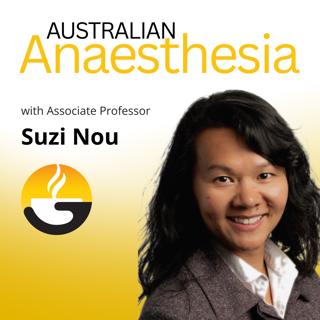
Ep118.  Trauma Informed Care with Brigette Berry

Ep118. Trauma Informed Care with Brigette Berry

In this episode, I explore trauma informed care with expert clinical psychologist Brigette Berry who specialises in acute and chronic pain. We examine five core principles of Fallot and Harris (2009): safety, trustworthiness, choice, collaboration and empowerment.

Trauma informed care benefits all patients, not just those who have disclosed trauma. For example, many women may have undisclosed trauma, children and neurodivergent people could all benefit from the application of these principles.

Brigette recommends the Blue Knot Foundation for support and further training.

Three other episodes of the Australian Anaesthesia podcast you might enjoy listening to are:

Ep55. Hypnotising children! with Drs Annette Webb and James Auld

Ep60. Communicate like a Boss with Dr Andrea Wojnicki

Ep83. The Women's Empowerment and Leadership Initiative (WELI) with Prof Nina Deutsch & A/Prof Larry Schwartz

Let me know if you're interested in the Blue Knot training or any other feedback: podcast@asa.org.au

Some AI generated notes:

Episode Highlights

00:02:15: Suzi introduces the concept of non-technical skills as essential core competencies for good doctoring, noting that anaesthetists can inadvertently contribute to patient trauma through insensitive communication.

00:05:30: Bridgette defines trauma using DSM-5 criteria as experiencing a literal or perceived threat to life, and notes that general anaesthesia itself may constitute a perceived threat to self.

00:08:45: Discussion of statistics showing one in three women have experienced interpersonal violence, emphasising the prevalence of trauma in patient populations without requiring explicit disclosure.

00:12:20: Explanation of the five trauma-informed care principles from Fallot and Harris (2009): safety, trustworthiness, choice, collaboration, and empowerment.

00:15:00: Practical safety applications including physical environment modifications (lighting, noise reduction), narrating procedures, and obtaining consent for physical contact.

00:22:30: Bridgette highlights unconscious behaviours in healthcare settings, such as lifting blankets without introduction or consent, demonstrating how small actions affect emotional safety.

00:28:15: Discussion of preoperative communication using positive language and imagery to support post-operative recovery and self-efficacy, referencing hypnosis-based communication techniques.

00:35:40: Bridgette introduces the COPE AHEAD skill from dialectical behaviour therapy as an evidence-based framework for imagined rehearsal and coping strategy preparation.

00:42:00: Emphasis on maintaining professional boundaries and respectful containment as essential components of trustworthiness, alongside being curious about fostering safety.

00:45:15: Bridgette recommends Blue Knot Foundation training and resources as practical tools for implementing trauma-informed care in healthcare settings.

Key Takeaways

Trauma-informed care is universal best practice applicable to all patients, not only those with disclosed trauma histories, and benefits neurodivergent individuals and children equally.

Simple acts of narration, consent-seeking, and signposting (e.g., "I'm about to put the drip in") significantly reduce threat perception and build emotional safety without requiring additional time.

Anaesthetists have a powerful preoperative role in setting positive post-operative outcomes through clear expectations, anxiety reduction, and empowering communication that improves both physical recovery and patient trust in healthcare systems.

Individualisation within a trauma-informed framework is essential; clinicians should remain flexible and responsive to patient cues, recognising that some patients may find excessive choice overwhelming while others require it.

Professional development training through organisations like Blue Knot Foundation provides practical, evidence-based tools for implementation, and adopting these principles requires ongoing humility and willingness to unlearn and relearn practices.

Quotable Moments

"There is always something more to learn, something more I can improve upon."

"One in three women have experienced some type of interpersonal violence, as an example. So if we think about one in three patients that we see for anaesthetic procedures, you know, there's a high proportion of those who experience traumatic events."

"Re-traumatisation is a very real thing. And I guess when we go through the principles, I can dive in slightly further. But we know, especially for those who have been through the more kind of chronic, prolonged, inescapable traumas, that are cumulative, we're less likely to feel safe within our own bodies."

"Even if we're asking the question of, is there anything else we can do in this space within reason that could make you more comfortable? That's really therapeutic than just not asking and making the person feel like they can't advocate for anything."

"It's the spirit of cooperation. So that may have to involve negotiation for the specific person in front of me."

"Being curious about how can I foster more safety. I think training, professional development training within your setting is really, really helpful."

"It's very humbling though, I will say, working in a trauma-informed way. So there's always stuff to learn unlearn, relearn, you know, and it's about humbling ourselves enough to be okay with that process because it makes us better clinicians and then it gives our patients a better experience."

Denne episoden er hentet fra en åpen RSS-feed og er ikke publisert av Podme. Den kan derfor inneholde annonser.

Episoder(121)

Ep117. Anaesthesia, Advocacy, and Authentic Leadership with Dr Mark Priestley

Ep117. Anaesthesia, Advocacy, and Authentic Leadership with Dr Mark Priestley

In this episode I chat with Dr Mark Priestley, Chair of the Leadership and Management Special Interest Group (LAMSIG), Australian Salaried Medical Officers Federation (ASMOF) NSW and ANZCA Councillor....

5 Apr 45min

Ep116. Mastering Emergencies - Inside the New Anaesthetic Crisis Manual with Dr David Borshoff

Ep116. Mastering Emergencies - Inside the New Anaesthetic Crisis Manual with Dr David Borshoff

I chat with Dr David Borshoff about the latest edition of the Anaesthetic Crisis Manual. This edition includes a new 'Prevention' section, collaboration with Médecins Sans Frontières (MSF) and the Int...

8 Mar 36min

Ep115.  How the ASA Cares for You - Wellbeing Resources with Dr Lan-Hoa Le

Ep115. How the ASA Cares for You - Wellbeing Resources with Dr Lan-Hoa Le

We have a new wellbeing webpage!In this episode I chat with Dr Lan-Hoa Le, Chair of the ASA's Wellbeing Advocates Committee. She has been busy curating a webpage with a tonne of useful resources from ...

22 Feb 26min

Ep114. Laughing Gas, Serious Waste: Measuring Nitrous Wastage with Dr Ethan Fitzclarence

Ep114. Laughing Gas, Serious Waste: Measuring Nitrous Wastage with Dr Ethan Fitzclarence

Who likes the idea of excessive waste in healthcare? Especially when it is something that can impact our colleagues and has negative climate effects?In this episode I chat with Dr Ethan Fitzclarence,...

8 Feb 30min

Ep113.  Airway, Breathing, Calm - ABCs of Yoga and Anaesthesia with Dr Andrea Binks

Ep113. Airway, Breathing, Calm - ABCs of Yoga and Anaesthesia with Dr Andrea Binks

Welcome to 2026!In this episode I chat with Dr Andrea Binks, an anaesthetist and accomplished yoga facilitator from Wollongong, NSW. Dr. Binks shares her unconventional journey into anaesthesia, trans...

4 Feb 43min

Ep112:  Success, Safety and Risk in Anaesthesia with Professor Tim Cook

Ep112: Success, Safety and Risk in Anaesthesia with Professor Tim Cook

I catch up with Professor Tim Cook, of the UK National Audit Projects live at the Australian Society of Anaesthetists' National Scientific Congress (NSC). We discuss his incredible work, his ideas of ...

21 Des 202526min

Ep111.  The GLP-1 Revolution:  What it Means for Anaesthesia with Dr Doug Hacking

Ep111. The GLP-1 Revolution: What it Means for Anaesthesia with Dr Doug Hacking

In this episode:The last of my thought bubble talks on how to introduce yourself with confidence and claritySome tips on balancing an academic research career and clinical medicineChanging from one me...

7 Des 202535min

Populært innen Fakta

fastlegen
dine-penger-pengeradet
relasjonspodden-med-dora-thorhallsdottir-kjersti-idem
rss-bisarr-historie
foreldreradet
rss-strid-de-norske-borgerkrigene
jakt-og-fiskepodden
treningspodden
rss-sunn-okonomi
rss-kunsten-a-leve
mikkels-paskenotter
sinnsyn
rss-bak-luftfarten
hverdagspsyken
gravid-uke-for-uke
tomprat-med-gunnar-tjomlid
rss-mind-body-podden
rss-kull
fryktlos
rss-sarbar-med-lotte-erik