
The Real "Wild West"

The Real "Wild West"

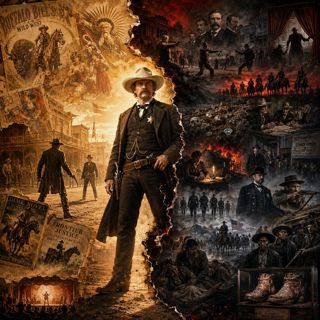
The Wild West most of us inherited is a marketing campaign. The cowboy in the lighter hat, the noble sheriff, the high-noon duel in a dusty street — those came out of dime novels, traveling shows, and ghostwritten biographies, often produced while the events themselves were still unfolding. The actual frontier was something else. It was a continent-sized arena of fraud, racial terror, corruption, hired killing, and government-protected theft, and the men we now call legends had a direct hand in selling us a version of it that left almost all of that out.In this episode we walk out into the real West.

We start with the mythmaking machine itself, Beadle's Dime Novels, Ned Buntline turning William Cody into Buffalo Bill, and the way real frontiersmen quietly cashed in by playing fictional versions of themselves on stage. We reexamine Wild Bill Hickok's so-called battle with the McCanles "gang" at Rock Creek Station in 1861, which wasn't a duel against ten desperados but a debt collection that ended with three men dead, one of them shot through a curtain. We look at the Earps as they actually lived. The brothel arrests in Peoria. The horse theft charge in Indian Territory. The thirty-second gunfight in a vacant lot off Fremont Street that wasn't actually at the OK Corral. The revenge ride Wyatt led under the cover of federal warrants after his brother Morgan was assassinated. And Stuart Lake's 1931 biography, which took Wyatt's preferred version of himself and turned it into the cowboy myth nearly every later movie repeated.

Then we follow the money. We walk through the Great Diamond Hoax of 1872, where two Kentucky cousins named Philip Arnold and John Slack salted a Wyoming mesa with industrial gemstones bought in London and sold the imaginary deposit to some of the wealthiest men in California for a generational fortune, before government geologist Clarence King quietly broke the case apart. We look at the homestead fraud machine that transferred enormous tracts of public land to timber and cattle interests through doghouse-sized "improvements" and signed-in-advance contracts, leading all the way up to Senator John Mitchell's 1905 conviction.

We spend time in Skagway with Soapy Smith, who ran an entire American town as his personal racket, fake telegraph office and paid-off marshal and all, until a robbed miner named John Stewart finally moved the vigilantes against him on July 8, 1898.We reopen the Lincoln County War, which wasn't a moral fable about an outlaw with a heart of gold but a corporate fight over Army supply contracts.

We open the Johnson County War, where Wyoming cattle barons hired a private army of Texas gunmen to ride into the county and kill a list of seventy people. We read Nate Champion's actual journal as he wrote it, alone in a burning cabin, surrounded by fifty hired guns. We walk the Pinkertons out of the detective novels and into their real job as a private violence service for railroads, mines, and cattle barons, and we meet Tom Horn, the stock detective whose signature was a flat rock under the head of the man he'd just shot from a quarter mile away. And we sit with the parts of this history that most school books leave alone. The Bear River Massacre of 1863. Sand Creek in 1864.

The Marias River killings of 1870. Camp Grant in 1871, where a Tucson mob killed more than a hundred surrendered Apaches and sold thirty children into slavery in Sonora. Wounded Knee in 1890. The Los Angeles Chinese Massacre of 1871. The Rock Springs killings in 1885. The Hells Canyon murders in 1887. The long, ongoing campaign of Texas Ranger violence against Mexican-descended people along the border, climaxing with Porvenir in 1918. The sundown towns scattered across nearly every western state. And Mountain Meadows in 1857, where Mormon militiamen disguised as Native attackers slaughtered an Arkansas wagon train and walked off with the surviving children.

We close with what the cowboy myth has actually been doing for the last hundred and fifty years, and with a small museum in Rawlins, Wyoming, where you can still see a pair of shoes made from the skin of an outlaw named George Parrott, worn by John Eugene Osborne to his 1893 inauguration as governor.The frontier that survived in our culture is mostly a story written by the men who came out of it on top. The one underneath it is messier, uglier, more diverse, and a great deal more disturbing. Once you've looked at it carefully, you don't quite hear the word "frontier" the same way again.

Have a forgotten historical mystery, disturbing event, unsolved crime, or hidden conspiracy you think deserves investigation?

Send your suggestions to brian@paranormalworldproductions.com.

Disturbing History is a dark history podcast exploring unsolved mysteries, secret societies, historical conspiracies, lost civilizations, and the shadowy stories buried beneath the surface of the past.

Follow the show and enable automatic downloads so you never miss a deep dive into history’s most unsettling secrets.

Because sometimes the truth is darker than fiction.

Denne episoden er hentet fra en åpen RSS-feed og er ikke publisert av Podme. Den kan derfor inneholde annonser.

Episoder(154)

The 1990's

The 1990's

On July 16, 1990, Time magazine put a group of young adults on its cover beneath the word “twentysomething” and asked whether they were laid back, late blooming, or simply lost. The story said they st...

30 Sep 1h 12min
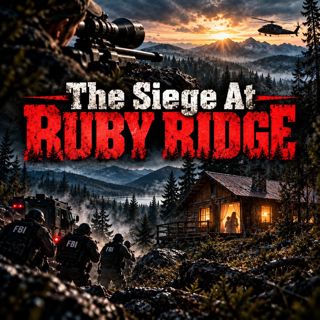
The Siege At Ruby Ridge

The Siege At Ruby Ridge

Listener discretion is advised. This episode contains descriptions of real-life violence and death, including the shooting deaths of a fourteen-year-old boy, his mother, and a federal law enforcement ...

27 Sep 1h 18min

The 1980's

The 1980's

The 1980s began with 52 Americans still being held hostage in Tehran and ended with crowds tearing open the Berlin Wall. Between those two moments came one of the most turbulent, contradictory decades...

25 Sep 1h 9min
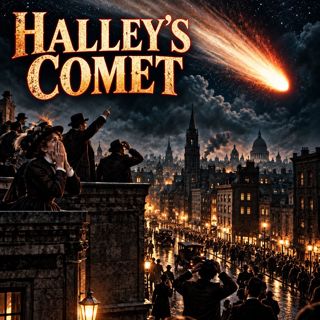
Halley's Comet

Halley's Comet

On the night of May 18, 1910, people across the world waited for Halley’s Comet to kill them.Hotels in New York opened their rooftops. Miners in Pennsylvania refused to go underground. A religious sec...

23 Sep 1h 1min
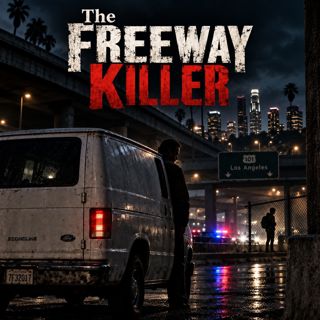
The Freeway Killer

The Freeway Killer

This episode discusses sexual violence against children and teenagers, torture, and murder and is not suitable for younger audiences. Listener discretion is strongly advised. On the night of June 11, ...

21 Sep 1h 19min
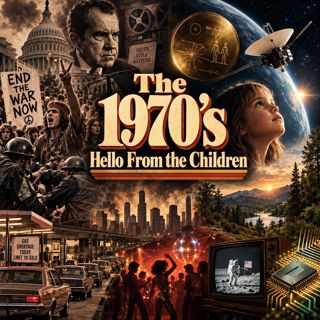
The 1970's

The 1970's

The 1970s opened in conflict.On April 30, 1970, President Richard Nixon announced the expansion of U.S. military operations into Cambodia.Days later, four students were killed by the Ohio National Gua...

18 Sep 1h 2min
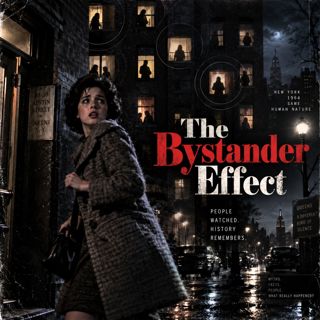
The Bystander Effect

The Bystander Effect

On March 27, 1964, The New York Times published a story that would become one of the most famous examples of human indifference ever told. According to the report, 38 people in Queens watched as 28-ye...

16 Sep 1h
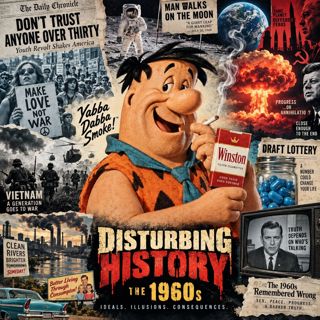
The 1960's

The 1960's

Everybody knows the line: “Don’t trust anyone over thirty.” It became shorthand for an entire generation, even though the man who said it was a 24-year-old Berkeley graduate student who would turn thi...

13 Sep 1h 2min

Populært innen Samfunn

rss-spartsklubben
giver-og-gjengen-vg
aftenpodden
konspirasjonspodden
aftenpodden-usa
popradet
rss-nesten-hele-uka-med-lepperod
rss-henlagt-andy-larsgaard
alt-fortalt
wolfgang-wee-uncut
rss-espen-lee-usensurert
grenselos
min-barneoppdragelse
synnve-og-vanessa
fladseth
frokostshowet-pa-p5
rss-herrepanelet
opptur-med-annette-og-ingeborg
rss-chit-chat-med-rakel-og-helle
krisemoter