
PFC Podcast: Velocity Kills - Wound Ballistics, Shotguns & Unpredictable Trauma in Prolonged Field Care

PFC Podcast: Velocity Kills - Wound Ballistics, Shotguns & Unpredictable Trauma in Prolonged Field Care

In this episode of the Prolonged Field Care Podcast, Dennis sits down with trauma surgeon Mark Shapiro for a no-BS masterclass on wound ballistics. They break down why understanding the physics of penetrating and blast trauma matters in austere and combat environments — even when experience makes you cynical. From high-velocity rifle rounds and their massive temporary cavities to the infectious nightmare of shotgun wounds and the four phases of blast injury, Mark shares hard-won lessons from civilian Level I trauma centers and years training special operations medics and ground surgical teams.

They tackle the myths around entry/exit wounds, when (and when not) to explore right upper quadrant gunshot wounds downrange, why you should almost never pack the abdomen or chest from the outside, how to assess neurovascular status in blast-injured extremities, and why bizarre bullet paths and “stable” patients with signs of life can still surprise you.

Key Takeaways:

  • Kinetic energy (½mv²) means velocity is king — high-velocity rifle rounds create devastating temporary cavities and fragmentation that can turn one projectile into many.
  • Jacketed rounds still fragment at rifle speeds; never assume a clean through-and-through. Bone fragments act like secondary missiles and can create wounds up to 3x the size of the fragment.
  • For stable patients with right upper quadrant GSWs in resource-limited settings, expectant management can be reasonable — but you must have a plan, know your limits, and be ready to move if things change.
  • Never pack the abdomen or chest from the outside in most cases. It risks pushing debris deeper and worsening injuries. Cover exposed organs if needed, but don’t shove gauze into body cavities.
  • Shotgun wounds (especially buckshot/birdshot) are “mobile IEDs” — massive tissue destruction, heavy debris inoculation, and extremely high risk of infection, fistula, and devascularized tissue requiring serial debridement.
  • In extremity blast trauma, assess vascular status (pulses, Doppler signals, color, warmth, capillary refill) and neurologic function. The ~6-hour window to revascularization is critical, but the decision point comes earlier.
  • Training + common sense + adaptability beat rigid protocols when resources are limited. Sometimes the best move is observation.

Chapters

  • 04:15 – Why Wound Ballistics Knowledge Still Matters (even when you’re cynical)
  • 08:30 – High-Energy Rifle Wounds: Muzzle Velocity, Kinetic Energy & Spitzer Bullets
  • 13:45 – Fragmentation, Tumbling & Secondary Missiles (bone shards & unpredictable paths)
  • 18:20 – Clinical Reality: Multiple Injuries & Why “Small Entrance, Big Exit” Is a Myth
  • 22:50 – Entry vs. Exit Wounds: When Trajectory Actually Matters (and when it doesn’t)
  • 26:40 – Right Upper Quadrant GSWs: Explore, Observe, or Expectant Management Downrange?
  • 31:10 – The Dangers of Packing Abdominal & Chest Wounds from the Outside
  • 34:55 – Low-Energy Pistol Wounds: How They Differ (or Don’t) from Rifles
  • 37:20 – Shotgun Wounds: Close-Range Carnage, Debris & Infectious Nightmares
  • 42:40 – IEDs & Modern Explosives: Blast Physics, Ukraine Patterns & Hard-Ground Effects
  • 48:15 – Primary, Secondary, Tertiary & Quaternary Blast Injuries Explained
  • 52:30 – Neurovascular Assessment in Blast-Injured Extremities (Conscious & Unconscious Patients)
  • 56:45 – Lessons from the Trauma Bay: Common Sense, Training & Knowing When to Deviate from Protocol

For more content, go to ⁠⁠⁠⁠⁠⁠⁠⁠⁠⁠⁠⁠⁠⁠⁠⁠⁠⁠⁠⁠⁠⁠⁠⁠⁠⁠⁠⁠⁠⁠⁠⁠⁠⁠⁠⁠⁠⁠⁠⁠⁠⁠⁠⁠⁠⁠⁠⁠⁠⁠⁠⁠⁠⁠⁠⁠⁠⁠⁠⁠⁠⁠⁠⁠⁠⁠⁠⁠⁠www.prolongedfieldcare.org⁠⁠⁠⁠⁠⁠⁠⁠⁠⁠⁠⁠⁠⁠⁠⁠⁠⁠⁠⁠⁠⁠⁠⁠⁠⁠⁠⁠⁠⁠⁠⁠⁠⁠⁠⁠⁠⁠⁠⁠⁠⁠⁠⁠⁠⁠⁠⁠⁠⁠⁠⁠⁠⁠⁠⁠⁠⁠⁠⁠⁠⁠⁠⁠⁠⁠⁠⁠⁠⁠


Consider supporting us: ⁠⁠⁠⁠⁠⁠⁠⁠⁠⁠⁠⁠⁠⁠⁠⁠⁠⁠⁠⁠⁠⁠⁠⁠⁠⁠⁠⁠⁠⁠⁠⁠⁠⁠⁠⁠⁠⁠⁠⁠⁠⁠⁠⁠⁠⁠⁠⁠⁠⁠⁠⁠⁠⁠⁠⁠⁠⁠⁠⁠⁠⁠⁠⁠⁠⁠⁠⁠⁠⁠patreon.com/ProlongedFieldCareCollective⁠⁠⁠⁠⁠⁠⁠⁠⁠⁠⁠⁠⁠⁠⁠⁠⁠⁠⁠⁠⁠⁠⁠⁠⁠⁠⁠⁠⁠⁠⁠⁠⁠⁠⁠⁠⁠⁠⁠⁠⁠⁠⁠⁠⁠⁠⁠⁠⁠⁠⁠⁠⁠⁠⁠⁠⁠⁠ or ⁠⁠⁠⁠⁠⁠⁠⁠⁠⁠⁠⁠⁠⁠⁠⁠⁠⁠⁠⁠⁠⁠⁠⁠⁠⁠⁠⁠⁠⁠⁠⁠⁠⁠⁠⁠⁠⁠⁠⁠⁠⁠⁠⁠⁠⁠⁠⁠⁠⁠⁠⁠⁠⁠⁠⁠⁠⁠www.lobocoffeeco.com/product-page/prolonged-field-care⁠

Denne episoden er hentet fra en åpen RSS-feed og er ikke publisert av Podme. Den kan derfor inneholde annonser.

Episoder(624)

294 - Do Antibiotics Really Reduce Mortality in Trauma? Wound Care First in Prolonged Field Care

294 - Do Antibiotics Really Reduce Mortality in Trauma? Wound Care First in Prolonged Field Care

Antibiotics are not magic. In this episode of the PFC Podcast, Dennis sits down with Ryan to cut through the common myth that “I’ve given antibiotics, so the wound is protected.” They unpack why vigor...

31 Aug 36min
SOMA 26' - Fresh Whole Blood is Not The Answer: It's Still a Question

SOMA 26' - Fresh Whole Blood is Not The Answer: It's Still a Question

Whole Blood Is Not a Solution (Until Conventional Forces Can Deliver It)Recorded live at SOMA 26Dr. Vanessa Hanick (emergency physician, former active-duty Army, now National Guard) and 1SG Cy Clayton...

27 Aug 28min
293 - Dead Tissue Kills in Prolonged Field Care: 4 C’s, Early Debridement & Delayed Primary Closure Lessons from the Field

293 - Dead Tissue Kills in Prolonged Field Care: 4 C’s, Early Debridement & Delayed Primary Closure Lessons from the Field

In this episode of the PFC Podcast, Dennis sits down with missionary surgeon Jason to cut through the noise on real-world wound care in austere and unconventional warfare environments. From the bridge...

24 Aug 49min
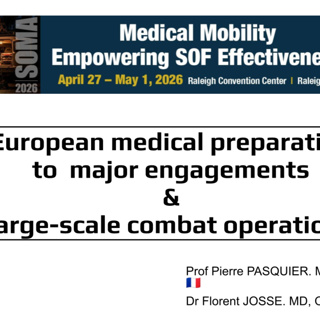
SOMA 26' - European Medical Preparations for Major Engagements and Large-Scale Combat Operations

SOMA 26' - European Medical Preparations for Major Engagements and Large-Scale Combat Operations

Recorded live at SOMA 26Pierre Pasquier (France) and his German counterpart deliver a clear-eyed assessment of how European military medical systems are preparing for large-scale combat operations and...

20 Aug 31min
292-Building Mobile Surgical Capability in Denied Environments

292-Building Mobile Surgical Capability in Denied Environments

In this episode of the Prolonged Field Care Podcast, Dennis sits down with Mitch (U.S. family practice/ER physician) and Augustine (frontline surgeon with five years of experience) to unpack what it a...

17 Aug 41min
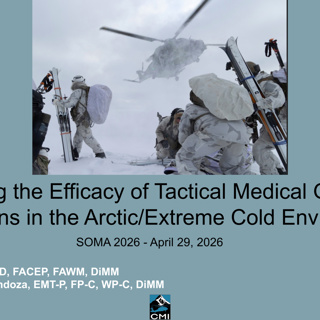
SOMA 26 - Optimizing the Efficacy of Commonly Used Tactical Medical Gear and Medications In The Arctic Extreme Cold Operational Environment

SOMA 26 - Optimizing the Efficacy of Commonly Used Tactical Medical Gear and Medications In The Arctic Extreme Cold Operational Environment

Recorded live at SOMA 26Dr. Emily Johnston (Cascadia Mountain Institute) and SFC Ezequiel Mendoza (Arctic Dustoff, Fairbanks) deliver a hard-hitting, field-validated look at how standard tactical medi...

13 Aug 29min
291 - Pediatric Burns In Prolonged Field Care Assessment, Resuscitation & Airway Management

291 - Pediatric Burns In Prolonged Field Care Assessment, Resuscitation & Airway Management

In this essential episode of the Prolonged Field Care Podcast, Dennis sits down with pediatric intensivist Dr. Sara Bibbens to tackle one of the most challenging and anxiety-inducing scenarios in aust...

10 Aug 30min
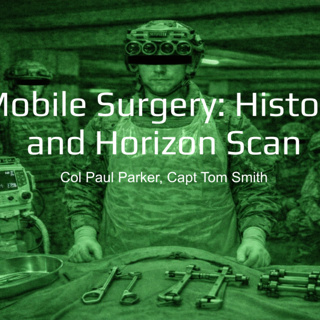
SOMA 26 - A History of Mobile Surgical Teams Role 1-3 and Horizon Scan

SOMA 26 - A History of Mobile Surgical Teams Role 1-3 and Horizon Scan

In this presentation, we take a deep dive into the 300-year history of mobile surgery supporting land campaigns — from Dominique Larrey’s ambulance volantes through the Letterman system, Arnhem, the F...

6 Aug 28min

Populært innen Fakta

fastlegen
dine-penger-pengeradet
relasjonspodden-med-dora-thorhallsdottir-kjersti-idem
jakt-og-fiskepodden
treningspodden
foreldreradet
rss-orjasater
tomprat-med-gunnar-tjomlid
rss-strid-de-norske-borgerkrigene
sinnsyn
hverdagspsyken
rss-var-forste-kaffe
rss-kunsten-a-leve
gravid-uke-for-uke
mikkels-paskenotter
hr-podden-2
fryktlos
rss-impressions-2
ukast
rss-sparepodden