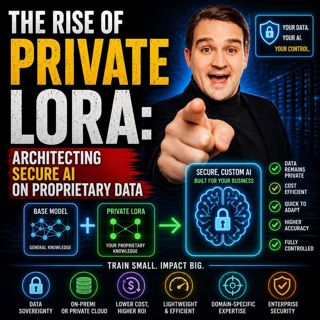
The Rise of Private LoRA: Architecting Secure AI on Proprietary Data

The Rise of Private LoRA: Architecting Secure AI on Proprietary Data

Everyone is talking about AI adoption. Far fewer are talking about AI sovereignty. Organizations have rushed to deploy Microsoft Copilot, Azure OpenAI, ChatGPT Enterprise, Claude, Gemini, and dozens of AI-powered productivity tools. The results have been impressive. Productivity has increased. Development cycles have accelerated. Knowledge discovery has improved. But beneath the excitement lies a growing concern. What happens when your organization's most valuable asset—its proprietary knowledge—starts flowing into AI systems you don't fully control? In this episode, we explore the rise of Private LoRA (Low-Rank Adaptation), why data sovereignty is rapidly becoming one of the most important architectural challenges in enterprise AI, and how organizations can build secure, domain-specific AI models without training foundation models from scratch. We examine the convergence of AI governance, regulatory compliance, Microsoft cloud architecture, sovereign AI, LoRA fine-tuning, quantization, federated learning, and enterprise security. If your organization views proprietary data as a strategic advantage, this episode explains why the future of AI may not belong to the biggest models—but to the most specialized ones.

THE SHADOW AI CRISIS

Most organizations believe their AI strategy is governed. The reality is very different. Employees routinely paste sensitive information into public AI systems because they are faster and easier than approved tools. This phenomenon has a name: Shadow AI. We explore how:
  • Proprietary business data leaks into public models
  • Internal documents are shared outside governance boundaries
  • Competitive intelligence leaves the organization
  • Customer information becomes exposed
  • Security teams lose visibility
The risk isn't always a breach. Sometimes it's simply the slow erosion of proprietary knowledge.

WHY DATA SOVEREIGNTY MATTERS

The conversation around AI is shifting. Organizations are no longer asking: "Can we use AI?" They're asking: "Where does the data go?" This episode explores the growing importance of:
  • AI Sovereignty
  • Data Residency
  • Data Localization
  • Cross-Border Data Restrictions
  • Intellectual Property Protection
  • AI Governance
  • Digital Sovereignty
As regulatory pressure increases, organizations are discovering that data location is becoming as important as model performance.

THE REGULATORY WALL IS ARRIVING

Compliance is no longer a future problem. It's becoming an architectural requirement. We examine the impact of:
  • EU AI Act
  • GDPR
  • CPRA
  • LGPD
  • Data Localization Requirements
  • Financial Regulations
  • Healthcare Compliance Frameworks
You'll learn why AI architectures designed for unrestricted global data movement may struggle in a world increasingly defined by jurisdictional boundaries.

MICROSOFT'S APPROACH TO AI SECURITY

Microsoft provides some of the strongest enterprise AI protections available today. But even with:
  • Microsoft 365 Copilot
  • Azure OpenAI
  • Azure AI Foundry
  • Microsoft Purview
  • Microsoft Entra ID
  • Azure Confidential Computing
There remains a gap between approved enterprise AI usage and actual user behavior. We discuss how organizations can extend Microsoft's security model while maintaining control over proprietary intelligence.

THE FALSE CHOICE BETWEEN PUBLIC AI AND BUILDING YOUR OWN MODEL

Many organizations believe they have only two options: Option One Use public AI services. Option Two Build and train a foundation model from scratch. In reality, there is a third option. Private LoRA. This episode explains how LoRA enables organizations to customize powerful open-weight models without the extraordinary cost and complexity of full model training.

HOW LORA ACTUALLY WORKS

LoRA, or Low-Rank Adaptation, changes the economics of AI customization. Instead of retraining billions of parameters, LoRA introduces lightweight trainable layers that adapt an existing model to a specific domain. We break down:
  • Full Fine-Tuning
  • Parameter-Efficient Fine-Tuning
  • Adapter Architectures
  • Rank Selection
  • Training Efficiency
  • Model Specialization
  • Domain Adaptation
The result is a highly customized AI model with a fraction of the cost and infrastructure requirements.

QUANTIZATION CHANGES EVERYTHING

LoRA becomes even more powerful when paired with quantization. Using techniques such as:
  • 8-bit Quantization
  • 4-bit Quantization
  • NF4
  • QLoRA
Organizations can dramatically reduce hardware requirements while maintaining strong performance. We explain how:
  • Memory consumption drops
  • Training costs decrease
  • Inference becomes affordable
  • Single-GPU deployments become practical
This is one of the key innovations making sovereign AI achievable for mainstream enterprises.

THE SINGLE-GPU ENTERPRISE AI MODEL

One of the most surprising insights in this episode is how little infrastructure is required. Using modern open-weight models and LoRA adaptation, organizations can:
  • Train on a single GPU
  • Deploy internally
  • Retain data sovereignty
  • Eliminate API dependencies
  • Reduce operating costs
We explore architectures built around:
  • Llama
  • Mistral
  • Open-Weight Models
  • Azure GPU Infrastructure
  • Azure Kubernetes Service
  • Azure Machine Learning
The economics are far more accessible than many organizations assume.

Become a supporter of this podcast: https://www.spreaker.com/podcast/m365-fm-modern-work-security-and-productivity-with-microsoft-365--6704921/support.

Denne episoden er hentet fra en åpen RSS-feed og er ikke publisert av Podme. Den kan derfor inneholde annonser.

Episoder(655)

From SharePoint Developer to Power Platform Architect: Building Secure and Scalable Solutions with Michel Mendes [MVP]

From SharePoint Developer to Power Platform Architect: Building Secure and Scalable Solutions with Michel Mendes [MVP]

In this episode of the M365 Podcast, Mirko Peters sits down with Microsoft MVP Michel Mendes to explore his remarkable journey from traditional SharePoint development to becoming a leading Power Platf...

16 Jun 44min
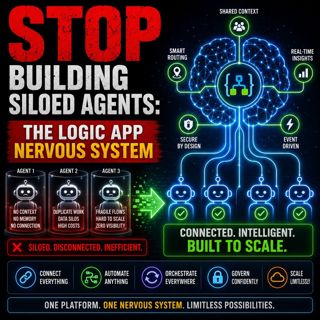
STOP BUILDING SILOED AGENTS: The Logic App Nervous System

STOP BUILDING SILOED AGENTS: The Logic App Nervous System

Everyone is building AI agents.Very few organizations are building agent architectures.Across Microsoft 365, Copilot Studio, Azure OpenAI, Power Platform, and custom AI solutions, enterprises are raci...

16 Jun 1h 18min

Building Multi-Agent AI Systems with Copilot Studio: From Ideas to Intelligent Automation with David Lorenzo Lopez  [MVP]

Building Multi-Agent AI Systems with Copilot Studio: From Ideas to Intelligent Automation with David Lorenzo Lopez [MVP]

Artificial Intelligence is rapidly evolving from simple chatbots into sophisticated multi-agent systems capable of automating complex business processes, collaborating across services, and delivering ...

15 Jun 54min
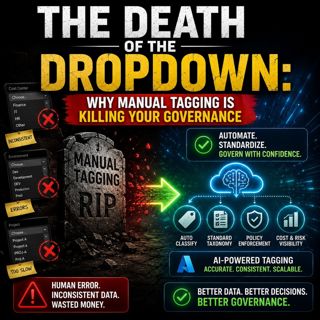
The Death of the Dropdown: Why Manual Tagging is Killing Your Governance

The Death of the Dropdown: Why Manual Tagging is Killing Your Governance

or years, organizations believed metadata governance was a training problem.If users understood the taxonomy better, governance would improve.If the dropdown lists were clearer, metadata quality would...

14 Jun 1h 22min
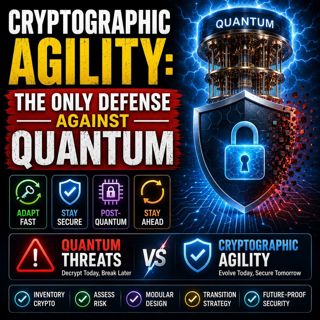
Cryptographic Agility: The Only Defense Against Quantum

Cryptographic Agility: The Only Defense Against Quantum

Most discussions about quantum computing focus on a single question:When will quantum computers break encryption?The better question is this:How quickly can your organization replace encryption when i...

13 Jun 1h 27min

Microsoft Purview in the Age of AI: Securing Copilot with Peter Rising [Microsoft]

Microsoft Purview in the Age of AI: Securing Copilot with Peter Rising [Microsoft]

As organizations race to adopt Microsoft 365 Copilot, AI Agents, and Generative AI, one critical question continues to emerge: is your data ready for AI? In this episode of M365 FM, Mirko Peters sits ...

12 Jun 59min
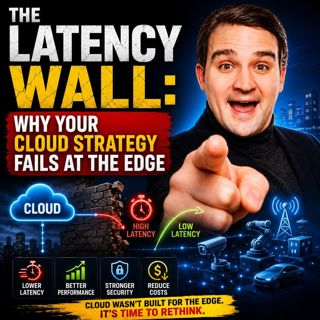
The Latency Wall: Why Your Cloud Strategy Fails at the Edge

The Latency Wall: Why Your Cloud Strategy Fails at the Edge

For years, organizations have followed a simple rule: move everything to the cloud.The strategy worked brilliantly for collaboration, analytics, business intelligence, and productivity workloads. Micr...

12 Jun 1h 20min

Populært innen Politikk og nyheter

giver-og-gjengen-vg
aftenpodden
aftenpodden-usa
fotballpodden-2
forklart
popradet
stopp-verden
det-store-bildet
rss-espen-lee-usensurert
nokon-ma-ga
lydartikler-fra-aftenposten
dine-penger-pengeradet
rss-gukild-johaug
hanna-de-heldige
rss-ness
e24-podden
aftenbla-bla
frokostshowet-pa-p5
rss-utenrikskomiteen-med-bogen-og-grasvik
chit-chat-med-helle