
PFC Podcast: TXA - 2g Slam and other myths busted

PFC Podcast: TXA - 2g Slam and other myths busted

In this deep-dive episode of the Prolonged Field Care Podcast, Dennis sits down with trauma and critical care surgeon Dr. John McClellan ( University of North Carolina) to cut through the noise on tranexamic acid (TXA) in trauma.

They cover the mechanism, who actually needs it, why the dosing shifted from 1g + drip to 2g upfront, pre-hospital decision-making when bleeding is controlled, redosing in ongoing hemorrhage, IM/IO options, seizure and hypotension concerns, the critical 3-hour window, and practical advice for the medic who is truly alone and afraid.

Whether you’re a combat medic, flight medic, or trauma provider, this conversation delivers actionable clarity on one of the most studied — and sometimes misunderstood — tools in hemorrhagic shock resuscitation.

Key Takeaways:

  • TXA is a lysine analog that reversibly (and at higher doses irreversibly) binds plasminogen, preventing its conversion to plasmin and stabilizing clots. It is one of the most evidence-backed hemorrhage adjuncts available.
  • The ideal candidate is any patient you suspect will trigger (or has triggered) a massive transfusion protocol — not just obvious amputations. Err on the side of giving it early in pre-hospital/austere settings to avoid missing occult bleeding.
  • Modern trauma practice favors 2g IV push upfront over the older CRASH-2 regimen of 1g bolus + 8-hour drip because traumatic bleeding is an acute event that needs rapid high plasma levels. The 8-hour drip was designed for elective surgical cases with ongoing bleeding over hours.
  • Overall safety is excellent. Large meta-analyses have not shown a clear increase in thrombotic events attributable to TXA. The bigger practical risks are seizures with doses significantly above 2g and accidental double-dosing due to poor handoff between pre-hospital and hospital teams.
  • Transient hypotension can occur with rapid push, but causality is murky — it is often impossible to separate from the patient’s underlying shock state.
  • Redosing is reasonable (another 1–2g) if significant re-bleeding causes hemodynamic instability. Roughly 25% of active TXA can be lost in major hemorrhage/transfusion models.
  • Give TXA within 3 hours of injury for maximum benefit. After 3 hours efficacy drops sharply and some data suggest potential increased bleeding risk.
  • For the solo medic: Preload if your protocol allows. Make TXA automatic once you have access (alongside calcium and blood products). Prioritize rapid transport. TCCC supports IM if no IV/IO is possible, though delivering the full 2g volume can be challenging.
  • Documentation and clear handoff are non-negotiable when pre-hospital TXA is given.

Chapters:

00:00 – Welcome & Podcast Disclaimer00:25 – Guest Introduction: Dr. John McClellan, Trauma Surgeon01:52 – What is TXA and How Does It Actually Work?03:28 – Who Should Get TXA? The Massive Transfusion Patient04:16 – Pre-Hospital TXA: Bleed Control First or TXA First?07:06 – Safety Concerns: Thrombosis, Seizures & Double Dosing Risks09:54 – Dosing Evolution: CRASH-2, 1g + Drip vs 2g Push in Trauma13:33 – Does TXA Cause Hypotension? Unpacking the Evidence19:12 – IO & IM TXA: Practical Routes When IV Access Is Tough21:46 – Redosing TXA in Ongoing Bleeding or Transport29:37 – Advice for the Medic Who Is Truly “Alone and Afraid”32:21 – The 3-Hour Rule: Why Timing Matters and What Happens After34:14 – Final Thoughts & Practical Takeaways from Dr. McClellan

For more content, go to ⁠⁠⁠⁠⁠⁠⁠⁠⁠⁠⁠⁠⁠⁠⁠⁠⁠⁠⁠⁠⁠⁠⁠⁠⁠⁠⁠⁠⁠⁠⁠⁠⁠⁠⁠⁠⁠⁠⁠⁠⁠⁠⁠⁠⁠⁠⁠⁠⁠⁠⁠⁠⁠⁠⁠⁠⁠⁠⁠⁠⁠⁠⁠⁠⁠⁠⁠⁠⁠⁠⁠www.prolongedfieldcare.org⁠⁠⁠⁠⁠⁠⁠⁠⁠⁠⁠⁠⁠⁠⁠⁠⁠⁠⁠⁠⁠⁠⁠⁠⁠⁠⁠⁠⁠⁠⁠⁠⁠⁠⁠⁠⁠⁠⁠⁠⁠⁠⁠⁠⁠⁠⁠⁠⁠⁠⁠⁠⁠⁠⁠⁠⁠⁠⁠⁠⁠⁠⁠⁠⁠⁠⁠⁠⁠⁠⁠⁠


Consider supporting us: ⁠⁠⁠⁠⁠⁠⁠⁠⁠⁠⁠⁠⁠⁠⁠⁠⁠⁠⁠⁠⁠⁠⁠⁠⁠⁠⁠⁠⁠⁠⁠⁠⁠⁠⁠⁠⁠⁠⁠⁠⁠⁠⁠⁠⁠⁠⁠⁠⁠⁠⁠⁠⁠⁠⁠⁠⁠⁠⁠⁠⁠⁠⁠⁠⁠⁠⁠⁠⁠⁠⁠⁠patreon.com/ProlongedFieldCareCollective⁠⁠⁠⁠⁠⁠⁠⁠⁠⁠⁠⁠⁠⁠⁠⁠⁠⁠⁠⁠⁠⁠⁠⁠⁠⁠⁠⁠⁠⁠⁠⁠⁠⁠⁠⁠⁠⁠⁠⁠⁠⁠⁠⁠⁠⁠⁠⁠⁠⁠⁠⁠⁠⁠⁠⁠⁠⁠⁠⁠ or ⁠⁠⁠⁠⁠⁠⁠⁠⁠⁠⁠⁠⁠⁠⁠⁠⁠⁠⁠⁠⁠⁠⁠⁠⁠⁠⁠⁠⁠⁠⁠⁠⁠⁠⁠⁠⁠⁠⁠⁠⁠⁠⁠⁠⁠⁠⁠⁠⁠⁠⁠⁠⁠⁠⁠⁠⁠⁠⁠⁠www.lobocoffeeco.com/product-page/prolonged-field-care⁠⁠

Denne episoden er hentet fra en åpen RSS-feed og er ikke publisert av Podme. Den kan derfor inneholde annonser.

Episoder(624)

294 - Do Antibiotics Really Reduce Mortality in Trauma? Wound Care First in Prolonged Field Care

294 - Do Antibiotics Really Reduce Mortality in Trauma? Wound Care First in Prolonged Field Care

Antibiotics are not magic. In this episode of the PFC Podcast, Dennis sits down with Ryan to cut through the common myth that “I’ve given antibiotics, so the wound is protected.” They unpack why vigor...

31 Aug 36min
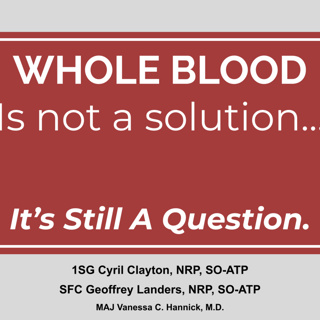
SOMA 26' - Fresh Whole Blood is Not The Answer: It's Still a Question

SOMA 26' - Fresh Whole Blood is Not The Answer: It's Still a Question

Whole Blood Is Not a Solution (Until Conventional Forces Can Deliver It)Recorded live at SOMA 26Dr. Vanessa Hanick (emergency physician, former active-duty Army, now National Guard) and 1SG Cy Clayton...

27 Aug 28min

293 - Dead Tissue Kills in Prolonged Field Care: 4 C’s, Early Debridement & Delayed Primary Closure Lessons from the Field

293 - Dead Tissue Kills in Prolonged Field Care: 4 C’s, Early Debridement & Delayed Primary Closure Lessons from the Field

In this episode of the PFC Podcast, Dennis sits down with missionary surgeon Jason to cut through the noise on real-world wound care in austere and unconventional warfare environments. From the bridge...

24 Aug 49min
SOMA 26' - European Medical Preparations for Major Engagements and Large-Scale Combat Operations

SOMA 26' - European Medical Preparations for Major Engagements and Large-Scale Combat Operations

Recorded live at SOMA 26Pierre Pasquier (France) and his German counterpart deliver a clear-eyed assessment of how European military medical systems are preparing for large-scale combat operations and...

20 Aug 31min
292-Building Mobile Surgical Capability in Denied Environments

292-Building Mobile Surgical Capability in Denied Environments

In this episode of the Prolonged Field Care Podcast, Dennis sits down with Mitch (U.S. family practice/ER physician) and Augustine (frontline surgeon with five years of experience) to unpack what it a...

17 Aug 41min
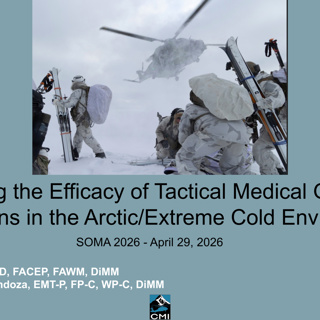
SOMA 26 - Optimizing the Efficacy of Commonly Used Tactical Medical Gear and Medications In The Arctic Extreme Cold Operational Environment

SOMA 26 - Optimizing the Efficacy of Commonly Used Tactical Medical Gear and Medications In The Arctic Extreme Cold Operational Environment

Recorded live at SOMA 26Dr. Emily Johnston (Cascadia Mountain Institute) and SFC Ezequiel Mendoza (Arctic Dustoff, Fairbanks) deliver a hard-hitting, field-validated look at how standard tactical medi...

13 Aug 29min
291 - Pediatric Burns In Prolonged Field Care Assessment, Resuscitation & Airway Management

291 - Pediatric Burns In Prolonged Field Care Assessment, Resuscitation & Airway Management

In this essential episode of the Prolonged Field Care Podcast, Dennis sits down with pediatric intensivist Dr. Sara Bibbens to tackle one of the most challenging and anxiety-inducing scenarios in aust...

10 Aug 30min
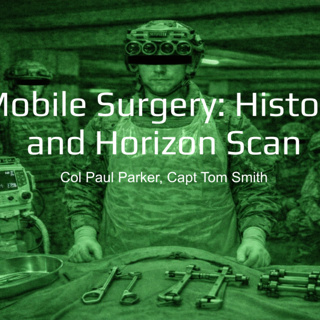
SOMA 26 - A History of Mobile Surgical Teams Role 1-3 and Horizon Scan

SOMA 26 - A History of Mobile Surgical Teams Role 1-3 and Horizon Scan

In this presentation, we take a deep dive into the 300-year history of mobile surgery supporting land campaigns — from Dominique Larrey’s ambulance volantes through the Letterman system, Arnhem, the F...

6 Aug 28min

Populært innen Fakta

fastlegen
dine-penger-pengeradet
relasjonspodden-med-dora-thorhallsdottir-kjersti-idem
treningspodden
jakt-og-fiskepodden
foreldreradet
rss-orjasater
rss-strid-de-norske-borgerkrigene
tomprat-med-gunnar-tjomlid
sinnsyn
hverdagspsyken
rss-var-forste-kaffe
rss-kunsten-a-leve
mikkels-paskenotter
gravid-uke-for-uke
rss-impressions-2
fryktlos
hr-podden-2
kvallm
hagespiren-podcast