He won a Nobel here for AlphaFold. Then he left. - John Jumper

He won a Nobel here for AlphaFold. Then he left. - John Jumper

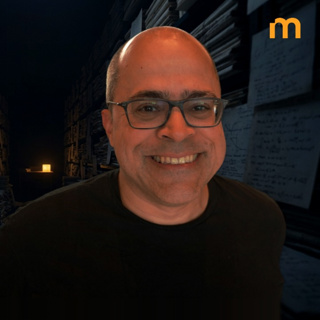
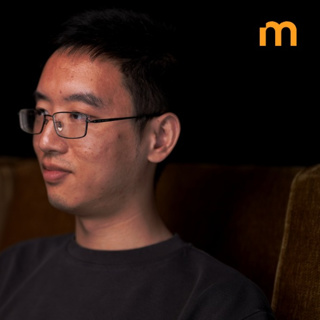
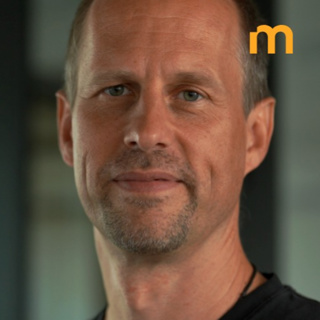
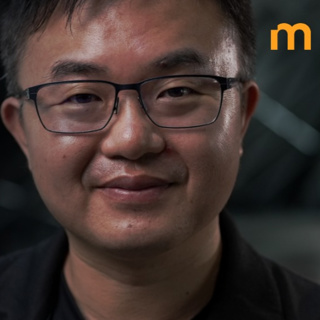
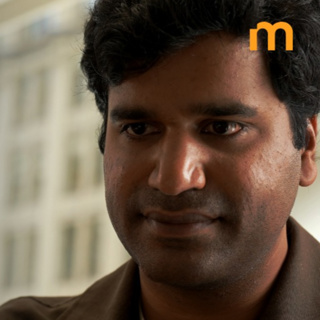
This episode is sponsored by Notion. Learn more about Notion's Developer Platform today at https://notion.com/mlstProtein folding stalled biology for fifty years. A sequence of amino acids dictates a three-dimensional shape, but reading that shape meant a year and roughly $100,000 of crystallography per structure. Then AlphaFold 2 won CASP14 so decisively the organizers called the problem essentially solved.In this documentary cut, John Jumper, who shared the 2024 Nobel Prize in Chemistry and has since left DeepMind for Anthropic, walks Tim Scarfe through what the system did and, more interestingly, what it did not. The architecture gets a proper dissection: MSAs, the Evoformer, invariant point attention, the FAPE loss, and Jumper's correction of the equivariance story, which ablations valued at roughly 2.5 of 30 GDT points rather than the whole win. He is blunt about the limits. AlphaFold predicts one experiment extraordinarily well; it is not a model of the cell, it does not capture dynamics, and on a given drug target it is "wrong nine times out of ten."From there: the AlphaFold Database of 200M+ predicted structures, AlphaFold 3 and ligands, Isomorphic Labs, and Jumper's quarrel with the bitter lesson, where finite data and human hypotheses still matter. Emmanuel Nji of BioStruct Africa closes the film on what changes when work that took years now takes months, and on training the next thousand structural biologists across Africa.---TIMESTAMPS:00:00:00 Cold open: predicting nature with a button press00:01:03 The protein folding bottleneck and CASP00:04:39 The Nobel, the database, and the move to Anthropic00:05:50 Sponsor (Notion) and framing: what AlphaFold does not claim00:07:39 Proteins as self-assembling nanomachines00:12:24 From structures to biology: drug discovery and Midnolin00:17:37 The humility of AlphaFold: a narrow predictor00:22:18 Inside the architecture: Evoformer, IPA and FAPE00:30:20 Ruthless empiricism: ablations and 100x in data00:35:20 Predict, control, understand00:40:00 Against the bitter lesson; AlphaFold 3 as diffusion00:45:07 Intelligence, representations and AGI00:49:23 Epilogue: AlphaFold in Africa00:52:16 Closing: the case for hybrid science models---REFERENCES:organization:[00:01:55] Critical Assessment of Structure Prediction (CASP)https://predictioncenter.org/[00:04:39] The Nobel Prize in Chemistry 2024https://www.nobelprize.org/prizes/chemistry/2024/summary/[00:05:18] BioStruct Africahttps://www.biostructafrica.org/[00:18:03] Isomorphic Labshttps://www.isomorphiclabs.com/paper:[00:03:09] AlphaFold Protein Structure Databasehttps://doi.org/10.1093/nar/gkab1061[00:17:25] Accurate structure prediction of biomolecular interactions with AlphaFold 3https://www.nature.com/articles/s41586-024-07487-w[00:22:18] Highly accurate protein structure prediction with AlphaFoldhttps://www.nature.com/articles/s41586-021-03819-2[00:23:10] Midnolin promotes degradation of substrates independent of ubiquitinationhttps://doi.org/10.1126/science.adh5021[00:27:00] Improved protein structure prediction using potentials from deep learninghttps://www.nature.com/articles/s41586-019-1923-7tool:[00:03:09] AlphaFold Protein Structure Database (EBI)https://alphafold.ebi.ac.uk/[00:45:55] AlphaEvolve: a coding agent for designing advanced algorithmshttps://deepmind.google/blog/alphaevolve-a-gemini-powered-coding-agent-for-designing-advanced-algorithms/other:[00:39:40] The Bitter Lessonhttp://www.incompleteideas.net/IncIdeas/BitterLesson.html---ReScript: https://app.rescript.info/share/d8cde5c221fb71e2c0f5aafe94f90dfaDisclaimer - not sponsored, editorial with us - we filmed it at GDM, London

Denne episoden er hentet fra en åpen RSS-feed og er ikke publisert av Podme. Den kan derfor inneholde annonser.

Episoder(260)

Stealing Reasoning Traces from Proprietary LLM APIs — Ilia Shumailov & Alexander Panfilov

Stealing Reasoning Traces from Proprietary LLM APIs — Ilia Shumailov & Alexander Panfilov

Tim Scarfe speaks with Ilia Shumailov and Alexander Panfilov about their paper, Stealing Reasoning Traces from Proprietary LLM APIs.The core bug sounds deceptively simple: providers return encrypted r...

22 Aug 49min

Every Exponential Ends — Silicon Valley Forgot — Adam Becker

Every Exponential Ends — Silicon Valley Forgot — Adam Becker

Astrophysicist Adam Becker, author of "What Is Real?", joins Tim Scarfe to take apart the futures Silicon Valley keeps selling: the 2045 singularity, mind uploading, Mars colonies, and the AI apocalyp...

20 Aug 1h 18min

AI Is Learning at the Wrong Level of Abstraction — Matthieu Wyart

AI Is Learning at the Wrong Level of Abstraction — Matthieu Wyart

This episode is sponsored by Notion. Learn more about Notion's Developer Platform today at https://notion.com/mlstWhy can deep networks discover abstractions that shallow models miss? Statistical phys...

10 Aug 1h 18min

How Researchers Test AI for Hidden Goals — Apollo Research

How Researchers Test AI for Hidden Goals — Apollo Research

Can an AI do the right thing for the wrong reason? Tim Scarfe speaks with Apollo Research’s Alexander Meinke, Axel Højmark and Jérémy Scheurer about Measuring Reward-Seeking via Contrastive Belief Upd...

31 Jul 1h 18min

Why a Nation Can't Outsource Its Frontier AI - Alistair Pullen (Cosine AI)

Why a Nation Can't Outsource Its Frontier AI - Alistair Pullen (Cosine AI)

This episode is sponsored by Notion. Learn more about Notion's Developer Platform today at https://notion.com/mlstBritain's most capable coding model can't be exported, and that ban is the whole reaso...

13 Jul 55min

 The Benchmark With No Instructions — ARC-AGI-3 (winning team!)

The Benchmark With No Instructions — ARC-AGI-3 (winning team!)

Tim Scarfe travels to Zurich to sit down with the Tufa Labs ARC-AGI-3 team — founder Benjamin Crouzier, with Jeroen Cottaar, Dries Smit, Stefano Viel and Michal Tesnar — to work out what their leaderb...

1 Jul 1h 24min

The Thermodynamic AI Computing Chip - Thomas Ahle

The Thermodynamic AI Computing Chip - Thomas Ahle

Thomas Ahle wants Normal Computing to be the Lovable for chip design: type your intent, and a swarm of agents carries it from design through optimisation, formalisation and verification to tape-out. T...

28 Jun 1h 2min

Populært innen Teknologi

lydartikler-fra-aftenposten
tomprat-med-gunnar-tjomlid
teknisk-sett
smart-forklart
elektropodden
nasjonal-sikkerhetsmyndighet-nsm
rss-ki-praten
fornybaren
shifter
rss-kunstig-intelligens-med-elisabeth-maren-og-morten
teknologi-og-mennesker
rss-alt-som-gar-pa-strom
rss-snakk-om-sikkerhet
rss-ai-forklart
rss-alt-vi-kan
rss-fisketimen
digital-forretningsforstaelse
rss-bouvet-bobler
pedagogisk-intelligens
rss-polypod