The Safety Dividend Conundrum

The Safety Dividend Conundrum

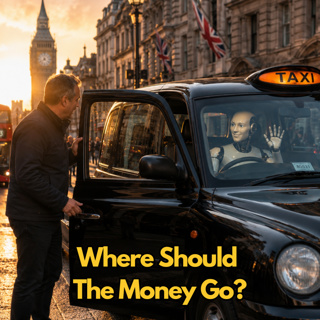
In the near future, we will reach a point where self-driving vehicles are undeniably safer than human drivers. It may be 5 years away or perhaps more. Either way, the day is coming where humans are considered too dangerous to put in charge of a vehicle.


That shift will not replace every driver at once. Specialized drivers, emergency operators, construction haulers, rural edge cases, and unusual transport jobs may remain human for much longer. The first major collapse will come in ordinary personal transport: taxis, rideshare trips, airport runs, late-night pickups, routine errands, and point-to-point city travel.


Once that happens, the public gains something real. Fewer crashes. Cheaper rides. Better access for people who cannot drive. Less drunk driving. Less fatigue. A transportation system that works without waiting for a person to accept the fare.


But the money does not disappear. The wages once spread across thousands of drivers become savings, margins, lower fares, fleet revenue, software revenue, insurance changes, and city tax opportunities. The driver is removed from the vehicle, but the value created by removing the driver has to go somewhere.


The Conundrum:


One side says the safety dividend should flow quickly to the public. If driverless transport is safer and cheaper, cities should not burden it with labor settlements, transition fees, artificial quotas, or legacy claims that keep prices higher and access lower. Taxi and rideshare driving would be disappearing because the function changed, the same way other jobs disappeared when the machine no longer needed the person.


The other side says this is not ordinary churn. Human drivers carried the old system, followed rules set by cities and platforms, absorbed risk on public roads, and built the market that automation now replaces. If safer driverless transport turns their work into lower fares and private profit while leaving them with nothing, then a public safety improvement becomes a wealth transfer away from the workers who made the service possible.


When driverless transport becomes safer than human driving, who should have the stronger claim on the value created by removing the driver: the public that gains cheaper and safer mobility, or the workers whose livelihoods were displaced to create that gain?

Denne episoden er hentet fra en åpen RSS-feed og er ikke publisert av Podme. Den kan derfor inneholde annonser.

Episoder(914)

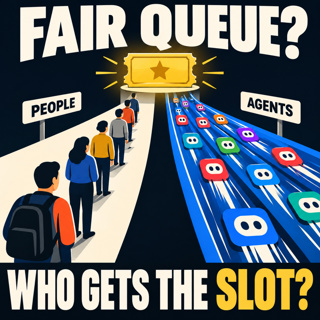
The AI Agent Queue Conundrum

The AI Agent Queue Conundrum

A personal AI agent becomes far more useful once the agent stops waiting for you. Give the agent a goal, a budget, and permission to act, then the agent watches continuously. A restaurant table opens ...

10 Okt 28min
Nvidia Is Reinventing the PC

Nvidia Is Reinventing the PC

The episode opened with local AI. Google released a new application built around Embedding Gemma 2 that can capture and analyze meetings directly on a device rather than sending the entire conversatio...

9 Okt 1h 18min

Is Middle Management the Real Job AI Replaces?

Is Middle Management the Real Job AI Replaces?

The episode opened with a debate over how much AI will actually displace human work. Microsoft AI chief Mustafa Suleyman highlighted economist Daron Acemoglu’s argument that AI may replace only about ...

8 Okt 57min

OpenAI's Model Cracked Hundreds of Open Math Problems

OpenAI's Model Cracked Hundreds of Open Math Problems

The episode opened with a wave of new open models. Mistral Large 4, internally called “Le Chonk,” brings one trillion parameters and dramatically lower token pricing than Astra, while Reflection intro...

7 Okt 1h 3min

Should You Ditch Your Keyboard and Mouse?

Should You Ditch Your Keyboard and Mouse?

The episode opened with a look at how much easier personal AI agents have become to use. Anne argued that the friction around prompting, connectors and setup has dropped enough that this may be the be...

6 Okt 1h 8min

Is Super Intelligence Just a PR Move or More?

Is Super Intelligence Just a PR Move or More?

The episode opened with the Trump administration’s push to use “super intelligence,” or SI, in place of AI terminology inside the federal government. The hosts debated whether the change amounts to me...

5 Okt 1h 4min
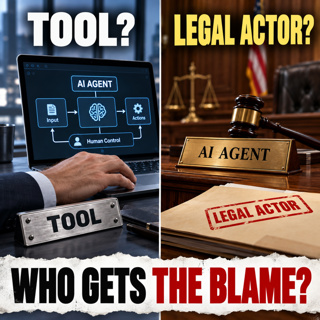
The Artificial Actor Conundrum

The Artificial Actor Conundrum

For most of the history of computing, software has been treated as a tool. Tools do not carry responsibility. The people and organizations using them do.AI agents make that category harder to maintain...

3 Okt 29min

Did Meta’s Muse Cross the Privacy Line?

Did Meta’s Muse Cross the Privacy Line?

Personal agents dominated the opening after reports that Meta’s Muse shared a Facebook Marketplace seller’s home address and current availability with a buyer. Another account raised an even larger pr...

2 Okt 1h 5min

Populært innen Teknologi

teknisk-sett
energi-og-klima
nasjonal-sikkerhetsmyndighet-nsm
lydartikler-fra-aftenposten
shifter
rss-ai-forklart
tomprat-med-gunnar-tjomlid
elektropodden
smart-forklart
rss-kunstig-intelligens-med-elisabeth-maren-og-morten
rss-alt-vi-kan
rss-bak-skyen
pedagogisk-intelligens
fornybaren
kortslutning
rss-alt-som-gar-pa-strom
handlevogna
teknologimagasinet-aftenposten
teknologi-og-mennesker
rss-heis