Fun Facts About the Bass

Fun Facts About the Bass

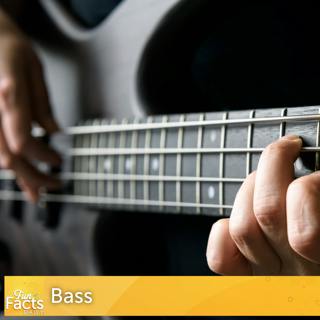
The evolution of bass instruments showcases a rich history of technological innovation and acoustic engineering. Traditionally crafted and maintained by skilled luthiers, stringed bass instruments have continually adapted across centuries to meet the demands of changing musical ensembles. While audiences frequently mistake the orchestral double bass as a member of the violin family, historical evidence reveals it descends from the viola da gamba family. It maintains traditional viol traits such as sloped shoulders, a flat back, and standard tuning in perfect fourths (E-A-D-G). To push the physical boundaries of depth, French luthier Jean-Baptiste Vuillaume constructed the monolithic octobass in 1850. Standing over eleven feet tall, this rare instrument requires complex lever and pedal mechanisms to manipulate the strings, producing profound frequencies as low as 16 Hz that border on subsonic vibrations. As ensemble music grew louder in the 20th century, the need for portable amplification became vital. Paul Tutmarc developed the first fretted, horizontal electric bass guitar in 1936 to help jazz musicians compete with loud horn sections, ultimately paving the way for Leo Fender’s revolutionary, mass-produced Precision Bass in 1951. Beyond their unique construction, bass instruments function on distinctive acoustic principles and performance styles that define modern rhythm sections. A low E note on a standard bass guitar vibrates at 41.2 Hz, producing massive sound waves nearly 27 feet long that easily penetrate physical barriers and require specialized bass traps in recording environments. Navigating these powerful frequencies demands proper ergonomic execution and an understanding of the fretboard layout, which mirrors the lower four strings of a standard guitar dropped by an entire octave. Musician Larry Graham popularized the highly percussive slap bass technique in the late 1960s to fill the structural void of a missing drummer. For musicians mastering the instrument, avoiding physical fatigue requires flattening the thumb against the center of the neck directly behind the middle finger to prevent tendon compression and wrist strain. Furthermore, enduring the initial discomfort of heavy string friction triggers hyperkeratosis, the body's natural thickening of the skin's outer layer to form protective calluses that safeguard nerve endings and brighten overall tonal articulation. ⁠Listen Ad-Free on Patreon. ⁠ For just $3 per month, you can get ad-free versions of Fun Facts Daily, Who ARTed and Art Smart. Head over to ⁠https://www.patreon.com/cw/FunFactsDailyPod⁠ if you are interested. Want to learn more? Head over to my website www.funfactsdailypod.com and be sure to listen to my other podcasts Who ARTed: Weekly Art History for All Ages or Art Smart. For family fun, check out my son's podcast Rainbow Puppy Science Lab The image used in the episode cover art came from Adobe's stock photos. Fun Facts Daily is an Airwave Media Podcast. If you are interested in advertising on this or any other Airwave Media show, email: advertising@airwavemedia.com Learn more about your ad choices. Visit megaphone.fm/adchoices

Denne episoden er hentet fra en åpen RSS-feed og er ikke publisert av Podme. Den kan derfor inneholde annonser.

Episoder(365)

Fun Facts About DayGlo Colors

Fun Facts About DayGlo Colors

Day-Glo colors owe their existence to an accidental discovery made by brothers Bob and Joe Switzer in the 1930s while Bob was recovering from an injury in a dark basement. Unlike standard pigments, wh...

11 Sep 16min

Fun Facts About Carrots

Fun Facts About Carrots

Carrots are nutrient-dense root vegetables rich in carotenoids, natural pigments synthesized by plants, most notably beta-carotene. Once digested, beta-carotene converts to vitamin A, supporting cellu...

10 Sep 13min

Fun Facts About the Solar System

Fun Facts About the Solar System

The solar system operates on immense scales governed by extreme physical environments, orbital mechanics, and surprising planetary characteristics. At its center, the Sun contains approximately 99.86%...

9 Sep 15min

Fun Facts About the Sistine Chapel

Fun Facts About the Sistine Chapel

The Sistine Chapel, commissioned in 1473 by Pope Sixtus IV and built to echo the biblical proportions of Solomon’s Temple, is one of the pinnacle achievements of Renaissance architecture and art. Span...

8 Sep 14min

Fun Facts About Unusual Jobs

Fun Facts About Unusual Jobs

While many careers follow traditional paths, several vital professions operate far outside conventional office environments. From certified water slide inspectors using multi-axis accelerometers and f...

7 Sep 16min
Fun Facts About Pizza

Fun Facts About Pizza

Pizza has evolved from a traditional Mediterranean staple into one of the most commercially significant foods on the planet, with origins tracing back to ancient flatbreads and medieval Italian manusc...

4 Sep 16min

Fun Facts About Your Olfactory System (Sense of Smell)

Fun Facts About Your Olfactory System (Sense of Smell)

The human olfactory system is an intricate sensory network capable of distinguishing an estimated one trillion distinct odor combinations through combinatorial receptor codes. Positioned high within t...

3 Sep 13min

Fun Facts About Duct Tape

Fun Facts About Duct Tape

Duct tape originated during World War II when ordnance worker Vesta Strout designed a durable, waterproof cloth-backed adhesive tape to keep moisture out of ammunition cases. It was originally manufac...

2 Sep 15min

Populært innen Fakta

fastlegen
dine-penger-pengeradet
relasjonspodden-med-dora-thorhallsdottir-kjersti-idem
rss-strid
rss-orjasater
foreldreradet
treningspodden
jakt-og-fiskepodden
rss-kunsten-a-leve
hverdagspsyken
rss-bisarr-historie
tomprat-med-gunnar-tjomlid
mikkels-paskenotter
sinnsyn
rss-var-forste-kaffe
gravid-uke-for-uke
lederskap-nhhs-podkast-om-ledelse
takk-og-lov-med-anine-kierulf
rss-impressions-2
branncast