Event Grid - Simply Explained
Modern cloud applications need to react instantly when something happens. A file is uploaded, a virtual machine is created, or an order is placed—and the right services should respond automatically without constantly checking for changes. In this episode of m365.fm, we explain Azure Event Grid in plain English, showing how it enables event-driven architectures that are faster, more efficient, and easier to scale than traditional polling-based systems. Through simple real-world examples and an easy-to-understand smart home analogy, you'll learn how Event Grid helps Azure services communicate automatically while reducing unnecessary compute, network traffic, and operational complexity.

WHY POLLING IS HOLDING YOUR APPLICATIONS BACK
Many applications still rely on polling, repeatedly asking whether something has changed even when nothing has happened. This creates unnecessary CPU usage, network traffic, and cloud costs while introducing delays between an event occurring and an application responding. We explain why event-driven architectures solve this problem by replacing constant requests with intelligent notifications. Instead of repeatedly checking for updates, applications simply wait until Event Grid tells them something important has happened, creating faster, more responsive, and significantly more efficient systems.

EVENTS, TOPICS, AND SUBSCRIPTIONS EXPLAINED
Understanding Event Grid starts with understanding its core building blocks. Learn the difference between events, topics, subscriptions, and event handlers, and discover how Azure services publish lightweight notifications that are automatically routed to the right destinations. We explain System Topics, Custom Topics, Azure Functions, Logic Apps, Webhooks, Storage Queues, and fan-out scenarios where a single event can trigger multiple automated workflows simultaneously. By separating publishers from subscribers, Event Grid creates loosely coupled applications that are easier to maintain, extend, and scale.

FILTERING, RELIABILITY, AND EVENT DELIVERY
Not every service needs every event. This episode explores Event Grid's powerful filtering capabilities, allowing subscriptions to receive only the notifications they actually need based on event type, resource path, prefixes, suffixes, or custom properties. We also cover enterprise-grade reliability features including automatic retries, exponential backoff, dead-lettering, and failure handling. You'll learn how Event Grid ensures important business events aren't silently lost while giving administrators complete visibility into failed deliveries and processing issues.

EVENT GRID VS. EVENT HUBS VS. SERVICE BUS
Azure offers several messaging services, and understanding when to use each one is critical. We compare Event Grid, Event Hubs, and Azure Service Bus, explaining the unique role each service plays within modern cloud architectures. Discover why Event Grid is designed for event notifications and serverless automation, Event Hubs excels at high-throughput telemetry and streaming workloads, and Service Bus provides reliable enterprise messaging with guaranteed delivery and ordered processing. Whether you're building cloud-native applications, automating Azure resources, or designing enterprise integration solutions, this episode provides the practical knowledge you need to choose the right Azure messaging service for every scenario.

Become a supporter of this podcast: https://www.spreaker.com/podcast/m365-fm-modern-work-security-and-productivity-with-microsoft-365--6704921/support.

Denne episoden er hentet fra en åpen RSS-feed og er ikke publisert av Podme. Den kan derfor inneholde annonser.

Episoder(758)

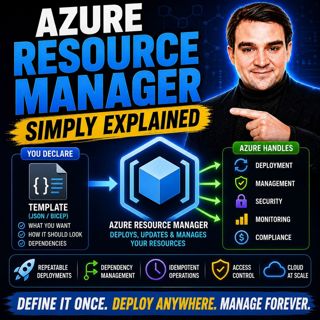
Azure Resource Manager - Simply Explained

Azure Resource Manager - Simply Explained

Every action you perform in Azure—whether you create a virtual machine, deploy a storage account, configure networking, or automate infrastructure with Bicep or ARM templates—passes through the same s...

16 Jul 16min
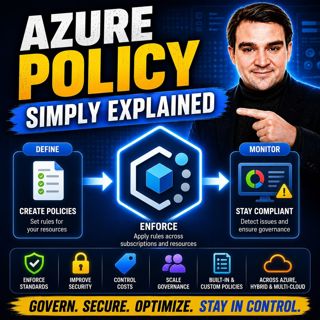
Azure Policy - Simply Explained

Azure Policy - Simply Explained

As organizations move to the cloud, governance becomes one of the biggest challenges they face. In traditional datacenters, infrastructure teams reviewed every server request before anything was deplo...

16 Jul 14min
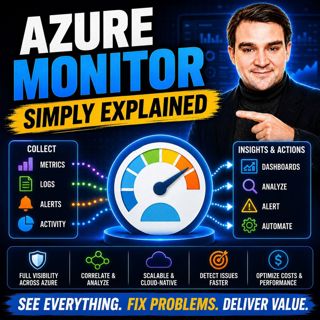
Azure Monitor — Simply Explained

Azure Monitor — Simply Explained

Keeping modern cloud environments running reliably requires far more than checking whether a server is online. Today's organizations operate virtual machines, applications, databases, containers, iden...

16 Jul 14min
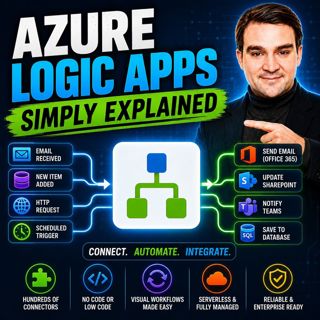
Azure Logic Apps - Simply Explained

Azure Logic Apps - Simply Explained

Connecting business applications has traditionally required custom development, complex integrations, and weeks of engineering effort. Azure Logic Apps changes that by providing a cloud-native workflo...

16 Jul 15min
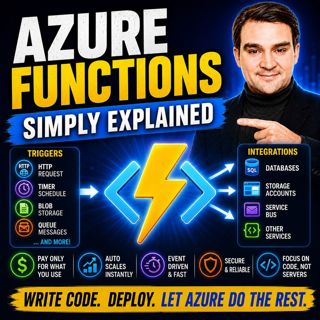
Azure Functions - Simply Explained

Azure Functions - Simply Explained

Serverless is one of the most talked-about concepts in cloud computing, yet it's also one of the most misunderstood. Many developers assume "serverless" means there are no servers involved, but the re...

15 Jul 13min
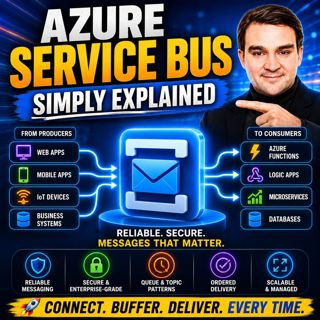
Azure Service Bus - Simply Explained

Azure Service Bus - Simply Explained

Building modern cloud applications isn't just about writing great code—it's about ensuring your applications continue working even when other systems are slow, offline, or temporarily unavailable. In ...

15 Jul 14min
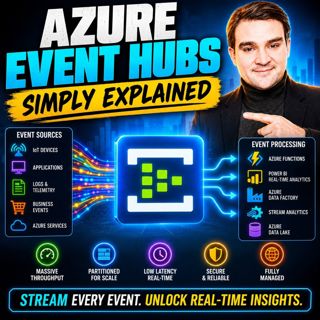
Azure Event Hubs - Simply Explained

Azure Event Hubs - Simply Explained

Modern applications generate an incredible amount of data every second. IoT devices stream telemetry, applications produce logs, websites capture user interactions, and financial systems process milli...

15 Jul 16min

Populært innen Politikk og nyheter

giver-og-gjengen-vg
aftenpodden-usa
aftenpodden
fotballpodden-2
forklart
stopp-verden
popradet
det-store-bildet
hanna-de-heldige
rss-gukild-johaug
rss-ness
dine-penger-pengeradet
aftenbla-bla
rss-utenrikskomiteen-med-bogen-og-grasvik
lydartikler-fra-aftenposten
nokon-ma-ga
rss-penger-polser-og-politikk
e24-podden
rss-hor-na-krim-2
rss-espen-lee-usensurert