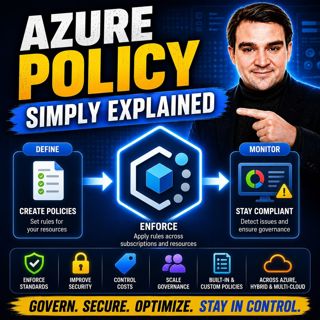
Azure Policy - Simply Explained
As organizations move to the cloud, governance becomes one of the biggest challenges they face. In traditional datacenters, infrastructure teams reviewed every server request before anything was deployed. In Azure, developers and administrators can provision resources instantly through the portal, APIs, Infrastructure as Code, or automation tools. Without guardrails, this flexibility can quickly lead to security risks, compliance violations, inconsistent configurations, and unnecessary costs. In this episode of m365.fm, we explain Azure Policy in plain English and show how it acts as the invisible rulebook that automatically enforces your organization's standards across Azure. Whether you're an Azure administrator, cloud architect, security professional, or developer, understanding Azure Policy is essential for building secure and well-governed cloud environments.

WHY CLOUD GOVERNANCE MATTERS
The cloud makes deploying resources incredibly easy—but that convenience also creates new risks. Virtual machines may be deployed in the wrong region, storage accounts might expose sensitive data publicly, expensive GPU instances can be provisioned accidentally, and required governance tags are often forgotten. We explain why manual approval processes no longer scale in modern cloud environments and how Azure Policy automatically validates every deployment regardless of whether it's created through the Azure Portal, Azure CLI, ARM templates, Bicep, Terraform, or REST APIs. You'll discover how Azure Policy continuously enforces organizational standards without slowing down development teams.

POLICY DEFINITIONS, ASSIGNMENTS, AND EFFECTS
Every Azure Policy begins with a simple principle: If this condition is true, then perform this action. This episode explores Policy Definitions, Policy Assignments, inheritance, scopes, parameters, and exemptions using practical examples that make governance easy to understand. We explain how policies evaluate resource properties, how assignments work across Management Groups, Subscriptions, and Resource Groups, and why inheritance allows organizations to manage governance at enterprise scale. You'll also learn the differences between Deny, Audit, Modify, Append, and DeployIfNotExists effects, when each should be used, and how they automatically enforce security, compliance, and operational standards without requiring manual intervention.

INITIATIVES, COMPLIANCE, AND REAL-WORLD GOVERNANCE
Managing hundreds of individual policies would quickly become overwhelming, which is why Azure Policy supports Initiatives—collections of related policies grouped around common objectives. We explain how initiatives simplify compliance reporting, support regulatory frameworks like ISO 27001, CIS, PCI DSS, HIPAA, and the Azure Security Benchmark, and provide centralized visibility into your organization's governance posture. Through practical examples—including location restrictions, mandatory resource tagging, VM size limitations, storage account security, and naming convention enforcement—you'll see how Azure Policy helps organizations improve security, reduce cloud costs, and maintain operational consistency across thousands of Azure resources.

BUILDING A MODERN AZURE GOVERNANCE STRATEGY
Azure Policy is far more than a standalone governance service—it's one of the core building blocks of Microsoft's Cloud Adoption Framework. In this episode, we explain how Azure Policy integrates with Azure Resource Manager, Management Groups, Role-Based Access Control (RBAC), Microsoft Defender for Cloud, Azure Advisor, Policy as Code, Git repositories, and CI/CD pipelines to create a scalable governance platform. You'll also discover why Policy as Code has become a best practice for enterprise organizations, enabling version control, automated deployments, and consistent governance across multiple Azure environments. Whether you're managing a single Azure subscription or an enterprise cloud platform, this episode provides a practical foundation for implementing Azure Policy and building secure, compliant, and well-governed Azure environments from day one.

Become a supporter of this podcast: https://www.spreaker.com/podcast/m365-fm-modern-work-security-and-productivity-with-microsoft-365--6704921/support.

Denne episoden er hentet fra en åpen RSS-feed og er ikke publisert av Podme. Den kan derfor inneholde annonser.

Episoder(758)

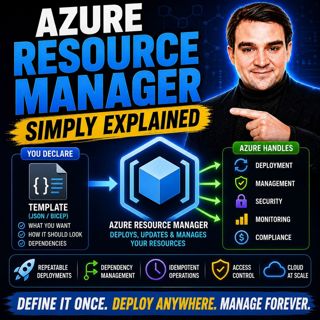
Azure Resource Manager - Simply Explained

Azure Resource Manager - Simply Explained

Every action you perform in Azure—whether you create a virtual machine, deploy a storage account, configure networking, or automate infrastructure with Bicep or ARM templates—passes through the same s...

16 Jul 16min
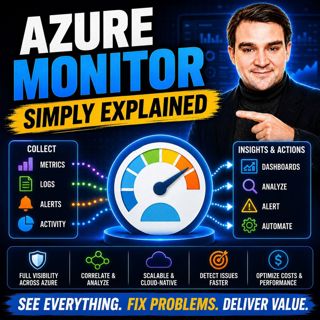
Azure Monitor — Simply Explained

Azure Monitor — Simply Explained

Keeping modern cloud environments running reliably requires far more than checking whether a server is online. Today's organizations operate virtual machines, applications, databases, containers, iden...

16 Jul 14min
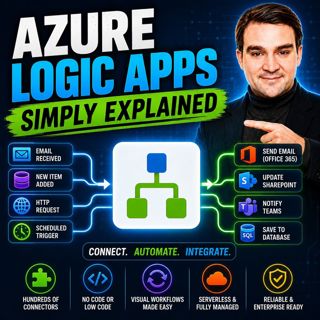
Azure Logic Apps - Simply Explained

Azure Logic Apps - Simply Explained

Connecting business applications has traditionally required custom development, complex integrations, and weeks of engineering effort. Azure Logic Apps changes that by providing a cloud-native workflo...

16 Jul 15min
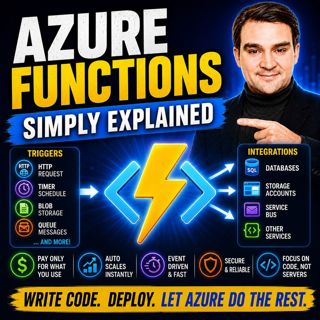
Azure Functions - Simply Explained

Azure Functions - Simply Explained

Serverless is one of the most talked-about concepts in cloud computing, yet it's also one of the most misunderstood. Many developers assume "serverless" means there are no servers involved, but the re...

15 Jul 13min
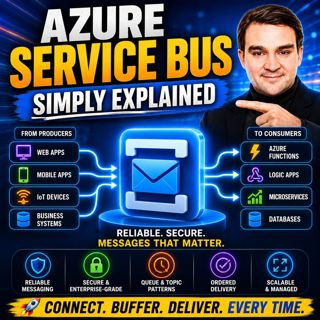
Azure Service Bus - Simply Explained

Azure Service Bus - Simply Explained

Building modern cloud applications isn't just about writing great code—it's about ensuring your applications continue working even when other systems are slow, offline, or temporarily unavailable. In ...

15 Jul 14min
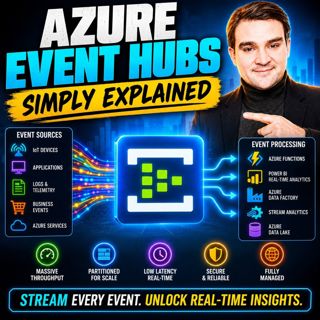
Azure Event Hubs - Simply Explained

Azure Event Hubs - Simply Explained

Modern applications generate an incredible amount of data every second. IoT devices stream telemetry, applications produce logs, websites capture user interactions, and financial systems process milli...

15 Jul 16min

Event Grid - Simply Explained

Event Grid - Simply Explained

Modern cloud applications need to react instantly when something happens. A file is uploaded, a virtual machine is created, or an order is placed—and the right services should respond automatically wi...

15 Jul 14min

Populært innen Politikk og nyheter

giver-og-gjengen-vg
aftenpodden-usa
aftenpodden
fotballpodden-2
forklart
stopp-verden
popradet
det-store-bildet
hanna-de-heldige
rss-gukild-johaug
rss-ness
dine-penger-pengeradet
aftenbla-bla
rss-utenrikskomiteen-med-bogen-og-grasvik
lydartikler-fra-aftenposten
nokon-ma-ga
rss-penger-polser-og-politikk
e24-podden
rss-hor-na-krim-2
rss-espen-lee-usensurert