312: Mapping Data to Human Potential - with Steve Rondeau

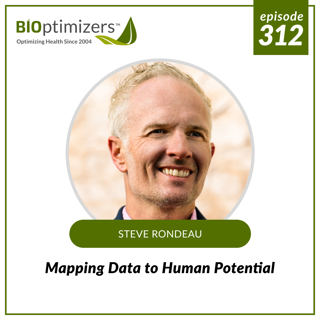
312: Mapping Data to Human Potential - with Steve Rondeau

Psychiatry often operates without looking at the actual organ being treated. Dr. Steve Rondeau notes that this is unlike any other field in medicine. A cardiologist would never diagnose a heart problem without using an EKG. Most specialties use objective tests to guide their treatment decisions.

Brain scans provide the missing data needed for accurate care. Without objective measures, doctors must rely on how a patient describes their feelings. This interpretation can lead to different diagnoses depending on which specialist you visit. Testing ensures that the treatment matches the actual biological need.

Objective Data for Better Health

Subjective interpretation often creates a cycle of trial and error for patients. Brain scans offer a direct look at the organ to cut through these personal biases. This allows clinicians to move past labels and focus on specific brain patterns.

Measuring brain activity helps identify exactly how an individual processes their world. Every person has a unique neurological signature that dictates how they respond to stress. By using data, we can move away from statistical averages and toward individualized care. This transition is essential for making mental healthcare as precise as any other medical field.

Solving the Treatment Resistance Problem

The term treatment resistant is frequently used when standard protocols fail a patient. This label often indicates a failure of the protocol rather than the person. Stress alone can manifest in over eight thousand different neurological combinations based on thirteen biomarkers. Guessing at a solution with such complex odds is rarely successful for everyone.

Providers can often feel burned out when their standard tools do not work. Patients may lose hope and begin to believe that something is fundamentally broken within them. Objective data removes the burden of guessing and provides a clear map for intervention. It shifts the focus from what is wrong with the patient to what the data shows.

Finding the Right Creative Outlet

A brain is deeply influenced by the environment in which it is placed. A husky born for cold climates will struggle if it is kept in a hot desert. Some people have brains that are naturally built for very high levels of stimulation. Without a healthy way to use that energy, they may turn to destructive habits.

Understanding these patterns helps reframe behaviors like addiction as a search for balance. The goal is not to fix the brain but to build an ecosystem that supports it. This approach transforms perceived deficits into personal strengths and superpowers.

Improving Connections and Future Care

Brain patterns can also explain why relationships experience conflict. Scans of couples often show that each person filters the same experience differently. Seeing these differences on a screen helps replace blame with validation and curiosity. It allows families to understand that neurological differences are not personal attacks.

Establishing a baseline for brain health should start in early childhood. Testing allows us to track brain health through major life transitions and aging. This proactive approach ensures that we are supporting the brain at every stage of life.

In this podcast, you will discover:

  • Why objective data is vital for modern mental health.
  • The reason for the label "treatment resistant" is often a misunderstanding.
  • How high-stimulation brains find healthy outlets instead of addiction.
  • The importance of matching your environment to your specific brain.
  • How brain scans can reduce conflict in close relationships.
  • Why early brain monitoring can support children and prevent crises.

    EPISODE RESOURCES:

Website
Instagram
Facebook
LinkedIn

Denne episoden er hentet fra en åpen RSS-feed og er ikke publisert av Podme. Den kan derfor inneholde annonser.

Episoder(315)

315: Power On With Light - with Roman Shapoval

315: Power On With Light - with Roman Shapoval

Roman Shapoval and his wife turned to natural light after experiencing severe health challenges. They uncovered invisible frequencies. Outdoor morning sunlight helped restore balance, inspiring them t...

24 Sep 44min

314: Vitality After Seventy - with Jerry Mixon

314: Vitality After Seventy - with Jerry Mixon

Reclaiming Youthful Hormone Balance Many people accept that aging means becoming slower and weaker. Dr. Jerry Mixon believes we lose vital biochemical tools needed to rebuild our bodies. His clinic's ...

10 Sep 1h 9min
313: Brain Biology to Stop Overeating - with Glenn Livingston

313: Brain Biology to Stop Overeating - with Glenn Livingston

Psychology often helps people understand why they eat, but it rarely stops the behavior itself. Glenn Livingston, a psychologist from a family of therapists, struggled with his weight for years despit...

27 Aug 1h 1min
311: Aging Powerfully and Staying Grounded - with Nathalie Niddam

311: Aging Powerfully and Staying Grounded - with Nathalie Niddam

Redefining the Aging Process Nathalie Niddam shares that aging is an inevitable biological reality. Wealth and extensive testing cannot prevent the process entirely. The goal should be compressing dec...

30 Jul 1h 7min
310: Engineering Systems for High Performance - with JD Tremblay

310: Engineering Systems for High Performance - with JD Tremblay

JD Tremblay is one of few people to complete the Epic Deca challenge. This feat involved ten consecutive Ironman distance triathlons across the islands of Hawaii. His journey proves that high performa...

16 Jul 56min
309: Can Harder Workouts Backfire? - with Molly McNamee

309: Can Harder Workouts Backfire? - with Molly McNamee

You eat clean and hit the gym twice a day. Yet, you feel bloated, tired, and the scale won't budge. You aren't doing anything wrong. Your body is simply reacting to chronic stress. When Effort Hurts Y...

25 Jun 41min
308: Your DNA Health Success Blueprint - with Sam Shay

308: Your DNA Health Success Blueprint - with Sam Shay

According to Dr. Sam Shay, functional genetics isn't genealogy or disease-gene testing. It's what Shay calls "terrain" genetics — identifying the upstream drivers of disease before they cascade into d...

11 Jun 1h 17min

Populært innen Helse

fastlegen
rss-gukild-johaug
psykodrama
hvordan-har-du-det-mann
leger-om-livet
rss-skravla-gar
relasjonspodden-med-dora-thorhallsdottir-kjersti-idem
foreldreradet
rss-dagen-for-dagen
hjernesterk
morten-ramm-lar-kakla-ga-til-du-sovner
rss-lopedrommen
treningsprat
klimaks
g-punktet
kjed-deg-i-sovn-verdens-kjedeligste-podcast
rss-loping-for-nybegynnere
bak-fasaden-en-reise-i-livet-med-sykepleier-ine
apent-forhold
hverdagspsyken