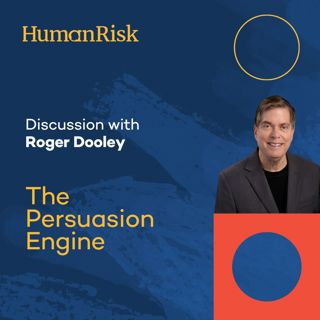
Roger Dooley on The Persuasion Engine

Roger Dooley on The Persuasion Engine

What if AI could help us understand people better, rather than simply replacing what humans do?

Episode summary
How can we use AI to become better at persuasion, communication and understanding human behaviour? My guest on this episode is Roger Dooley, author of The Persuasion Engine, a new book exploring what happens when behavioural science meets rapidly evolving technology.

Roger argues that tools once available only to large organisations — from behavioural science expertise to eye-tracking — are becoming accessible to almost anyone. We explore how AI can act as a personal “nudge unit”, helping us apply ideas from behavioural science, test communications and understand how different audiences might respond.We also discuss why simply asking an AI for an answer isn't enough, how to push LLMs beyond predictable responses, and why human judgement remains essential.

Roger introduces his idea of a “60-second audit” — using AI to identify how communications might be misunderstood or backfire before we send them.Along the way, we talk about Cialdini, cognitive biases, invisible calls-to-action, board papers, cultural disasters, AI collaborators, rally driving, long division and why the best analogy for AI might be a power tool rather than a replacement for human thinking.

Guest bio
Roger Dooley is an author, speaker and behavioural science expert who has spent years exploring a deceptively simple question: why do people do what they do?

His latest book, The Persuasion Engine (Wiley, 2026), looks at what happens when behavioural science meets AI — and how tools once available only to big companies with big budgets are now becoming accessible to almost anyone.Roger is also the author of Friction, named a Top 3 Management Book by PwC’s strategy+business, and Brainfluence, which has been published in 11 languages.

He brings an unusually practical perspective to the subject. Roger co-founded College Confidential and today he combines that entrepreneurial experience with behavioural science in his writing, speaking and teaching.He is a lecturer at McCombs Business School, a Forbes contributor and host of the Brainfluence podcast — and his work focuses on helping organisations understand people better, remove unnecessary friction and communicate in ways that actually work.

AI-Generated Timestamped Summary
00:00 — What if AI could be your behavioural scientist?
05:00 — Cialdini, behavioural science and why people don’t know why they decide
10:00 — Eye-tracking, attention and what people actually notice
15:00 — Making important information more visible
20:00 — Board reports, visual hierarchy and designing for human attention
25:00 — Better prompting and getting AI beyond obvious answers
30:00 — What happens to human expertise when AI knows the theory?
35:00 — Reactance, unintended consequences and communications that backfire
40:00 — Cultural context, reputation and Roger’s “60-second audit”
45:00 — Using AI to become better at understanding other audiences
50:00 — Roger’s lifelong interest in technology and what comes next
55:00 — Cognitive offloading, critical judgement and rally driving
57:00 — Why AI is best thought of as a power tool

Links to topics discussed

Denne episoden er hentet fra en åpen RSS-feed og er ikke publisert av Podme. Den kan derfor inneholde annonser.

Episoder(379)

Annie Wagstaff on The Joy of Curiosity

Annie Wagstaff on The Joy of Curiosity

What’s the last thing you learned simply because you wanted to know?Episode summaryWhy do we feel the need to justify what we learn? My guest on this episode is Annie Wagstaff, a musician and composer...

23 Aug 1h
Paul Craven on Living With Uncertainty

Paul Craven on Living With Uncertainty

What happens when someone who spends his life thinking about risk, decision-making and human behaviour is confronted with an uncertainty he simply can’t control?Episode summaryMy guest is Paul Craven,...

15 Aug 51min
Benji Wilson on why we rate everything

Benji Wilson on why we rate everything

Why do we rate everything and why do we do so on a scale of one to five stars? What happens when systems designed to help us make better choices start influencing our behaviour in ways we don’t necess...

8 Aug 1h 4min
Mark Heywood on The Stories We Tell About Ourselves

Mark Heywood on The Stories We Tell About Ourselves

What parts of yourself have you learned to hide in order to be taken seriously? My guest on this episode is Mark Heywood, a friend of the show, returning guest and someone I've collaborated with on a ...

2 Aug 1h 21min
Gill Kernick on Grenfell -  the disaster we still haven't learned from

Gill Kernick on Grenfell - the disaster we still haven't learned from

When something goes badly wrong, we investigate it. Reports are written. Recommendations are made. Lessons are identified. But do we actually learn them?Episode SummaryReturning to the show, Gill Kern...

21 Jul 57min
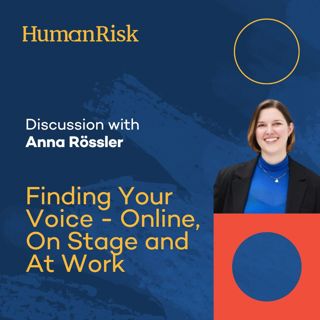
Anna Rössler on Finding Your Voice — Online, On Stage and At Work

Anna Rössler on Finding Your Voice — Online, On Stage and At Work

What does jazz singing have to do with LinkedIn? More than you might think. This week's guest, Anna Rössler, has built a career helping senior leaders find their voice online while simultaneously deve...

5 Jul 1h 1min
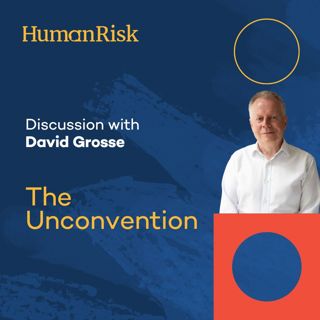
David Grosse on The Unconvention

David Grosse on The Unconvention

What happens when two people who spend their careers thinking about human behaviour meet in a London pub and start complaining about conferences? Apparently, they decide to organise one.Episode Summar...

25 Jun 48min

Populært innen Vitenskap

fastlegen
romkapsel
liberal-halvtime
tingenes-tilstand
jss
tomprat-med-gunnar-tjomlid
rekommandert
forskningno
sinnsyn
villmarksliv
rss-paradigmepodden
tidlose-historier
fjellsportpodden
rss-nysgjerrige-norge
rss-rekommandert
nordnorsk-historie
rss-inn-til-kjernen-med-sunniva-rose
grunnstoffene
nevropodden
rss-fuglehundfolk