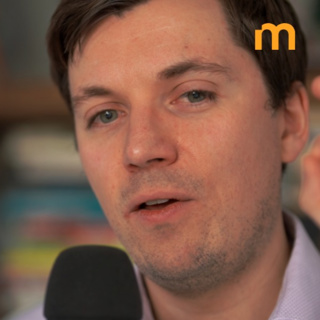

How Replication Could Teach Machines What Good Science Looks Like — Edward Hughes

How Replication Could Teach Machines What Good Science Looks Like — Edward Hughes

Can a machine learn the judgement that separates a plausible-looking result from a faithful experiment? Edward Hughes, Chief Scientist and co-founder of Inherent, joins Tim Scarfe to argue that creativity is not optimisation, and that the missing capability in AI is choosing which questions are worth asking.


SPONSOR:

---

Cyber Fund built the Monastery to help founders ship products that were impossible a year ago.

Apply now: https://cyber.fund

---


Edward makes the case that Move 37 was innovative rather than creative, and that the field, not the individual, decides what counts as a discovery. That reframing runs through Csikszentmihalyi, Deutsch and exaptation into open-endedness, where deceptive goals and imperfect world models turn out to be the point rather than the problem. The second half turns to the paper: Replica, a task space built by redacting figures from real papers, and Faraday, a 27-billion-parameter model trained to steer a frontier coding agent that then beats the frontier on held-out replications.


---

TIMESTAMPS:

00:00:00 Cold open: Move 37, Faraday and collective intelligence

00:01:08 Sponsor: CyberFund

00:01:46 Inherent's $50M raise and the road from string theory

00:09:14 Three timescales of learning: weights, context, culture

00:13:47 Move 37 was innovative, not creative: the field decides

00:20:39 Creativity as satisficing: the urinal and evolution

00:25:06 Exaptation and the Tristan chord: creativity in context

00:30:56 Coherence for whom? Deutsch's hard-to-vary explanations

00:35:53 Why copying is creative: Deutsch and the constraint engineer

00:42:27 Societies of agents and the strong Moravec paradox

00:45:51 Evaluate in hindsight: from Lean proofs to climate change

00:51:56 Picbreeder, local goals and why discovery needs deception

00:57:21 Spaghetti proofs, translation layers and superhuman Go

01:00:37 Does nature compress? Naturalness and real patterns

01:07:36 Why replicate? Replica's redacted figures and Faraday

01:12:31 Faraday beats Codex, Claude and GLM 5.2 on held-out tasks

01:15:31 Replication to innovation: how the Transformer happened

01:18:26 Deep replication: what Faraday learns from Voyager and GNoME

01:23:37 Can the AI scientist cheat? Goodharting the judge

01:29:09 Inside Replica: scale-down, 8xB300 runs, per-task rubrics

01:34:11 The RL crisis: getting GRPO to work with per-turn credit

01:39:43 Weights vs harnesses: AlphaEvolve, DGM and EvoTune

01:45:45 The recursive company: agents cross a phase transition

01:50:35 Collective intelligence and the electric dynamo

01:55:46 What replaces OKRs? Incumbents and the burden of knowledge


---

REFERENCES:

MLST Creativity Article:

https://archive.mlst.ai/read/why-creativity-cannot-be-interpolated


organization:

[00:01:47] Inherent

https://inherentlabs.ai/

other:

[00:20:51] Marcel Duchamp, Fountain

https://www.tate.org.uk/art/artworks/duchamp-fountain-t07573

[00:05:19] Human-Timescale Adaptation in an Open-Ended Task Space (Adaptive Agent)

https://arxiv.org/abs/2301.07608

[00:06:05] The AI Scientist

https://arxiv.org/abs/2408.06292

[00:12:13] Training AI Scientists to Replicate Research (Replica and Faraday)

https://arxiv.org/abs/2608.13331

[01:44:46] Evolutionary Principles in Self-Referential Learning

https://people.idsia.ch/~juergen/diploma.html

[01:59:33] Are Ideas Getting Harder to Find?

https://www.nber.org/papers/w23782

book:

[00:16:04] Creativity: Flow

https://search.worldcat.org/title/254487436

[00:26:22] Why Greatness Cannot Be Planned

https://link.springer.com/book/10.1007/978-3-319-15524-1

[00:33:03] The Beginning of Infinity

https://www.penguinrandomhouse.com/books/293575/the-beginning-of-infinity-by-david-deutsch/

[01:55:47] Laws of Knowledge

https://www.penguin.co.nz/books/the-infinite-alphabet-9780241655672


(Full list refs on YT/rescript)

---

RESCRIPT:

https://app.rescript.info/session/670296ba913761d0?share=6281911cac9bdbff637f10819d4d1e5c

Denne episoden er hentet fra en åpen RSS-feed og er ikke publisert av Podme. Den kan derfor inneholde annonser.

Episoder(271)

What Most People Get Wrong About Evolution | Akarsh Kumar

What Most People Get Wrong About Evolution | Akarsh Kumar

A lot of people in AI treat evolution as a dumb fallback, basically random search for when you can't take a gradient. Akarsh Kumar thinks that is wrong. Selection hangs on to partial solutions, so mut...

10 Okt 47min

How a Voice Agent Learns the Rhythm of Conversation — Shawn Wen

How a Voice Agent Learns the Rhythm of Conversation — Shawn Wen

Tsung-Hsien (Shawn) Wen, CTO of PolyAI, tells Tim Scarfe why voice agents are harder than text agents. Voice adds time, and a good conversation depends on adapting to the person on the line, not just ...

1 Okt 1h 10min

Who Checks a Proof No Human Can Read? — Leo de Moura

Who Checks a Proof No Human Can Read? — Leo de Moura

Leonardo de Moura created Lean and co-created Z3. ---This episode is sponsored by Parallel.Parallel, where agents find answers: web search, extraction and deep research APIs built for AI agents.Start ...

30 Sep 1h 14min

When AI Research Starts Moving Faster Than Human Research - Zhengyao Jiang

When AI Research Starts Moving Faster Than Human Research - Zhengyao Jiang

Weco let an AI coding agent rewrite the harness around another agent for eight days: its code, prompts and tools, while the underlying language model stayed fixed. Tim Scarfe asks Weco co-founder Zhen...

26 Sep 43min

How Deep Learning Finally Cracked Messy Tables - Frank Hutter

How Deep Learning Finally Cracked Messy Tables - Frank Hutter

Frank Hutter, co-founder of Prior Labs, talks about TabPFN, a tabular foundation model that makes predictions in a single forward pass, and the research behind it.TabPFN is pre-trained on synthetic da...

23 Sep 1h 53min

Why Scaling Prediction Cannot Create Intelligence - Alexander Mattick

Why Scaling Prediction Cannot Create Intelligence - Alexander Mattick

Alexander Mattick is a researcher at Fraunhofer IIS and a PhD researcher at the University of Technology Nuremberg (UTN), and a regular on Yannic Kilcher's Discord. He first came on MLST in 2022, afte...

21 Sep 2h 14min

How Physical AI Learns Across Language, Video and Action — Ming-Yu Liu

How Physical AI Learns Across Language, Video and Action — Ming-Yu Liu

The car making a left turn at the start of this episode was never filmed. Cosmos 3 generated it. Ming-Yu Liu, who leads the Cosmos research at NVIDIA, explains how one model can describe a video, gene...

15 Sep 25min

Speech Recognition Is Not a Solved Problem — Pavan Kumar Reddy

Speech Recognition Is Not a Solved Problem — Pavan Kumar Reddy

Pavan Kumar Reddy leads audio research at Mistral AI. He joins Tim Scarfe for a deep technical tour of Voxtral — and explains why the frontier of deployed voice is still a cascade of specialised model...

14 Sep 1h 42min

Populært innen Teknologi

teknisk-sett
energi-og-klima
lydartikler-fra-aftenposten
nasjonal-sikkerhetsmyndighet-nsm
elektropodden
tomprat-med-gunnar-tjomlid
rss-ai-forklart
rss-kunstig-intelligens-med-elisabeth-maren-og-morten
shifter
smart-forklart
fornybaren
pedagogisk-intelligens
rss-alt-som-gar-pa-strom
rss-bak-skyen
rss-alt-vi-kan
teknologimagasinet-aftenposten
rss-hvorfor-ble-det-sann
rss-romnasjonen
kortslutning
rss-ki-praten