Can Artificial Intelligence Help Us See the Person Behind the Pattern? Intimate Partner Violence Through the Lens of Radiology

Can Artificial Intelligence Help Us See the Person Behind the Pattern? Intimate Partner Violence Through the Lens of Radiology

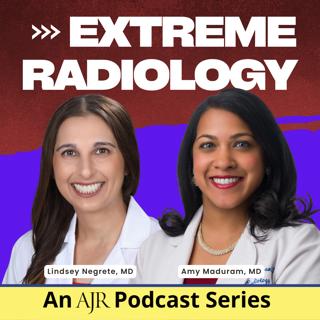
What do you do when images tell a different story? Bharti Khurana, MD, MBA, speaks with cohosts Lindsey Negrete, MD, and Amy Maduram, MD, about her journey from the reading room to the forefront of artificial intelligence innovation, transforming the way we identify and support survivors of intimate partner violence. Listen to their discussion in episode 4 of Extreme Radiology, an AJR Podcast Series.

*Key Takeaways

The Longitudinal Biomarker: There is no single characteristic injury that defines intimate partner violence (IPV). Instead, the true warning sign is a longitudinal pattern of trauma over time, including target injuries to the head and face, defensive injuries to the upper extremities, and neck injuries from strangulation.

Protecting the Patient Portal: Radiologists should not write "suspicious for IPV" in a formal imaging report because the partner may be monitoring the patient's electronic records. Radiologists should objectively describe the injuries in the text and directly call the referring clinician to raise abuse suspicions.

The "Pickle Jar" of Disclosure: If a case is flagged and the patient denies the abuse, the radiologist should not feel that they have failed. Reporting IPV is like opening a tight pickle jar; each safe conversation loosens the lid until the patient is finally ready and empowered to disclose their situation.

Humanizing Medicine with AI: The AIRS tool uses computational analysis to flag high probability IPV risk, which allows clinicians to better dedicate appointment times toward empathetic, trauma-informed conversations.

Bias as a Strength: Critics initially warned that radiologists could not diagnose IPV because they may not see the patient's socioeconomic background in the reading room. However, this is also a source of strength, allowing radiologists to report objective findings without certain potential implicit biases.

*Chapters

0:00 - Welcome and Content Warning

2:46 - Why Study IPV in Radiology

6:17 - Imaging Clues and Patterns

8:03 - Longitudinal Data and Integration

9:19 - Gender Differences and Misconceptions

14:33 - Reporting Safely in the EMR Era

19:00 - The Longitudinal Biomarker Eureka Moment

22:56 - AI That Prompts Human Care

25:21 - AIRS Workflow and Future Tools

30:25 - Collaboration and Leaving the Silo

34:47 - Handling Criticism and Staying Motivated

38:12 - What Trainees Should Know

41:52 - Closing Takeaways

Follow AJR on Social Media

LinkedIn: https://www.linkedin.com/showcase/ajr-radiology/

YouTube: https://www.youtube.com/channel/UCfFAYezkLMxJGMgIJLN0Dpg

Instagram: https://www.instagram.com/ajr_radiology/

TikTok: https://www.tiktok.com/@ajr_radiology

X: https://x.com/AJR_Radiology

BlueSky: https://bsky.app/profile/ajrradiology.bsky.social

Threads: https://www.threads.com/@ajr_radiology

*These sections were generated using artificial intelligence (Descript and Google Gemini) and then reviewed for accuracy.

Denne episoden er hentet fra en åpen RSS-feed og er ikke publisert av Podme. Den kan derfor inneholde annonser.

Episoder(434)

It's Not You, It's the Workflow

It's Not You, It's the Workflow

What are drivers of stress and satisfaction in the radiology workplace? Pranjal Rai, MD, discusses this article by Ayyala et al. that explores this issue among radiologists, technologists, nurses, and...

28 Sep 6min

Low-keV Virtual Monoenergetic Imaging in Bladder Cancer: Does Photon-Counting CT Make a Difference?

Low-keV Virtual Monoenergetic Imaging in Bladder Cancer: Does Photon-Counting CT Make a Difference?

The combination of photon-counting CT and low-keV VMI has the potential to aid bladder cancer local stage Anna Lo Verde, MD, discusses the prospective study by Wang et al. exploring this combination f...

28 Sep 8min
Negotiating the Career You Want

Negotiating the Career You Want

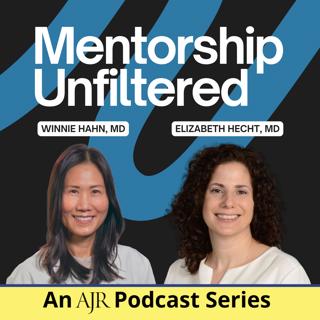
Negotiation is an important skill that physicians are rarely taught. Anees Chagpar, MD, MA, MBA, MPH, and Naman Desai, MD, speak with cohosts Winnie Hahn, MD, and Elizabeth Hecht, MD, about how prepar...

23 Sep 58min

How to Avoid Pitfalls in Study Design

How to Avoid Pitfalls in Study Design

A strong research question can still fail if the study design cannot answer it. Michael Soulen, MD, and Shudaveep Ganguly, MD, DM, speak with host Amit Gupta, MD, about selecting meaningful outcomes, ...

16 Sep 54min

Beyond the Mammogram: Can AI Predict Breast Cancer Risk?

Beyond the Mammogram: Can AI Predict Breast Cancer Risk?

How can AI help predict breast cancer risk? Heta Ladumor, MD, discusses the AJR article by Xu et al. that developed a novel deep-learning tool for predicting risk from DBT examinations. Full article: ...

14 Sep 8min

Rising Neuroimaging Utilization in the ED

Rising Neuroimaging Utilization in the ED

Neuroimaging utilization in the emergency department (ED) is growing. Christopher Ruggiero, MD, discusses this article by Rai et al. that explores this growth in over 3 million ED encounters nationall...

14 Sep 5min

Vision Language Models for Ultrasound Assessment of Suspicious Axillary Lymph Nodes in Breast Cancer

Vision Language Models for Ultrasound Assessment of Suspicious Axillary Lymph Nodes in Breast Cancer

Vision language models (VLMs) are receiving growing attention in radiology. Kathy Dai, MD, is joined by Dorothy Sippo, MD, MPH, to discuss the article by He et al. exploring the use of VLMs for axilla...

14 Sep 16min

Populært innen Fakta

fastlegen
dine-penger-pengeradet
relasjonspodden-med-dora-thorhallsdottir-kjersti-idem
rss-strid
treningspodden
rss-bisarr-historie
foreldreradet
jakt-og-fiskepodden
rss-orjasater
tomprat-med-gunnar-tjomlid
takk-og-lov-med-anine-kierulf
hverdagspsyken
sinnsyn
mikkels-paskenotter
rss-impressions-2
rss-kull
gravid-uke-for-uke
rss-kunstig-intelligens-med-elisabeth-maren-og-morten
rss-kunsten-a-leve
fryktlos