429 | AI, Education, and the Decline of Independent Thinking | Jonathan Schaeffer

429 | AI, Education, and the Decline of Independent Thinking | Jonathan Schaeffer

Are you using AI to make better decisions—or letting a confident answer do your thinking for you?

In this episode of Futureproof Founder, Jeff Mains sits down with AI researcher and entrepreneur Jonathan Schaeffer for a candid conversation about privacy, accuracy, and the gap between what AI can do and how much we should trust it. After 40 years in academia, Jonathan stepped into entrepreneurship to address the problems he saw eroding public trust in the technology he had spent his career advancing.

Jonathan shares the classroom frustrations that inspired Kind, a tool designed to answer questions using a person’s own collection of documents, videos, and other materials. What began as a way to reduce repetitive student emails revealed an unexpected feature users loved: finding the exact moment a topic appeared in a recorded lecture.

Key Takeaways

[~08:00] AI should inform decisions—not make them for you. Jonathan shares his Star Trek–inspired vision of AI: provide useful information, acknowledge uncertainty, and keep humans in control.

[~15:30] A confident answer is not necessarily a correct answer. Jonathan explains why persuasive AI responses still require verification and why he believes “hallucination” softens the seriousness of factual errors.

[~18:30] Solve a problem you understand firsthand. Repetitive student emails and unreliable online study materials inspired Kind—a tool designed to answer questions from a curated collection of course content.

[~22:30] Your customers may discover your product’s strongest selling point. Students especially valued jumping directly to the relevant moment in a recorded lecture—an unexpected benefit that encouraged Jonathan to keep building.

[~30:00] Privacy matters—until convenience gets in the way. Jeff and Jonathan explore the challenge of building a business around a value customers say they prioritize but frequently trade away.

[~37:30] Keep the vision steady while the technology evolves. Jonathan revisits his original 2017 product concept and explains how advances in AI strengthened the implementation without fundamentally changing the vision.

[~40:00] Local computing creates different cost-and-speed tradeoffs. Jonathan describes using otherwise idle desktop resources for substantial analysis—and why he is willing to wait longer rather than incur cloud-processing charges.

[~50:30] Founder conviction is not proof of customer demand. Before shipping, ask whether people will buy what you are building. Jonathan discusses validating a real need through adoption, usage, and willingness to pay.

[~52:30] Give customers a clear choice between local and hybrid processing. Jonathan explains the differences between Kind Local and Kind Hybrid, using handwriting recognition to illustrate the tradeoff between fully local processing and cloud-assisted capability.

Tweetable Quotes“But let's call it what it is. It's an error. It's a lie. It's a fabrication.” — Jonathan Schaeffer, on AI “hallucinations”“This goes nowhere without trust.”— Jonathan Schaeffer“If you're meeting a real need, people will buy the product. And just because I believe there's a need doesn't mean that there is a need.”— Jonathan Schaeffer“The product that lasts won't be the fastest one. It'll be the one people can actually trust with what matters: their data, their decisions, their thinking.”— Jeff MainsSaaS Leadership Lessons

Build trust into the product—not just the pitch.

Jonathan’s approach makes privacy and the boundaries of the knowledge base central product decisions. The leadership takeaway: define what your product should access, what it should answer, and what customers must remain in control of before making bigger promises about capability. Pasted text

Pay attention to the feature customers keep celebrating.

Kind began with a goal of reducing repetitive questions, but students highlighted the value of searchable video moments. Customer feedback can reveal a more compelling benefit than the one that originally inspired the product. Let those discoveries influence what you improve and how you explain its value. Pasted text

Keep the vision steady while adapting the implementation.

Jonathan’s original concept remained recognizable years later, even though advances in AI dramatically improved how it could work. Separate the enduring customer problem from the technology used to solve it. Your implementation can evolve without abandoning the reason the product exists. Pasted text

Validate principles with customer behavior.

A value such as privacy may matter deeply to you without motivating every buyer. Jonathan acknowledges that distinction directly. Identify the customers for whom your priorities solve a meaningful problem, then look for evidence in usage, feedback, and willingness to pay—not agreement alone. Pasted text

Use AI to expand capability without surrendering accountability.

Jonathan’s argument is not that leaders should avoid AI. It is that they should remain responsible for validating information and deciding how to use it. For SaaS teams, the practical lesson is to preserve critical thinking alongside AI adoption rather than treating persuasive output as a substitute for judgment. Pasted text

Guest Resources

jonathan@synsira.com

https://kind.synsira.com

https://www.linkedin.com/in/jonathan-schaeffer-phd-frsc-aaai-fellow-3318015/

Episode Sponsor

The Futureproof Series - https://www.youtube.com/playlist?list=PLfkXKUPZ5xuOqMPR7_gzGybncTtavyR1N

The Captain's Keys

Small Fish, Big Pond – https://smallfishbigpond.com/ Use the promo code ‘SaaSFuel’

Champion Leadership Group – https://championleadership.com/

https://jeffmains.com/books/

SaaS Fuel Resources

Website - https://championleadership.com/

Jeff Mains on LinkedIn - https://www.linkedin.com/in/jeffkmains/

Twitter - https://twitter.com/jeffkmains

Facebook - https://www.facebook.com/thesaasguy/

Instagram - https://instagram.com/jeffkmains

Denne episoden er hentet fra en åpen RSS-feed og er ikke publisert av Podme. Den kan derfor inneholde annonser.

Episoder(433)

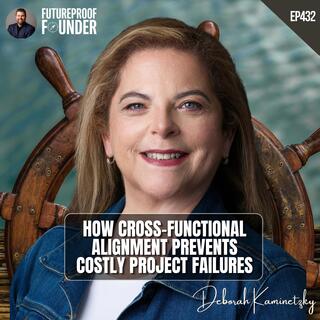
432 | How Cross-Functional Alignment Prevents Costly Project Failures | Deborah Kaminetzky

432 | How Cross-Functional Alignment Prevents Costly Project Failures | Deborah Kaminetzky

A software implementation can be delivered on time and on budget, then fail the moment people refuse to use it.In this episode, Jeff Mains talks with Deborah Kaminetzky, founder of De Facto Project Ma...

15 Okt 47min

431 | The Hidden Work Behind Cross-Border Supply Chains | Daman Grewal

431 | The Hidden Work Behind Cross-Border Supply Chains | Daman Grewal

Daman Grewal grew a logistics company from $1 million to $24 million in four years, working across dispatch, safety, accounts receivable, and sales before he fully recognized the skills he was buildin...

13 Okt 53min
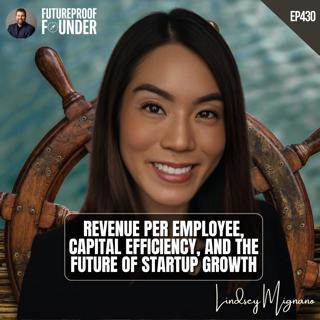
430 | Revenue Per Employee, Capital Efficiency, and the Future of Startup Growth | Lindsey Mignano

430 | Revenue Per Employee, Capital Efficiency, and the Future of Startup Growth | Lindsey Mignano

Are you raising venture capital because your business needs it—or because getting funded feels like proof you’ve made it?In this episode of Futureproof Founder, Jeff Mains sits down with Lindsey Migna...

8 Okt 54min

428 | Intellectual Property for Founders: Trademarks, Patents, Copyright, and Trade Secrets | James Gourley

428 | Intellectual Property for Founders: Trademarks, Patents, Copyright, and Trade Secrets | James Gourley

Jeff Mains sits down with James Gourley, a patent attorney and IP litigator who has spent 20 years on both sides of intellectual property disputes — from filing patents and trademarks to defending com...

1 Okt 42min
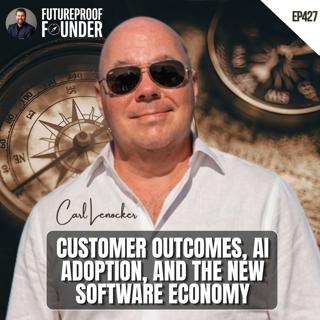
427 | Customer Outcomes, AI Adoption, and the New Software Economy | Carl Lenocker

427 | Customer Outcomes, AI Adoption, and the New Software Economy | Carl Lenocker

Jeff Mains sits down with Carl Lenocker, a 30-year enterprise software veteran who started in Silicon Valley in the '80s, survived the dot-com bust, and now consults founders on what actually creates ...

29 Sep 45min
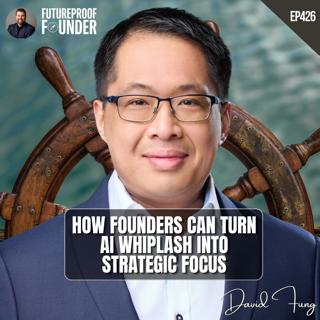
426 | How Founders Can Turn AI Whiplash Into Strategic Focus | David Fung

426 | How Founders Can Turn AI Whiplash Into Strategic Focus | David Fung

David Fung spent 15 years at Salesforce as a Senior Director before walking away from unvested RSUs to launch Coachful Coaching. He now coaches CTOs and tech leaders on the pattern he calls "AI whipla...

24 Sep 46min

425 | Product-Market Fit Starts with Understanding the User | Erin Rollenhagen

425 | Product-Market Fit Starts with Understanding the User | Erin Rollenhagen

Erin Rollenhagen learned the most expensive lesson in product development the hard way: she spent years building software without ever talking to a single end user—and people took early retirement to ...

22 Sep 46min

Populært innen Business og økonomi

stopp-verden
dine-penger-pengeradet
e24-podden
rss-penger-polser-og-politikk
rss-borsmorgen-okonominyhetene
rss-skravla-gar
rss-pa-konto
pengepodden-2
livet-pa-veien-med-jan-erik-larssen
tid-er-penger-en-podcast-med-peter-warren
utbytte
lederpodden
finansredaksjonen
stormkast-med-valebrokk-stordalen
rss-markedspuls-2
morgenkaffen-med-finansavisen
pengesnakk
rss-orjasater
okonomiamatorene
liberal-halvtime