The Beginning of the Second Sino-Japanese War and the Nanjing Massacre

The Beginning of the Second Sino-Japanese War and the Nanjing Massacre

On July 7, 1937, the Second Sino-Japanese War and World War II began with the Marco Polo Bridge Incident. It is also known as the Lugou Bridge Incident. Within days of the small skirmish with 100 Chinese garrison troops, the Japanese had brought in 180,000 troops. After that, the fighting between the Chinese and the Japanese did not stop until 1945.


Japan then attacked Shanghai. Nationalist troops resisted for three months, including with hidden artillery that killed the Japanese Empress' cousin during an amphibious landing. But the Japanese eventually captured China's largest port city and turned their attention to the national capital of Nanjing, after sacking the historic, cultural city of Suzhou.


Chiang Kai-shek ordered Nanjing to be both defended and evacuated. Treasures from the Forbidden City were moved west, along with government officials. Soldiers were brought in and they fortified in anticipation of the attack. Refugees streamed west, including some to Nanjing. Trapped between the attacking columns and the Yangzi River, only a small number were able to evacuate once the battle was lost. Those who were not able to find refuge in the Nanjing Safety Zone were most often killed or raped and murdered. The Nanjing Massacre, also known as the Rape of Nanking, was one of the worst war crimes in human history.


John Rabe, a Nazi, helped save thousands, perhaps even two hundred thousand lives as he led the Nanjing Safety Zone. He used his Nazi armband to get Japanese soldiers to leave the Chinese alone. He reported Japanese abuses to German officials, including Hitler, but in Germany, after being transferred back to Berlin, he was taken and interrogated by the Gestapo.


Robert Wilson, a surgeon, refused to leave and gave medical care day and night for free, at the cost of his own health.


Minnie Vautrin gave up food, took beatings and had her life threatened for protecting Chinese in the Safety Zone, which the Japanese did not recognize. Her efforts to save Chinese lives and spirits cost her life. She told the Chinese that China would not perish and that Japan would fail in the end.


It did and War Criminals were tried and executed, both in Tokyo and in Nanjing, for acts during the Nanjing occupation.


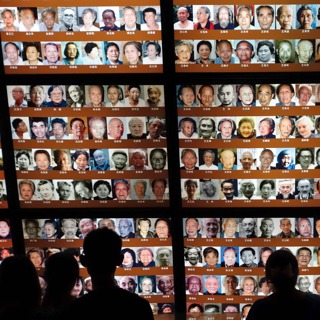
The Nanjing Massacre Memorial Hall is today a place of remembrance and of education.


Image: "Nanjing Massacre Memorial Hall" by kevin dooley is licensed under CC BY 2.0.


You can support this show through Buy me a coffee. https://www.buymeacoffee.com/thechineserevolution

Hosted on Acast. See acast.com/privacy for more information.

Denne episoden er hentet fra en åpen RSS-feed og er ikke publisert av Podme. Den kan derfor inneholde annonser.

Episoder(67)

The Wang Jingwei Regime: A Puppet Regime in Nanjing

The Wang Jingwei Regime: A Puppet Regime in Nanjing

In 1938, after the Battle of Wuhan, Wang Jingwei left Chongqing and the Republic of China team in Chongqing for Hanoi. He negotiated with Japanese officials and eventually set up a puppet regime know ...

30 Jun 202428min
Living Under Japanese Occupation

Living Under Japanese Occupation

Japan controlled Taiwan as a colony from 1895 to 1945. During the Second Sino-Japanese War, Chinese language education and publications stopped and the Imperial Subject Movement tried to Japanize resi...

27 Mai 202429min
The Brilliance of Chairman Mao

The Brilliance of Chairman Mao

By the early 1940s, the Communists in Yan’an were feeling relatively secure. The Japanese advance in north China had not reached that area. The Sino-Japanese War and the United Front meant that Chiang...

7 Apr 202420min
Hope and the Second United Front in Wuhan

Hope and the Second United Front in Wuhan

For ten months in 1938, Hankou in Wuhan was the center of China's Second United Front and defense against the Japanese invasion.Artistic expression, political parties and free speech all blossomed. Ne...

3 Mar 202426min
The National Palace Museum Treasures During the Second Sino Japanese War

The National Palace Museum Treasures During the Second Sino Japanese War

The treasures of the National Palace Museum, originally the Forbidden City, followed China's path. They escaped the invading Japanese by leaving Beijing, first for Shanghai, then Nanjing and then foll...

12 Feb 202455min
Chiang Kai Shek is Kidnapped

Chiang Kai Shek is Kidnapped

After the Long March, the Chinese Communists were mostly in northern Shaanxi, wanting a breather. Japan had continued its aggression in China after it set up the puppet state of Manchukuo under Empero...

7 Jan 202416min
The Long March

The Long March

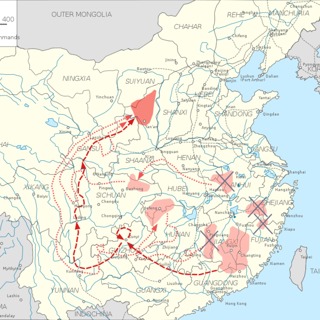
Zhou Enlai planned in secret the details of the Chinese Communist's escape from the encirclement of the Central Soviet. He identified a Guangdong warlord who preferred to save his troops rather than f...

25 Des 202341min

Populært innen Samfunn

rss-spartsklubben
alt-fortalt
giver-og-gjengen-vg
aftenpodden
aftenpodden-usa
konspirasjonspodden
popradet
rss-nesten-hele-uka-med-lepperod
rss-henlagt-andy-larsgaard
wolfgang-wee-uncut
lydartikler-fra-aftenposten
rss-espen-lee-usensurert
bokmerket-2
grenselos
fladseth
rss-dette-ma-aldri-skje-igjen
rss-siktet
min-barneoppdragelse
frokostshowet-pa-p5
synnve-og-vanessa