In the News... Infusion set recall, diabetes & sleep studies, cinnamon clinical trial and more!

In the News... Infusion set recall, diabetes & sleep studies, cinnamon clinical trial and more!

It's In the News, a look at the top stories and headlines from the diabetes community happening now. Top stories this week: infusion set recall, update on ViaCyte stem cell research, a few new studies look at sleep and diabetes, actual clinical research into cinnamon for type 1 and lots more.

Links & transcript below

Find out more about Moms' Night Out

Please visit our Sponsors & Partners - they help make the show possible!

Edgepark Medical Supplies

--

We will be starting a newsletter soon. Sign up today (no spam we promise)

Here's where to find us:

Facebook (Group)

Facebook (Page)

Instagram

Threads

Check out Stacey's books!

Learn more about everything at our home page www.diabetes-connections.com

Reach out with questions or comments: info@diabetes-connections.com

Episode transcript:

Hello and welcome to Diabetes Connections In the News! I'm Stacey Simms and every other Friday I bring you a short episode with the top diabetes stories and headlines happening now.

XX

In the news is brought to you by Edgepark simplify your diabetes journey with Edgepark

XX

Our top story this week…

XX

A recall of infusion sets. This is the VariSoft infusion set used with Tandem Diabetes Pumps. The recall here isn't new.. but the FDA has changed the rating to Class 1, its most serious. The VariSoft version is flexible and can be put in place at an insertion angle anywhere between 20 and 45 degrees, it's usually recommended for people "who are thin or who have scar tissue or limiting potential insertion sites."

The problem is that the connector can detach from the set – which means no insulin is going in. To date, according to the FDA notice, there has only been one report of injury related to the recall.

https://www.fiercebiotech.com/medtech/fda-gives-class-i-recall-rating-infusion-sets-used-tandem-insulin-pumps

XX

An already existing drug may help preserve beta cell function in people with new onset type 1. It's got a very long name, so it's usually referred to as DFMO. It inhibits a pathway, which plays a role in the inflammatory responses in autoimmune diseases, including type 1 diabetes. It's sold under a few names for different conditions, including Vaniqa which is a cream for unwanted hair growth in women. It also has orphan designations for treating various cancers, including neuroblastoma.

The new safety study by Sims and colleagues, which was published November 1 in Cell Medicine Reports, enrolled 41 people with type 1 diabetes that had been diagnosed within the previous 8 months, including 31 children. Participants were randomly assigned to undergo oral treatment with DFMO at one of five doses or placebo for 3 months, with 3 additional months of follow-up.

Following a mixed-meal tolerance test at 6 months, the C-peptide area under the curve ― a measure of beta-cell function ― was significantly higher with the three highest DFMO doses compared to placebo (P = .02, .03, and .02 for 125 mg/m2, 750 mg/m2, and 1000 mg/m2, respectively).

https://www.medscape.com/viewarticle/998671?form=fpf

XX

Despite earlier promising findings, it seems unlikely that cinnamon can improve blood sugar levels in people with type 1, or insulin-dependent, diabetes, researchers report.

Previous research has shown that cinnamon appears to help fat cells recognize and respond to insulin. In test tube experiments and in animal studies, the spice led to a noteworthy increase in the processing of glucose. Moreover, in a previous study of people with type 2, or non-insulin dependent, diabetes, those who incorporated a small amount of cinnamon each day for 40 days into their normal diets experienced a healthy drop in blood sugar levels.

But a new study of teenagers with type 1 showed cinnamon made no difference after 90 days .

In fact, "In essentially all outcomes...the trend favored the placebo group, although did not achieve statistical significance," the researchers report.

https://www.reuters.com/article/us-cinnamon-diabetes-idUSSIB65463020070406/

XX

New results from ViaCyte clinical trials – that's a stem cell-based treatment for type 1 diabetes. The therapy aims to replace the insulin-producing beta cells that people with type 1 diabetes lack. Dubbed VC-02, the small medical implant contains millions of lab-grown pancreatic islet cells, including beta cells. The devices—approximately the size of a Band-Aid and no thicker than a credit card—are implanted just beneath a patient's skin where it is hoped they will provide a steady, long-term regulated supply of self-sustaining insulin. The clinical trial was conducted at Vancouver General Hospital, with additional sites in Belgium and the U.S. Ten participants, each of whom had no detectable insulin production at the start of the study, underwent surgery to receive up to 10 device implants each.

Six months later, three participants showed significant markers of insulin production and maintained those levels throughout the remainder of the year-long study. These participants spent more time in an optimal blood glucose range and reduced their intake of externally administered insulin.

One participant, in particular, showed remarkable improvement, with time spent in the target blood glucose range increasing from 55% to 85%, and a 44% reduction in their daily insulin administration.

In another ongoing trial, the UBC-VCH team is investigating whether a version of the device containing cells that have been genetically engineered to evade the immune system, using CRISPR gene-editing technology, could eliminate the need for participants to take immunosuppressant drugs alongside the treatment.

https://medicalxpress.com/news/2023-11-stem-cell-based-treatment-blood-sugar.html

XX

A new look at sleep quality in people with type 1 finding that more time in range means better sleep. No surprise here, but important to quantify. Interestingly, recurrent high or low blood sugar, rather than constant or prolonged higher levels seems associated with worse sleep.

A study in adults with type 1 diabetes showed that 17.7% wake up every night, and 53.5% wake up once or twice a week1. This was a small pilot study – the researchers want to now move to a larger one.

https://www.nature.com/articles/s41598-023-47351-x

XX

New study looks at women, sleep and insulin sensitivity. This is a small study, only 40 women, which found that particularly post menopausal women who sleep less 7 hours per night may have impaired insulin sensitivity regardless of body fat.

Nearly 40 women were randomly assigned to either restricted sleep or adequate sleep for 6 weeks, then crossed over to the other sleep condition. During sleep restriction, women slept an average of 6.2 hours per night vs 7-9 hours per night. Both fasting insulin levels and insulin resistance were significantly increased during sleep restriction with more insulin needed to normalize glucose. These researchers say if sustained over time, it is possible that prolonged insufficient sleep among individuals with prediabetes could accelerate the progression to type 2 diabetes

https://www.medscape.com/viewarticle/insufficient-sleep-impairs-womens-insulin-sensitivity-2023a1000tlz

XX

XX

Pregnant women with type 2 who use CGM saw improvement in blood glucose levels but only if they used the device more than 50% of the time during their pregnancy. This study involved high-risk women from regional and remote Australia all with type 2. No changes in diabetes metrics were seen in those who used the CGM only early or late in their pregnancies.

https://www.healio.com/news/endocrinology/20231128/greater-use-of-cgm-linked-to-glycemic-benefits-for-pregnant-women-with-type-2-diabetes

XX

Commercial

XX

When it comes to walking and type 2 diabetes risk, it's not just how much you do it that helps — it's also how fast you move, a new study has found.

Brisk walking is associated with a nearly 40% lower risk of developing type 2 diabetes later in life, according to the study published Tuesday in the British Journal of Sports Medicine.

"Previous studies have indicated that frequent walking was associated with a lower risk of developing type 2 diabetes in the general population, in a way that those with more time spent walking per day were at a lower risk," said the study's lead author Dr. Ahmad Jayedi, a research assistant at the Social Determinants of Health Research Center at the Semnan University of Medical Sciences in Iran.

The study authors reviewed 10 previous studies conducted between 1999 and 2022, which assessed links between walking speed — measured by objective timed tests or subjective reports from participants — and the development of type 2 diabetes among adults from the United States, the United Kingdom and Japan.

After a follow-up period of eight years on average, compared with easy or casual walking those who walked an average or normal pace had a 15% lower risk of developing type 2 diabetes, the researchers found. Walking at a "fairly brisk" pace meant a 24% lower risk than those who easily or casually walked. And "brisk/striding walking had the biggest benefit: a 39% reduction in risk.

Easy or casual walking was defined as less than 2 miles per hour. Average or normal pace was defined as 2 to 3 miles per hour. A "fairly brisk" pace was 3 to 4 miles per hour. And "brisk/striding walking" was more than 4 per hour. Each kilometer increase in walking speed above brisk was associated with a 9% lower risk of developing the disease.

https://www.cnn.com/2023/11/28/health/walking-speed-lowers-diabetes-risk-wellness/index.html

XX

Not a lot of events happening in December but there are two to tell you about:

Beyond Type 2 virtual summit

https://beyondtype2.org/registration-type-2-diabetes-virtual-summit/

Episoder(59)

Does every person with type 2 diabetes need a Continuous Glucose Monitor (CGM)?

Does every person with type 2 diabetes need a Continuous Glucose Monitor (CGM)?

This endocrinologist tries to have every single one of his patients use a CGM – that's people with type 1 and type 2. Dr. Thomas Grace is going to explain the specific benefits he thinks people who do...

20 Mar 202432min
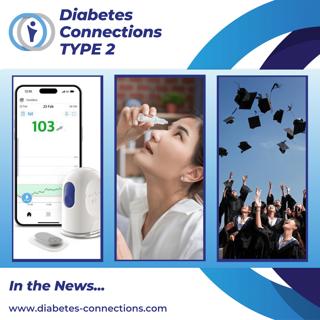
In the News... ATTD updates, new CGMs, drops for diabetes eye disease, scholarships and more!

In the News... ATTD updates, new CGMs, drops for diabetes eye disease, scholarships and more!

It's In the News! A look at the top diabetes stories and headlines happening now. Top stories this week: The annual ATTD conference wraps up with news about CGMs, including new FDA approvals and a loo...

15 Mar 20248min
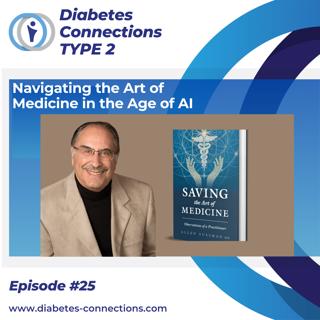
Navigating the Art of Medicine in the Age of AI with Dr. Allen Sussman

Navigating the Art of Medicine in the Age of AI with Dr. Allen Sussman

It's pretty clear that the future of medicine will include artificial intelligence. It's already part of doctor's appointments, health data, and more. But balancing that machine learning high tech wit...

13 Mar 202428min
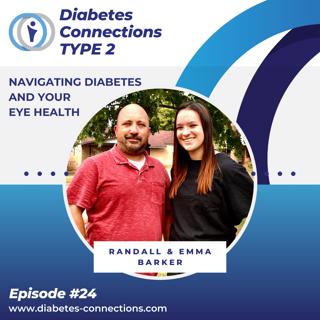
Navigating Diabetes and Your Eye Health

Navigating Diabetes and Your Eye Health

What you need to know about diabetes and your eyes. I know, this one can make people nervous, but the most important thing to know is that treatments have changed A LOT and they are much more effectiv...

6 Mar 202436min
In the News... MicroGlucagon to speed up insulin, SGLT2 & false positive tests, FDA warns about non-invasive glucose monitors and more!

In the News... MicroGlucagon to speed up insulin, SGLT2 & false positive tests, FDA warns about non-invasive glucose monitors and more!

It's In the News, a look at the top stories and headlines from the diabetes community happening now. Top stories this week: what is MicroGlucagon and how could it speed up existing rapid-acting insuli...

1 Mar 20247min

From Restrictive Diets to Realistic Solutions with Dr. Mike Roussell

From Restrictive Diets to Realistic Solutions with Dr. Mike Roussell

What you eat is an important part of managing diabetes. By now, we all know being super restrictive doesn't work, so let's talk about some easier ways to work in more healthy foods without turning you...

21 Feb 202428min

In the News.. Tandem Mobi released, surprising outcomes for type 2 surgery, exercise and diabetes studies, T1D at the Super Bowl, and more!

In the News.. Tandem Mobi released, surprising outcomes for type 2 surgery, exercise and diabetes studies, T1D at the Super Bowl, and more!

It's In the News, a look at the top stories and headlines from the diabetes community happening now. Top stories this week: Tandem announces it's taking orders and starting to ship the Mobi pump, Insu...

16 Feb 20248min

A new CGM made for people with type 2 - Learn about Dexcom's Stelo

A new CGM made for people with type 2 - Learn about Dexcom's Stelo

Dexcom is planning a new CGM system called Stelo, aimed at people with type 2 diabetes who don't use insulin. This week, we're talking to the Chief Operating Officer Jake Leach all about this. Dexcom ...

14 Feb 202426min

Populært innen Fakta

fastlegen
mikkels-paskenotter
dine-penger-pengeradet
relasjonspodden-med-dora-thorhallsdottir-kjersti-idem
foreldreradet
treningspodden
rss-strid-de-norske-borgerkrigene
jakt-og-fiskepodden
takk-og-lov-med-anine-kierulf
sinnsyn
hverdagspsyken
rss-bisarr-historie
gravid-uke-for-uke
rss-kunsten-a-leve
tomprat-med-gunnar-tjomlid
rss-sunn-okonomi
rss-kull
hagespiren-podcast
fryktlos
rss-var-forste-kaffe