20VC: Opensea Founder, Devin Finzer on Scaling GMV from $150M to $3BN in 18 Months, How Brands and Celebrities Will Harness NFTs To Change Their Business, The Impact of NFTs on Gaming & What is in Devin's Metamask Wallet?!
Devin Finzer is the Founder & CEO @ Opensea, the world's first and largest NFT marketplace allowing you to discover, collect, and sell extraordinary NFTs. To date, Devin has raised over $423M for the company with their last $300M round valuing Opensea at $13.3BN. Before changing the world of NFTs, Devin co-founded ClaimDog which was acquired by Credit Karma and before founding ClaimDog, Devin was an engineer at Pinterest. Do want to say, I always love Semil Shah's startup of the year, for 2021 it was Opensea, check out his piece here. In Today's Episode with Devin Finzer You Will Learn: 1.) How Devin made his way into the world of NFTs and came to found the first and largest NFT marketplace in the form of Opensea? 2.) The Scaling Story: What were the first early signs that Opensea was working when they were in YC? What core metrics did they look at to determine success? Given NFTs not being "hot" at the time, how was the fundraising process for Opensea coming out of YC? What were the early investors most excited about? What was the inflection point when Opensea and NFTs really started to take off? What most surprised Devin about the way in which the inflection point happened? When scaling from $150M to $4BN in GMV, what are the first things to break in a company? How does Devin maintain company morale with such volatile crypto and NFT markets? 3.) The Next Decade of NFTs: How does Devin predict large brands and companies will utilise NFTs for their businesses? In what ways does Devin think creators and celebrities will use NFTs moving forward to create more efficient business models? How does Devin respond to the statement, "NFTs do more to harm than help income inequality?" What are Devin's biggest concerns moving forward when analysing the NFT market? How does Devin see the future for the development and experimentation of NFTs? 4.) The Future of NFT & Gaming: How does Devin see NFTs impacting the world of gaming most? How does Devin think about interacting with these gaming communities that are external to the centralised Opensea marketplace? Item's Mentioned In Today's Episode with Devin Finzer Devin's Favourite Book: Homo Deus: A Brief History of Tomorrow
14 Jan 202235min

20VC: The Memo: Never Before Revealed Metrics; A Full Breakdown of Unit Economics Behind JOKR, How Does Emerging Markets Compare to Developed Economies & The Biggest Misnomers on Quick Commerce with Ralf Wenzel, Founder & CEO @ JOKR
Ralf Wenzel is the Founder & CEO @ JOKR, a global platform for instant retail delivery at a hyper-local scale serving both the US and LATAM. Ralf has raised over $260M for the company, most recently valuing it at $1.2BN. Prior to JOKR, Ralf spent 7 years as the Founder & CEO @ foodpanda, as well as, enjoying roles as Chief Strategy Officer @ Delivery Hero, Interim Chief Product and Experience Officer @ WeWork and even moving to the other side of the table as a Managing Partner with Softbank. In Today's Episode with Ralf Wenzel You Will Learn: 1.) What is the unit economic breakdown for quick commerce business models? What levers can be used to improve it over time? 2.) Comparing the US to LATAM: What is the AOV (average order value) in the US vs LATAM? What is the order frequency in the US vs LATAM? How does labour cost vary when comparing LATAM to the US? How does real estate cost for fulfilment centres differ when comparing LATAM to the US? How do product margins on a per product basis differ when comparing US to LATAM? 3.) New Market Growth and Maturation: What is the payback period for new markets? How has this changed over time? How does the payback period reduce with every new market being opened? What % of AOV is spent on marketing when a new market is opened? How does this marketing spend change over time? In mature markets, how much new customer acquisition is organic vs paid? What is the average weekly growth rate in new vs mature markets? 4.) Business Model Expansions: How does Ralf and JOKR approach the potential for private label goods? How does private label change the margin structure of the goods? What have been their lessons from starting their first private label goods? How does Ralf approach the ability to integrate advertising and paid search? What is needed for paid search and advertising to be a meaningful part of the business?
12 Jan 202244min
20VC: Former Governor of the Bank of England, Mark Carney on Why "Only the Niche Will Survive" in Crypto, How Governments and Central Banks Retain Control in a World of Decentralised Finance & The Winners and Losers in Crypto Exchanges and NFTs
Mark Carney is Vice Chair of Brookfield Asset Management and Head of Transition Investing. Prior to Brookfield, Mark served as the Governor of the Bank of England from 2013 to 2020, and prior to that as Governor of the Bank of Canada from 2008 until 2013. Mark was also Chairman of the Financial Stability Board from 2011 to 2018. Mark is a long-time and well-known advocate for sustainability and is currently the United Nations Special Envoy for Climate Action and Finance. If that was not enough, Mark serves on numerous other boards including Stripe, Bloomberg Philanthropies and the Foundation Board of the World Economic Forum to name a few. In Today's Episode with Mark Carney You Will Learn: 1.) How Mark made his entrance into the world of finance and came to the role of Governor of the Bank of Canada? How did that role lead to his becoming Governor of the Bank of England? How did seeing multiple booms and busts impact Mark's investing mindset? 2.) Governments, Central Banks and Regulation: How do governments and central banks retain control in a completely decentralized financial world? Can traditional currencies and digital currencies peacefully co-exist? What are Mark's predictions for central bank digital currencies? How does Mark expect governments and central banks to regulate digital currencies in the coming years? 3.) The Winners and Losers: What does the future hold for crypto exchanges? How do competitors for digital gold perform? Why does Mark believe in crypto "only the niche will survive"? What does the rise of Defi mean for traditional banks? What will determine those that survive? What does Mark mean when he says the winners will decide "what is my interface with this crypto world?'' 4.) The Future of NFTs: Do NFTs do more to help or to harm income inequality? How does Mark see the future for the development and experimentation of NFTs? Who are the winners and losers in the next decade for NFTs? How does Mark feel about the pause between productivity gains and real wage benefits that exist today? Item's Mentioned In Today's Episode with Mark Carney Mark's Favourite Book: Arcadia by Tom Stoppard
10 Jan 202238min
20VC: Whoop Founder, Will Ahmed on How CEOs Can Perform at their Highest Level, Why There is Value in Struggle Early On, Why Realism is Overrated in Startups and How To Create a Culture of Delegated Decision-Making
Will Ahmed is the Founder and CEO @ Whoop, the company on a mission to unlock human performance with their wearable device that is your digital fitness and health coach. To date, Will has raised over $400M for the company with the last round valuing Whoop at $3.6BN and with a cap table including the likes of Softbank, Accomplice, Founder Collective, Foundry Group, IVP and more. In Today's Episode with Will Ahmed You Will Learn: 1.) How Will went from being a professional athlete and college student to founding one of the hottest startups in fitness and healthcare? What are the similarities and differences of being an athlete and being a CEO? 2.) What does Will mean when he says, "there is value in the struggle early on"? How does Will advise founders on when to give up vs when to stay the course? If Will had not struggled with funding in the early days, would the Whoop journey be different? How does Will advise founders when it comes to taking funding when it is on the table? What are the nuances to this? 3.) In what way does Will believe "realism is overrated"? When does Will believe it is good to be realistic? In what ways can it be good to be idealistic? How did Will get some of the largest sports stars on the planet to use Whoop in the early days? Why did Will always refuse to pay sports stars to use Whoop? What were the benefits of doing this? 4.) How does Will define high performance? Why does Will believe it is crucial for leaders to disassociate their own personal feelings from the progress of their company? What advice does Will give to leaders in an attempt to do this? What has Will done to be a better CEO in the last year? What does Will believe are his biggest weaknesses as a CEO? Item's Mentioned In Today's Episode with Will Ahmed Will's Favourite Book: Shoe Dog: A Memoir by the Creator of NIKE
5 Jan 202241min
20Growth: The Biggest Growth Lessons from Leading Teams at Instagram & Instacart, How To Structure The Hiring Process for Growth Teams, How To Onboard Growth Reps Efficiently and The Relationship Between Growth and The Rest of the Org with Bangaly Kaba, H
Bangaly Kaba is the Head of Platform Growth @ Popshop Live, a live streaming mobile marketplace that combines commerce, entertainment, and social. Prior to Popshop, Bangaly led the product growth and consumer product orgs at Instacart and before Instacart was Head of Growth @ Instagram, where he built and led the product team that helped grow Instagram from 440M to > 1B monthly actives in 2.5yrs. If all of this was not enough, Bangaly has also spent time investing as a Sequoia Scout having made investments into Career Karma, Binti.com and Squad App to name a few. In Today's Episode with Bangaly Kaba You Will Learn: 1.) How Bangaly made his way into the world of growth and came to lead some of the largest growth orgs in tech at the likes of Instacart and Instagram? 2.) How does Bangaly define the rule of "Head of Growth"? When is the right time for founders to start hiring a growth leader? How do they know whether to hire a growth leader or junior growth reps? Where should founders place these first growth hires in the org? Product or marketing? 3.) How would Bangaly structure the hiring process for any growth hire? What are the must-ask questions? What case studies would Bangaly ask all candidates to complete? What are the signals of a 10x growth hire? What are some core red flags that show in the interview process? 4.) What does the ideal onboarding process look like for new growth hires? What are the signs that a new growth hire is hitting target and expectations? What are some early warning signs that a growth hire is not meeting expectations? 5.) What is the ideal relationship between the Head of Growth and the CEO? How often should they meet? How should they structure the discussion? How should the growth team work with product teams to be successful? How should growth teams work with marketing teams?
16 Des 202138min
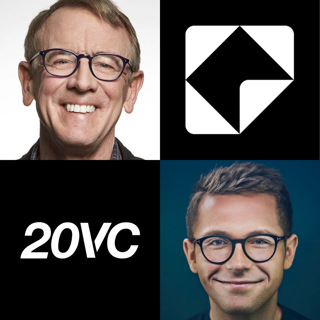
20VC: John Doerr on Buying 12% of Google for $12M, His Biggest Investing Lesson from 30 Years in Venture & The Climate Crisis: Why Governments are The Biggest Problem and Where the Biggest Opportunities Are in Climate Investing?
John Doerr is an engineer, venture capitalist, the chairman of Kleiner Perkins, and the author of the #1 New York Times best-seller Measure What Matters. For over 40 years, John has helped build some of the most generational defining companies of our generation. He was an original investor and board member at Google and Amazon, helping to create more than a million jobs. A pioneer of Silicon Valley's cleantech movement, John has invested in zero emissions technologies since 2006. Check out his latest book, Speed & Scale: An Action Plan for Solving Our Climate Crisis Now. In Today's Episode with John Doerr You Will Learn: 1.) What was John's entry into climate change investing? Having backed the likes of Amazon and Google, why did John decide then was the right time to do a climate fund, a pandemic fund, an iPhone fund? How does John think about market timing risk today? How does John determine between risks he is vs is not willing to take? 2.) What was one of John's biggest lessons on risk and upside from working alongside Tom Perkins? How did the Google deal come together? Where did John first meet Larry and Serge? What convinced John to write them a $12M check for 12% of the company? Why was it a contested deal within the partnership? How did the discussion go internally? 3.) Why and how is climate innovating and investing different today than it was in 2008? What are the core OKR's laid out in the book, that we need to achieve as a society? Why does John believe that governments are the biggest problem to us achieving these objectives? What does John mean when he says, "I am hopeful but not optimistic"? 4.) What does truly great listening mean to John? How would John describe his style of board membership? What do the truly special board members do? What does John do that makes him often cited as one of the best at recruiting? What is John's biggest investing miss? How did it change his mindset and approach? What investment is John most proud of, that no one knows? Item's Mentioned In Today's Episode with John Doerr John's Favourite Book: How to Avoid a Climate Disaster: The Solutions We Have and the Breakthroughs We Need
13 Des 202137min

20 Sales: When To Hire Your Head of Sales/ First Reps, What To Look for in 10x Sales Candidates, How To Structure The Hiring Process, How To Onboard New Reps Efficiently, How To Set First Quotas and more with Kyle Parrish, Figma's VP Sales
Kyle Parrish is VP Sales @ Figma, the company that connects everyone in the design process so teams can deliver better products, faster. At Figma, Kyle built the sales engine from scratch to today, with over 100 incredible people in sales. Before Figma, Kyle spent over 5 years at Dropbox in numerous different roles including Head of Sales, where he scaled the Austin, Texas office from 3 to over 80 people to Global Partnerships lead, where he was responsible for growing Dropbox's partner ecosystem. In Today's Episode with Kyle Parrish You Will Learn: 1.) How Kyle first made his way into the world of sales and came to be one of the 3 performing sales reps in a 300+ sales team? How that led to his joining the hypergrowth journey of Dropbox? What led Kyle to make the move from Dropbox to the rocketship that is Figma? 2.) When and Who: Does the founder need to be the person to create the sales playbook? How can a founder know whether it is right to hire sales reps or a Head of Sales first? In terms of ARR, is there a time when you have to have a Head of Sales? Does Kyle agree with Jason Lemkin in terms of bringing in reps, two at a time? Where do founders make the biggest mistakes when it comes to the timing of these hires? 3.) How To Know and Test: What non-obvious characteristics do 10x sales hires have? What questions or case studies does Kyle find to be most revealing in identifying these non-obvious traits? How should founders structure the process for new reps and a Head of Sales? Meeting by meeting, what should we look to achieve? 4.) Setting Up for Success: What does the ideal onboarding process look like for new sales reps? What tasks and processes would Kyle expect new reps to complete within the first month or two on the job? What are the clearest signs of a new rep hire not working out? How should founders approach 1-1 and 360 reviews with their new reps? 5.) Working Together: What is the ideal relationship between the founder and the new Head of Sales? How often should they meet? What should the founder expect from the new Head of Sales? How should the Head of Sales work with the Head of Marketing most efficiently? Item's Mentioned In Today's Episode with Kyle Parrish Kyle's Favourite Sales Blog Post: The Sales Learning Curve
8 Des 202137min
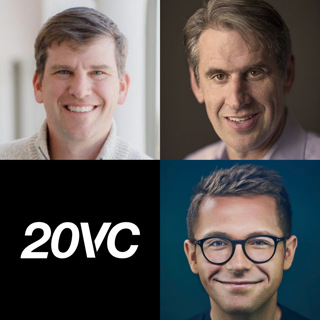
20VC: Bill Gurley and Michael Eisenberg on The First Signs of an Impending Bust, What Happens with a Market Crash, How Do Public Markets Impact Private Valuations & The Biggest Lessons from 20 Years Investing in Venture
Bill Gurley is a General Partner @ Benchmark, one of the most successful funds of the last decade with a portfolio including Uber, Twitter, Dropbox, Modern Treasury, Snapchat, StitchFix, and many more. As for Bill, widely recognized as one of the greats in venture having worked with GrubHub, NextDoor, Uber, OpenTable, Stitch Fix, and Zillow. Prior to Benchmark, Bill was a partner with Hummer Winblad Venture Partners. Michael Eisenberg spent 15 years as a General Partner @ Benchmark working alongside Bill and the Benchmark partnership. Following Benchmark, Michael co-founded Aleph, one of the leading Israeli venture funds of the last decade with a portfolio including Lemonade, Melio, and HoneyBook, just to name a couple of Aleph's unicorns. In Today's Episode with Bill Gurley and Michael Eisenberg You Will Learn: 1.) How does the current market activity in venture today compare to the dot com bubble? What elements are different? What elements are the same? What were the ramifications of the dot com bubble? Would Bill and Michael expect to see the same again? Is there anything good that comes from bubbles? How did the prior bubble impact Michael and Bill's investing mindset? 2.) Does Bill Gurley agree that Benchmark are the only firm to have retained price discipline in this crazy market? How do Bill and Michael think about their own relationship to price today? How does Bill try and answer the question, "what could go right?" when he meets entrepreneurs today? On reflection, what have been Michael and Bill's biggest miss? How did it change their approach? 3.) How does one compete in a world of Tiger and crossover funds? When it comes to capital deployment and pacing, do Michael and Bill agree with the suggestion of "playing the game on the field"? What are the nuances to this statement? What companies does Bill believe capital can be a moat for? What companies is capital not a moat and they should be conservative with raising and pre-emptive rounds? 4.) Do Bill and Michael believe that ownership still matters today with outcomes being larger than ever? How do Bill and Michael feel about the importance of temporal diversification today in a world of compressed deployment cycles? What investing lesson learned over 25 years in the business do Bill and Michael wish they had known when they started? Item's Mentioned In Today's Episode with Bill Gurley and Michael Eisenberg Bill's Favourite Book: The Storytelling Animal: How Stories Make Us Human
6 Des 202150min