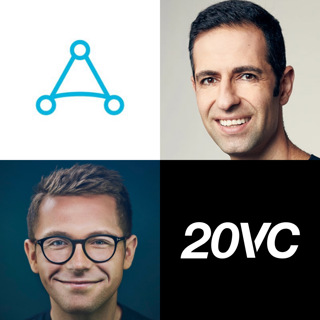
20VC: AppLovin's Co-Founder & CEO, Adam Foroughi on How AppLovin Might Be The Venture Capital Industry's Biggest Miss, How To Run a 1,000+ Organisation with Very Few Meetings & Balancing the Demands of Wall St with Long Term, Sustainable Growth
Adam Foroughi is the Co-Founder and CEO @ AppLovin, the company that allows developers to market, monetize, analyze and publish their apps. Under Adam's leadership, he has taken the company public, grown the team to over 1,000 people around the world, and scaled revenue in 2020 to $1.5Bn. Prior to AppLovin, Adam founded two companies—Lifestreet Media and Social Hour, and before that Adam started his career as a derivatives trader. In Today's Episode with Adam Foroughi You Will Learn: 1.) How Adam made his way into the world of startups and came to found one of the world's largest gaming, advertising and marketing companies in the form of AppLovin? 2.) Adam founded 4 companies before AppLovin, does Adam believe in the benefits of serial entrepreneurship? What has he done differently with AppLovin having learned from past experience? What did he do the same, having seen it work before? 3.) Why does Adam advocate for as few meetings as possible within the company? Why does Adam believe meetings are unproductive? How do decisions get made internally without meetings? What is the structure and process? How does Adam create an environment where people make decisions without the fear of the repercussions? What are the breakpoints in company scaling? 4.) Why does Adam think that VCs did not want to invest in the early rounds? What were his biggest takeaways from those early fundraising days? How has Adam found the transition to being a public markets CEO? What does he like? What does he not like? How does Adam feel about pleasing the street but also having a long-term mindset? 5.) How does Adam structure his day? With 5 children, how does Adam approach work/life balance? What does his exercise and sleep routine look like? How does he do both weights and running without losing the productivity of the weights? What changes has he made in the last year that have made a significant difference? Item's Mentioned In Today's Episode with Adam Foroughi Adam's Favourite Book: Never Split the Difference: Negotiating as if Your Life Depended on It
29 Nov 202143min

20VC: The Contentful Memo: Point Nine's Christoph Janz on The Cold Email That Led to a Unicorn Investment, How To Approach Market Sizing and Timing & The Pros and Cons of Pre-Emptive Rounds, When To Do Them vs When Not To?
Christoph Janz is the Co-Founder and General Partner @ Point Nine, one of Europe's leading early-stage firms with a portfolio including the likes of Zendesk, Algolia, Revolut, Nex Health, Loom and of course, Contentful. Prior to co-founding Point Nine, Christoph was a prolific angel investor and also the Co-Founder @ Pageflakes, leading the company from inception to their acquisition by LiveUniverse in 2008. Christoph is also one of the most thoughtful writers in SaaS and you can find his writing here. In Today's Episode with Christoph Janz You Will Learn: 1.) How did a cold email from the solo founder of Contentful convince Christoph to lead their first round? What was it about the email that made Christoph excited? How does Christoph advise founders today when it comes to crafting cold emails to VCs? 2.) The Market: How did Christoph analyze the market when making the investment? How much of a role does market sizing and analysis play in determining whether Christoph will make an investment? What matters more team or market? How did the market change in a way that Christoph was not expecting? How did it evolve in a way he was expecting? 3.) Business Model: How does Christoph advise SaaS founders today in crafting variable pricing mechanisms? How can you create a pricing mechanism that does not disincentivize usage but also optimizes for value extraction? Where does Christoph see many founders go wrong when it comes to pricing? 4.) Fundraising: How did the early fundraising rounds for Contentful come together? How does Christoph advise founders today on whether to take pre-emptive rounds? When can they be helpful? In what circumstances can they be very damaging? What is the best outcome that founders should be optimizing for today with fundraising?
24 Nov 202131min
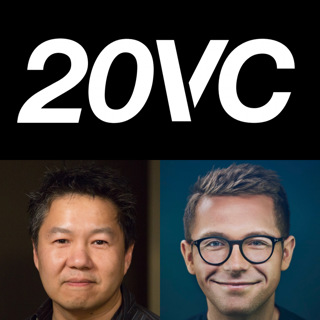
20VC: Eugene Wei on "Status as a Service", Why Networks Grow and Stop Growing, The Worst Design Choices Social Media Incumbents Have Made & The Next 10 Years of Media and the Metaverse
Eugene Wei is one of my favorite thinkers, writers, and strategists in tech today. Having spent the majority of his professional career at consumer internet companies, Eugene started his career with a 7-year stint at Amazon with a focus on product. He then joined Hulu leading the product, design, editorial, and marketing teams. Post Hulu, Eugene co-founded Erly, later acquired by Airtime, and then joined Flipboard as Head of Product. Finally, Eugene's last position was with Oculus as Head of Video. You have to check out Eugene's blog and can find his writing here. In Today's Episode with Eugene Wei You Will Learn: 1.) How Eugene made his way into the world of tech and startups with his first position at Amazon? What did Eugene do differently that made him stand out to the recruiters at Amazon? 2.) Decision-Making: Why does the process and medium by which decisions are made matter so much? How has Euegene's decision-making process changed over time? Where do many people go wrong in constructing and optimising their decision-making process? What are Eugene's biggest takeaways and lessons from Jeff Bezos and Steve Jobs on messaging? 3.) The World of Social: What does Eugene believe is the graph design problem for so many social apps today? What does Eugene believe are the best and the worst design choices social media incumbents have made? How does Eugene encourage the next generation of consumer social founders to think through design decisions? 4.) Status as a Service: What does the concept of "Status as a Service" mean to Eugene? What is the biggest misunderstanding people have with the concept? What has fundamentally changed this concept in the last 2-3 years? How does the rise of crypto and NFT's impact the notion of "status as a service"? How does Eugene believe this will look in 10 years? 5.) The World of Media: How does Eugene think through the attention economy today? Why is media and content harder than ever today? Why does Eugene believe media has now become zero-sum? What does Eugene believe will be the future business model for media? Item's Mentioned In Today's Episode with Euegene Wei Eugene's Favourite Book: The Sound and the Fury, The Visual Display of Quantitative Information
22 Nov 202146min

20Growth: Top Growth Lessons from the Early Facebook, Twitter and Quora Days, The Most Important Question to Ask When Building Your Growth Team, How To Test For True Candidate Depth and Quality When Hiring for Growth with Andy Johns, Venture Partner @ Unu
Andy Johns is one of the pre-eminent growth leaders of the last decade. Andy's career started in growth at Facebook when the company scaled from 100M-500M active users. Since he has worked in some of the leading growth orgs at companies like Twitter, Quora and more recently at Wealthfront as Head of Growth and President. Andy is also an active angel investor and advisor with companies such as Poshmark, Robinhood, Webflow, Blue Bottle Coffee, and Opendoor. If that was not enough, Andy is currently a Venture Partner @ Unusual Ventures where he focuses on consumer social and network-driven startups. In Today's Episode with Andy Johns You Will Learn: 1.) How Andy made his way into the world of startups and growth with his joining the Facebook growth team? What were the biggest takeaways from his time with Facebook, Twitter and Quora? How did that impact his mindset today? 2.) How does Andy define "VP and Head of Growth"? When is the right time to start hiring for your growth team? How should founders determine whether they need a growth leader or growth engineers in the early days? What is the core question founders need to ask on network effects to answer this question? Should the growth team be incorporated into the product team? 3.) How does Andy structure the hiring process for growth hires? What does the structure of the interviews look like? How does Andy test for real depth with candidates? What case studies does he do to really understand their quality? Where do many go wrong with the interview process? What are Andy's biggest suggestions for how to optimise the process? 4.) What does the optimal onboarding process for new hires look like? What takes and processes should they complete in their first month? What are early signs of a poor candidate? How long should one give them if they are not performing? How does Andy approach structure post-mortems within the team? What is the ideal relationship between CEO and Head of Growth?
17 Nov 202141min
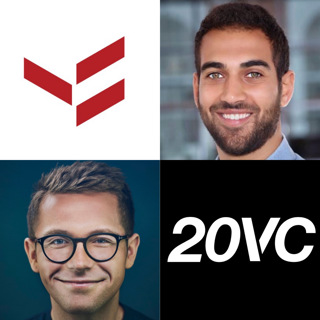
20VC: Thrive Capital's Kareem Zaki on The One Rule That Drives Investment Decision-Making and Focus at Thrive, Why Every Large Institution Will Enter Venture Capital Over the Next Decade and How To Create a Firm Culture That Attracts The Best Young Talent
Kareem Zaki is a General Partner @ Thrive Capital, with a portfolio including Stripe, Instacart, Instagram, Nubank, Github, Glossier and many more, they have cemented their position as one of the leading venture firms of the last decade. As for Kareem, he is a co-founder and board member to Cedar, Nava, Scope Security and Cadence and has invested in the likes of Affirm, Lemonade, Ramp and Trade Republic. Prior to entering venture, Kareem spent 3 years in private equity with Blackstone. In Today's Episode with Kareem Zaki You Will Learn: 1.) How Kareem made his way from the world of private equity to backing some of the most innovative next-generation companies with Thrive Capital? 2.) Portfolio Construction: What is the one rule that drives all decision-making at Thrive? How does Kareem think about maintaining focus with such a broad mandate? How do Thrive think about asset allocation internally with such a broad mandate? How does incubating companies also help Kareem be a better investor? 3.) Investing Style: How has Kareem's investing style changed over the last 10 years? What does he focus on now that he did not before and visa versa? How does Kareem assess his own relationship to price? Through what lens does Kareem approach market sizing and timing? Where do many investors make mistakes here? 4.) The Landscape: How does Kareem respond to the activity and cadence of Tiger? In what way does Kareem believe the venture landscape will have changed most significantly in the next 10 years? How do the existing incumbent firms need to change in the wake of this? How do Thrive respond to the pace and cadence of check writing today? Item's Mentioned In Today's Episode with Kareem Zaki Kareem's Favourite Book: How Will You Measure Your Life Kareem's Most Recent Investment: Cadence
15 Nov 202124min

20VC: The Anduril Memo: Founders Fund's Brian Singerman on What Makes Palmer Luckey One of the Greatest Innovators in History, Why It Is BS The DOD Do Not Want To Work With Silicon Valley & Why in Venture You Have To Play A Different Game to the Hedge Fun
Brian Singerman is a General Partner @ Founders Fund, one of the most prominent venture firms of the last decade with a portfolio including Anduril, SpaceX, Tesla, Palantir, Stripe, Affirm, Airbnb, Facebook, and many more. As for Brian, he has led investments in the likes of Affirm, Oscar Health, Wish, Asana, Oculus, and Postmates to name a few. Brian also sits on the board or is an observer to The Long Term Stock Exchange, Solugen, Cloud9, Modern Health, and of course, Anduril. Prior to Founders Fund, Brian spent a very successful 4 years as an engineer and executive at Google. In Today's Episode with Brian Singerman on Anduril, You Will Learn: 1.) How did Brian first come to meet Palmer and the Anduril team? Where did the meeting take place? How did the discussion go? Did Brian instantly feel that Palmer was special? What about the way Palmer presented, suggested this to Brian? 2.) The Market: What gave Brian the confidence Anduril would be successful where so many others had failed? How did the market change or evolve in a way Brian did expect? In what ways did the market surprise Brian? Does Brian think we will see the relationship between Silicon Valley and the DOD change over time? 3.) Anduril: The Business: Why is Anduril as a business, so hard to copy? How did Brian gain comfort around their defensibility? What does Brian think is the biggest misconception people have of Anduril as a business? How does Brian think about when is the right time to add secondary and ancillary products? 4.) Investing Today: Why is Brian no longer Zoom investing today? What does Brian mean when he says you have to, "play a different game to the hedge funds today"? In what way does he and Founders Fund look to do this? How does Brian think about the current levels of pricing? How does he determine when to pay up vs when to be disciplined?
11 Nov 202128min
20VC Special: Accel Founders Arthur Patterson and Jim Swartz on Building Accel Into One of the Most Prominent Venture Firms Over Four Decades, How Today's Market Compares To The Dot Com Bubble, How To Do Generational Transition Well and Why Accel Will Nev
Arthur Patterson and Jim Swartz founded Accel in 1983. Under their leadership, they have built Accel into one of the most prominent venture firms of the last 4 decades. Starting with Arthur, as the lead investor, Arthur has helped management teams develop companies into market-defining leaders over an incredible four decades. Prior to co-founding Accel, Arthur was a General Partner of Adler & Company with his career in venture starting at Citicorp Venture Capital. As for Jim, Jim has been the lead director of more than 50 successful companies. He was instrumental as a founder/mentor of Accel London and in the founding of Meritech Capital. Before Accel, Jim was the founding general partner of Adler & Company, which he started with Fred Adler in 1978 after his tenure as a vice president of Citicorp Venture Capital. In Today's Episode with Arthur Patterson and Jim Swartz You Will Learn: 1.) How Arthur and Jim made their first entry into the world of venture capital in the 70's? What was the founding moment for them with Accel? Where did the first discussion happen? Did they align on strategy? Why did they decide to name the firm Accel? 2.) What did the venture ecosystem look like when Arthur and Jim founded Accel in 1983? Why does Arthur believe the specialist always beats the generalist? What was the hardest Accel fund to raise? Why was it the hardest to raise? When did the Accel brand hit an inflection point and fundraising became easier? Where do Arthur and Jim disagree on this? 3.) How do Jim and Arthur feel about the current frothiness of the venture market? Why does Jim believe we are entering a market correction? How do they feel about the inflation of asset value? Through what lens is now the same vs different to 1999/2000? What have been their biggest lessons from experiencing 5 macro booms and busts? 4.) How did Jim and Arthur think about when to expand with a new Accel product? What did Accel do specifically to make the expansion to London and India so successful? What is the key to doing generational transition well? Where do many go wrong here? Do Jim and Arthur agree with Doug Leone, "when you lose seed, you become private equity"? 5.) How do Jim and Arthur think about partner selection within the firm? How have they structured decision-making to ensure politics do not get introduced? How does one create a decision-making framework of accountability without fear to take big risks? What do Arthur and Jim mean when they speak of "the prepared mind"? How does it help them think and operate better?
8 Nov 202139min
20VC Unscripted: Pricing is Crazy, Pre-Emptive Rounds are Normal, Pricing at 200x Revenue Multiple is Common, There is More Cash Than Ever. What Happens Next; Market Analysis with Ryan Denehy, Founder and CEO @ Electric
Ryan Denehy is the Founder & CEO @ Electric, the company that provides a modern IT solution that's simplified. To date, Ryan has raised over $188M for the company from the likes of GGV, Bessemer, Slack Fund, and 01 Advisors to name a few. As for Ryan, he is a 3x entrepreneur with his first company being acquired by USA TODAY Sports and his second company, Swarm Mobile being acquired by Groupon in 2014. In Today's Episode with Ryan Denehy You Will Learn: 1.) How Ryan made his way into the world of startups with his first startup being acquired when he was still in college? How have experiences raising $180M with Electric, impacted how he thinks about the venture market today? 2.) Is Ryan concerned by the lack of due diligence investors are doing today? How has the DD process changed over the years? What materials should founders provide to investors? How should founders reference check investors? What do many founders do wrong here? 3.) Should founders always take the most money at the highest price? When thinking about price, what do you founders have to think through? Why are some of the prices we are seeing today so crazy? How can founders outcome scenario plan to come to the best price option? When are founders and investors misaligned when it comes to price? 4.) What does Ryan mean when he says, "sales and product-market fit are more closely related than people think"? How does Ryan advise founders on when to really raise big? Does Ryan believe in the notion of "skipping a round"? Does this ever happen? Does Ryan ever believe the "this will be our last round before we breakeven" statement?
4 Nov 202135min