
The Chinese Typewriter: A History

The Chinese Typewriter: A History

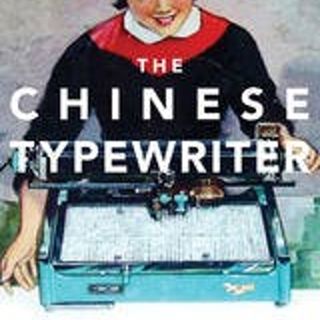
In this episode Chris Gondek speaks with author Tom Mullaney on the invention of the Chinese typewriter, and how the characters originally utilized are still the ones available on modern keyboards. Chinese writing is character based, the one major world script that is neither alphabetic nor syllabic. Through the years, the Chinese written language encountered presumed alphabetic universalism in the form of Morse Code, Braille, stenography, Linotype, punch cards, word processing, and other systems developed with the Latin alphabet in mind. This book is about those encounters--in particular thousands of Chinese characters versus the typewriter and its QWERTY keyboard. Thomas Mullaney describes a fascinating series of experiments, prototypes, failures, and successes in the century-long quest for a workable Chinese typewriter. The earliest Chinese typewriters, Mullaney tells us, were figments of popular imagination, sensational accounts of twelve-foot keyboards with 5,000 keys. One of the first Chinese typewriters actually constructed was invented by a Christian missionary, who organized characters by common usage (but promoted the less-common characters for "Jesus" to the common usage level). Later came typewriters manufactured for use in Chinese offices, and typewriting schools that turned out trained "typewriter girls" and "typewriter boys." Still later was the "Double Pigeon" typewriter produced by the Shanghai Calculator and Typewriter Factory, the typewriter of choice under Mao. Clerks and secretaries in this era experimented with alternative ways of organizing characters on their tray beds, inventing an input method that was the first instance of "predictive text." Today, after more than a century of resistance against the alphabetic, not only have Chinese characters prevailed, they form the linguistic substrate of the vibrant world of Chinese information technology. The Chinese Typewriter, not just an "object history" but grappling with broad questions of technological change and global communication, shows how this happened.

Denne episoden er hentet fra en åpen RSS-feed og er ikke publisert av Podme. Den kan derfor inneholde annonser.

Episoder(577)

Soraya Murray, "Technothriller: Film and the American Imagination" (MIT Press, 2026)

Soraya Murray, "Technothriller: Film and the American Imagination" (MIT Press, 2026)

Technothriller: Film and the American Imagination (MIT Press, 2026) is the first dedicated examination of popular movies classified as “thrillers” that channel societal anxiety or dread about advan...

14 Jul 1h 6min

Are Capitalism and Democracy Fundamentally Incompatible? A Conversation with Mordecai Kurz

Are Capitalism and Democracy Fundamentally Incompatible? A Conversation with Mordecai Kurz

Today I'm speaking with Mordecai Kurz, Joan Kenney Professor of Economics Emeritus at Stanford University. We are discussing his latest book, Private Power and Democracy's Decline: How to Make Capital...

9 Jul 1h 3min

Joe P. L. Davidson, "Saving Utopia: Imagining Hopeful Futures in Dystopian Times" (MIT Press, 2026)

Joe P. L. Davidson, "Saving Utopia: Imagining Hopeful Futures in Dystopian Times" (MIT Press, 2026)

There is no alternative. The End of History. Climate Apocalypse. It seems that our contemporary moment is defined by the idea that things can only get worse or, in the most optimistic reading, perha...

17 Jun 1h 4min

Michael Brownstein et al., "Somebody Should Do Something: How Anyone Can Help Create Social Change" (MIT Press, 2025)

Michael Brownstein et al., "Somebody Should Do Something: How Anyone Can Help Create Social Change" (MIT Press, 2025)

A novel and scientific approach to creating transformative social change—and the surprising ways that each of us can help make a real difference. Changing the world is difficult. One reason is that th...

6 Jun 1h 11min

Rahul Mukherjee, "Unlimited: Aspirational Politics and Mobile Media Distribution" (MIT Press, 2026)

Rahul Mukherjee, "Unlimited: Aspirational Politics and Mobile Media Distribution" (MIT Press, 2026)

Around 2016, buoyed by so-called data kranti  ("data revolution"), an aspirational neo-middle class of users in India accessed internet for the first time on their mobile phones. Unlimited: Aspiration...

2 Jun 1h 1min

Yosef Grodzinsky, "How Deeply Human Is Language?: Chomsky, the Brain, and the AI Fantasy" (MIT Press, 2026)

Yosef Grodzinsky, "How Deeply Human Is Language?: Chomsky, the Brain, and the AI Fantasy" (MIT Press, 2026)

How Deeply Human Is Language? Chomsky, the Brain, and the AI Fantasy (MIT Press, 2026) is Yosef Grodzinsky’s exploration of the criticality of the linguistic theories to the design of LLMs. The book ...

24 Mai 48min

Aymar Jèan Escoffery, "Reparative Media: Cultivating Stories and Platforms to Heal Our Culture" (MIT Press, 2025)

Aymar Jèan Escoffery, "Reparative Media: Cultivating Stories and Platforms to Heal Our Culture" (MIT Press, 2025)

Can producing stories and developing platforms to support people who have been harmed by multiple, intersecting systems heal those systems? In Reparative Media: Cultivating Stories and Platforms to He...

15 Mai 1h

Silvia Danielak, "Peace Infrastructures: How UN Peace Operations Build Roads, Bridges, and Solar Farms in the Pursuit of Sustainability" (MIT Press, 2026)

Silvia Danielak, "Peace Infrastructures: How UN Peace Operations Build Roads, Bridges, and Solar Farms in the Pursuit of Sustainability" (MIT Press, 2026)

Roads, bridges, a renewable power plant, and an electricity grid: UN peacekeepers might be unusual infrastructure builders, but they’re certainly not unambitious. Since the beginning of the UN’s peace...

15 Mai 34min

Populært innen Fakta

fastlegen
dine-penger-pengeradet
relasjonspodden-med-dora-thorhallsdottir-kjersti-idem
foreldreradet
rss-kunsten-a-leve
treningspodden
mikkels-paskenotter
sinnsyn
rss-strid-de-norske-borgerkrigene
tomprat-med-gunnar-tjomlid
gravid-uke-for-uke
jakt-og-fiskepodden
hverdagspsyken
rss-var-forste-kaffe
rss-sarbar-med-lotte-erik
fryktlos
rss-impressions-2
uroskolen
hagespiren-podcast
dopet